Banker explaining interest rate to a client
1344×768 · AVIF · CC BY 4.0

In a Brazilian bank in the morning, a manager explains the Selic rate to a client, detailing its impact on investments and loans.
About this subject
The Selic rate is Brazil's benchmark interest rate, set by the Monetary Policy Committee (Copom) of the Central Bank. It directly influences credit costs, fixed-income investment returns, and inflation control. When the Selic is high, loan and financing interest rates rise, while investments like CDBs and Tesouro Direto become more attractive. In a bank in the morning, managers often explain the correlation between the Selic and financial products, such as savings account yields or DI funds.
The explanation typically covers how the Selic affects the client's daily life: from the installment amounts of a mortgage to the returns of a conservative investment. The manager may highlight that in high Selic scenarios, it is more advantageous to invest in post-fixed securities tied to the rate, such as Tesouro Selic. Conversely, in periods of decline, the client might be advised to seek fixed-rate alternatives to lock in future returns.
Historically, the Selic has peaked at 14.25% per year in 2015 and hit a low of 2% in 2020 during the pandemic. These fluctuations reflect monetary policy adopted to curb inflation or stimulate the economy. The manager can illustrate with recent data, showing how the current rate impacts purchasing power and the client's investment decisions.
The morning meeting at the bank is a crucial moment to align expectations and educate the client about personal finance. Understanding the Selic allows the client to make more informed decisions, whether to take out credit or diversify their investment portfolio.
Frequently Asked Questions
What is the Selic rate?
The Selic rate is Brazil's benchmark interest rate, set by the Central Bank's Monetary Policy Committee (Copom). It serves as a reference for other interest rates in the country and influences investments, loans, and inflation control.
How does the Selic affect my investments?
The Selic directly impacts the returns of fixed-income investments such as CDBs, Tesouro Direto, and DI funds. When the Selic rises, these investments tend to yield more; when it falls, returns decrease.
What is the difference between Selic and CDI?
The Selic is the rate set by the Central Bank, while the CDI (Interbank Deposit Certificate) is a market rate that closely tracks the Selic. In practice, both are used as references for investments, with very similar values.
Direct URL
https://pub-c7d6a6ea828543ac903a74a341ccb2e1.r2.dev/imagens/banker-explaining-selic-rate-to-a-client-documentary-morning-3.avifHow to credit
Include a visible link back to UtilizAí. Copy one of the snippets below:
<a href="https://xn--utiliza-eza.com/en/midia/imagens/banker-explaining-selic-rate-to-a-client-documentary-morning-3">Banker explaining interest rate to a client</a> by <a href="https://xn--utiliza-eza.com">UtilizAí</a>, licensed under <a href="https://creativecommons.org/licenses/by/4.0/">CC BY 4.0</a>.
[Banker explaining interest rate to a client](https://xn--utiliza-eza.com/en/midia/imagens/banker-explaining-selic-rate-to-a-client-documentary-morning-3) by [UtilizAí](https://xn--utiliza-eza.com), CC BY 4.0
License: CC-BY-4.0
Tags
Related images
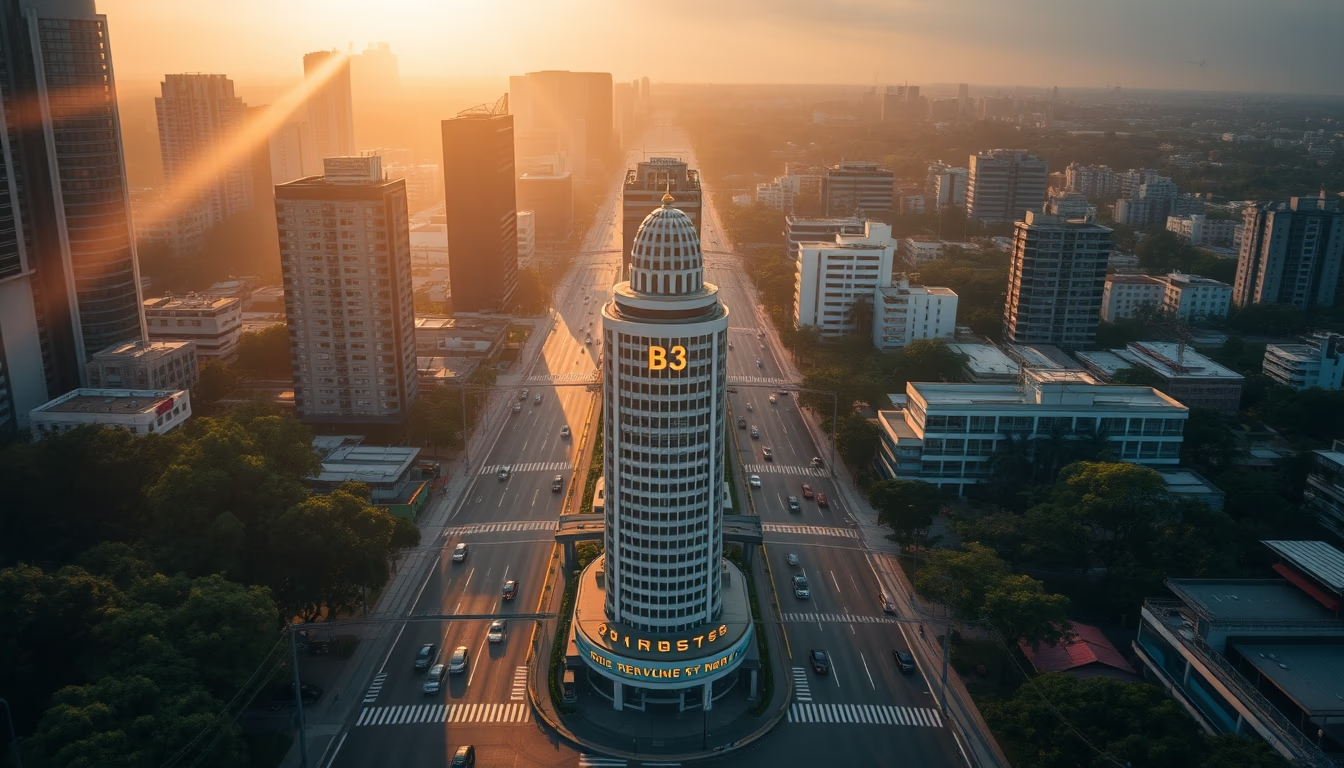 Aerial view of São Paulo financial district at golden hour with B3 building
 Aerial view of São Paulo financial district at golden hour with B3 building
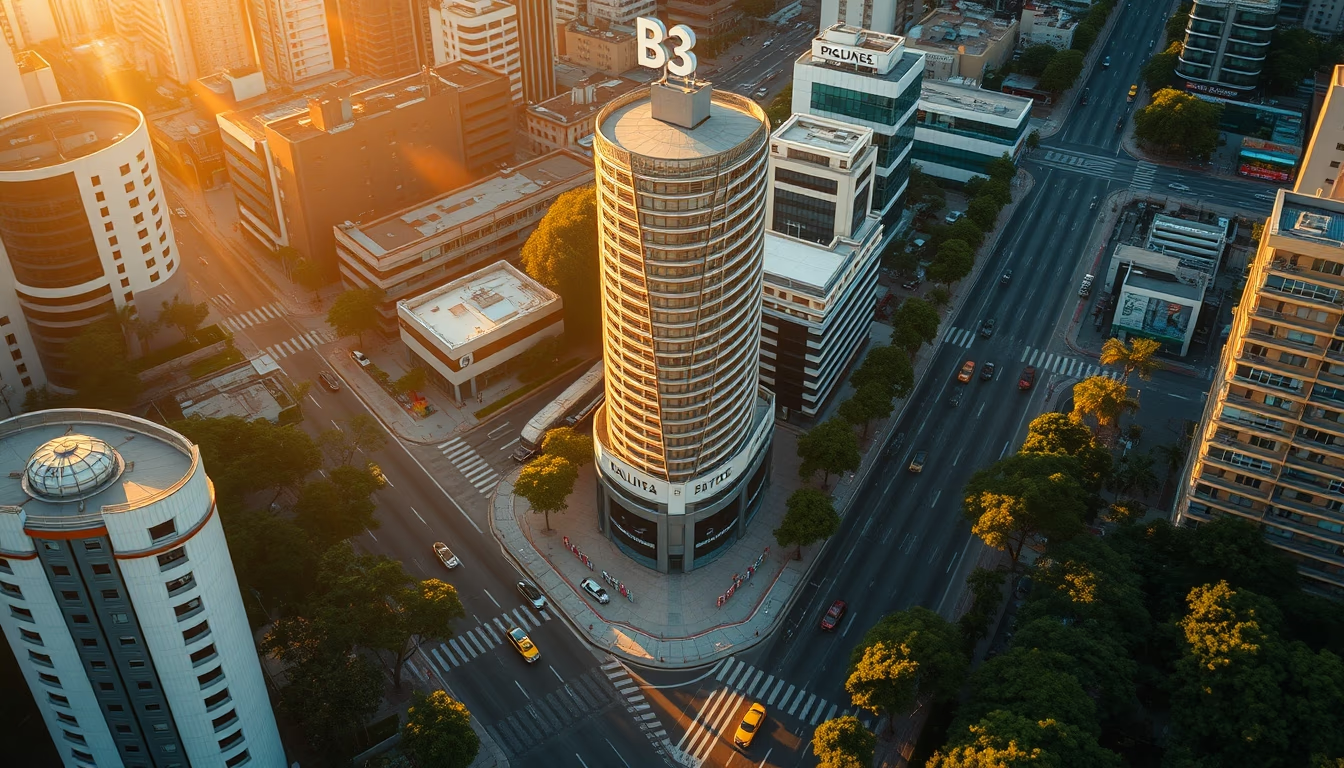 Aerial view of São Paulo financial district at golden hour with B3 building
 Aerial view of São Paulo financial district at golden hour with B3 building
 Aerial view of São Paulo financial district at golden hour with B3 building
 Aerial view of São Paulo financial district at golden hour with B3 building