Baby monitor camera
1344×768 · AVIF · CC BY 4.0
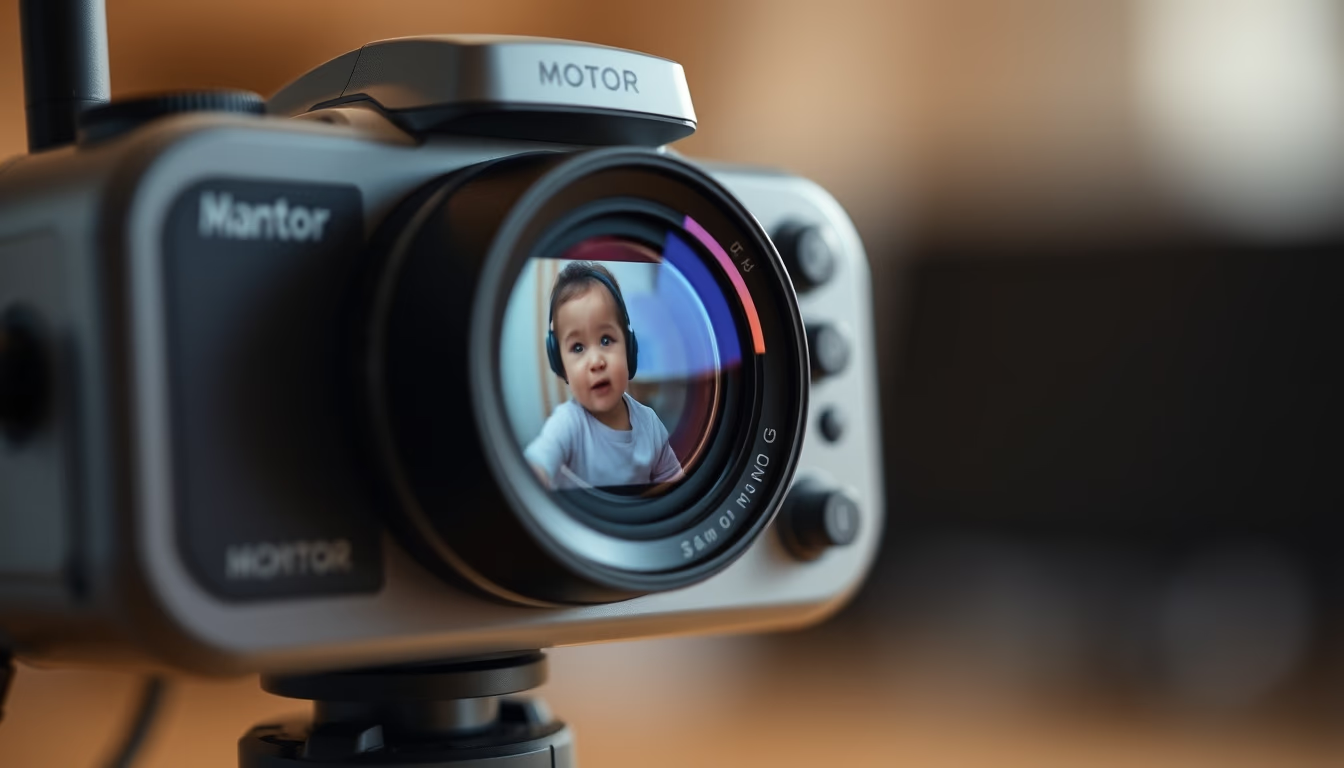
Baby monitor camera in macro close-up: safety technology for modern parents seeking remote baby surveillance.
About this subject
A baby monitor is an electronic device that allows parents or caregivers to observe and hear a baby from a distance. Originally created as a simple audio intercom in the 1930s, the equipment has evolved to include video, Wi-Fi connectivity, and smart sensors. Today, modern models offer infrared night vision, motion detection, room temperature monitoring, and even cry pattern analysis, soothing the child with lullabies or recordings of the parents' voice. The global baby monitor market is worth over US$ 2 billion and grows about 8% annually, driven by demand for child safety and the popularity of the Internet of Things (IoT).
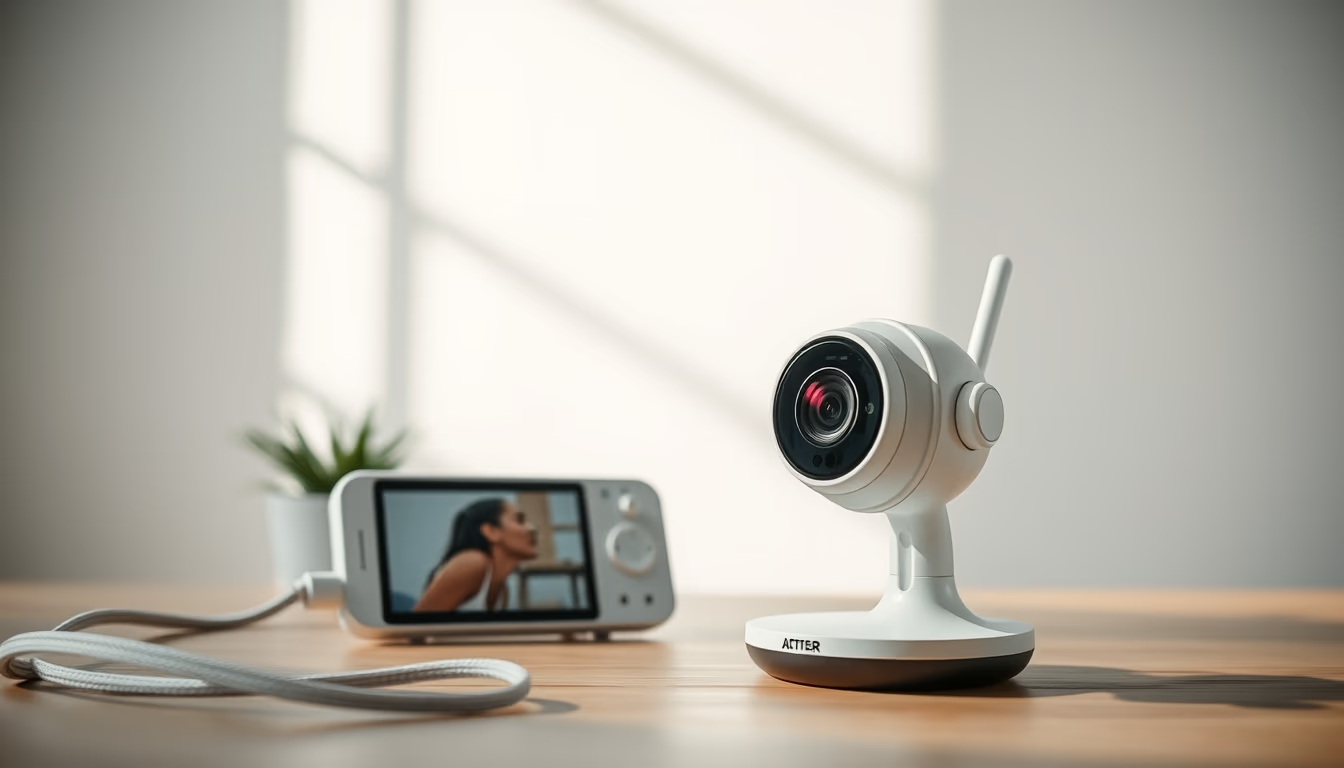
Parents can choose between two main categories: simple audio monitors that transmit only sound, and video monitors that show real-time images. Wi-Fi-connected models allow remote access via smartphone, tablets, or computers with customizable alerts. Cordless (RF) models operate on dedicated frequencies, ensuring privacy but with limited range. Some devices bypass the internet entirely, sending images directly to a portable monitor, ideal for those who prefer a more secure solution against hackers.
Cybersecurity is a growing concern: unprotected cameras can be targeted by intruders. Therefore, manufacturers recommend strong passwords, firmware updates, and use of secure Wi-Fi networks. Recent models include end-to-end encryption and two-factor authentication. Additionally, agencies like the FCC in the United States regulate transmission frequencies. Despite the risks, benefits are undeniable: parents can check on a sleeping baby without entering the room, reducing the risk of accidents, and third parties (like grandparents) can follow from far away with permission.
Interestingly, modern baby monitors incorporate artificial intelligence to interpret behaviors: some detect if the baby has turned onto their stomach (risk of SIDS) and send immediate alerts. Others track sleep duration and breathing quality. By 2026, trends point to integration with virtual assistants like Alexa and Google Assistant, as well as higher resolution screens (HD and 4K). The macro close-up reveals the fine details of the lens and sensors, showcasing the technological precision behind parental peace of mind.
Frequently Asked Questions
How does a baby monitor work?
A baby monitor captures audio and/or video from the crib and transmits it to a receiver or smartphone. Wi-Fi models use the home network for remote access, while RF models operate on dedicated frequencies without the internet.
What types of baby monitors are available?
The main types are audio monitors (sound only), video monitors (with a handheld screen or smartphone), and smart monitors with motion, temperature, and cry detection sensors.
Is it safe to use a Wi-Fi baby monitor?
Yes, as long as security measures are taken: strong passwords, firmware updates, and encrypted networks. Models with end-to-end encryption offer extra protection against intrusions.
Direct URL
https://pub-c7d6a6ea828543ac903a74a341ccb2e1.r2.dev/imagens/baby-monitor-camera-macro-closeup-p4.avifHow to credit
Include a visible link back to UtilizAí. Copy one of the snippets below:
<a href="https://xn--utiliza-eza.com/en/midia/imagens/baby-monitor-camera-macro-closeup-p4">Baby monitor camera</a> by <a href="https://xn--utiliza-eza.com">UtilizAí</a>, licensed under <a href="https://creativecommons.org/licenses/by/4.0/">CC BY 4.0</a>.
[Baby monitor camera](https://xn--utiliza-eza.com/en/midia/imagens/baby-monitor-camera-macro-closeup-p4) by [UtilizAí](https://xn--utiliza-eza.com), CC BY 4.0
License: CC-BY-4.0