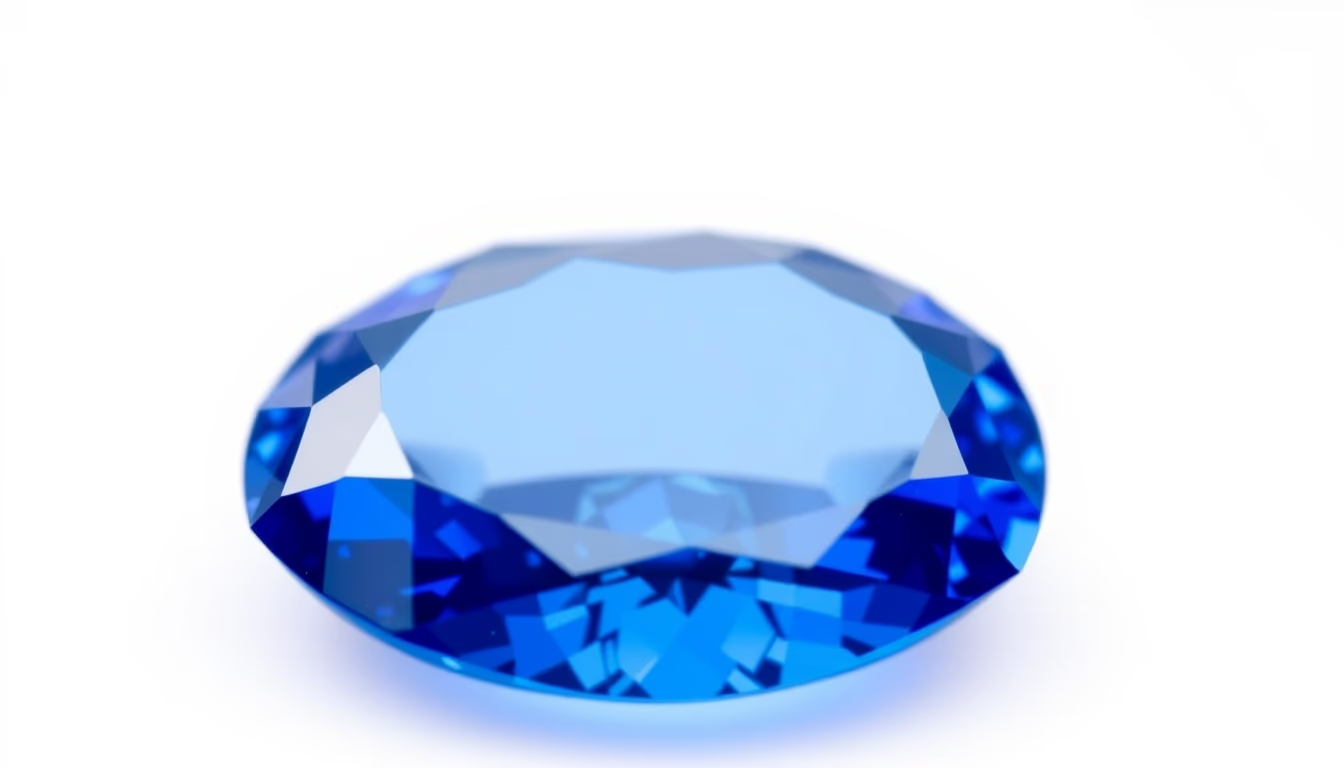
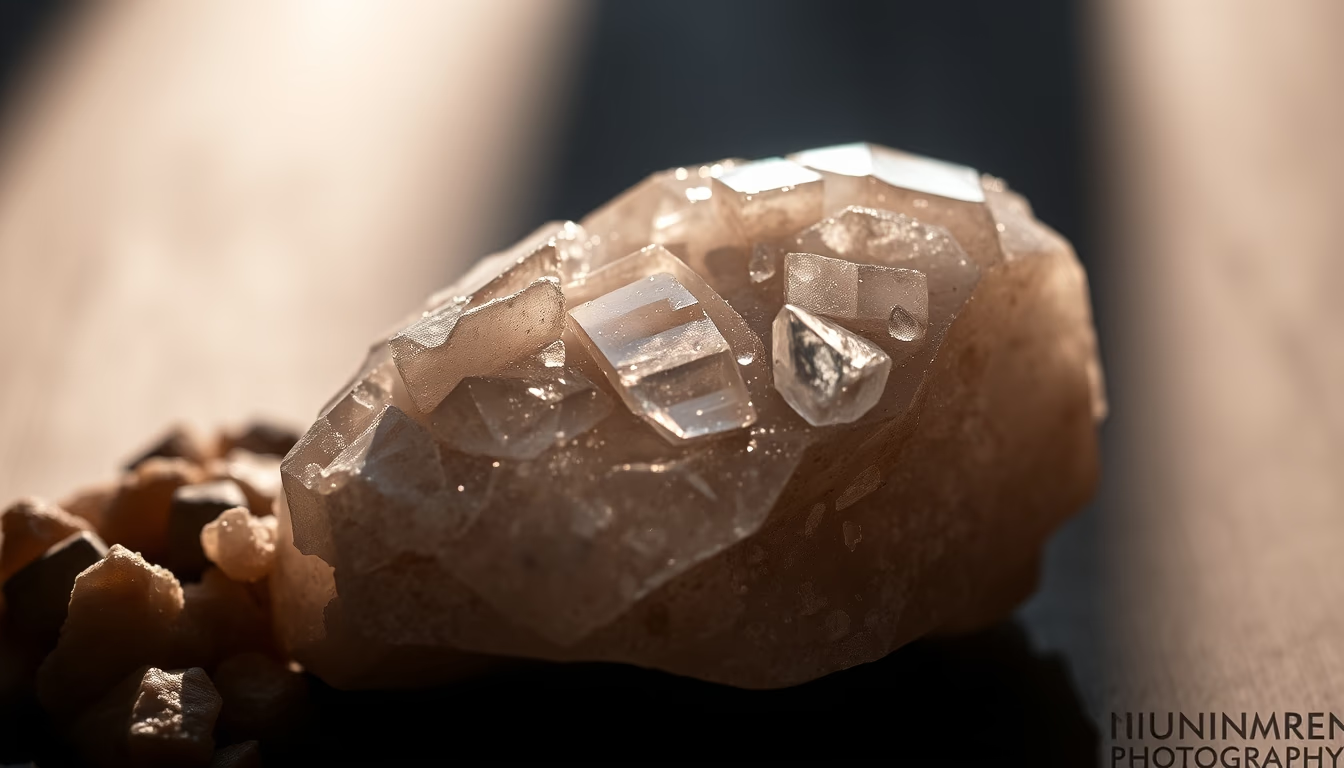
Azurite blue mineral
1344×768 · AVIF · CC BY 4.0
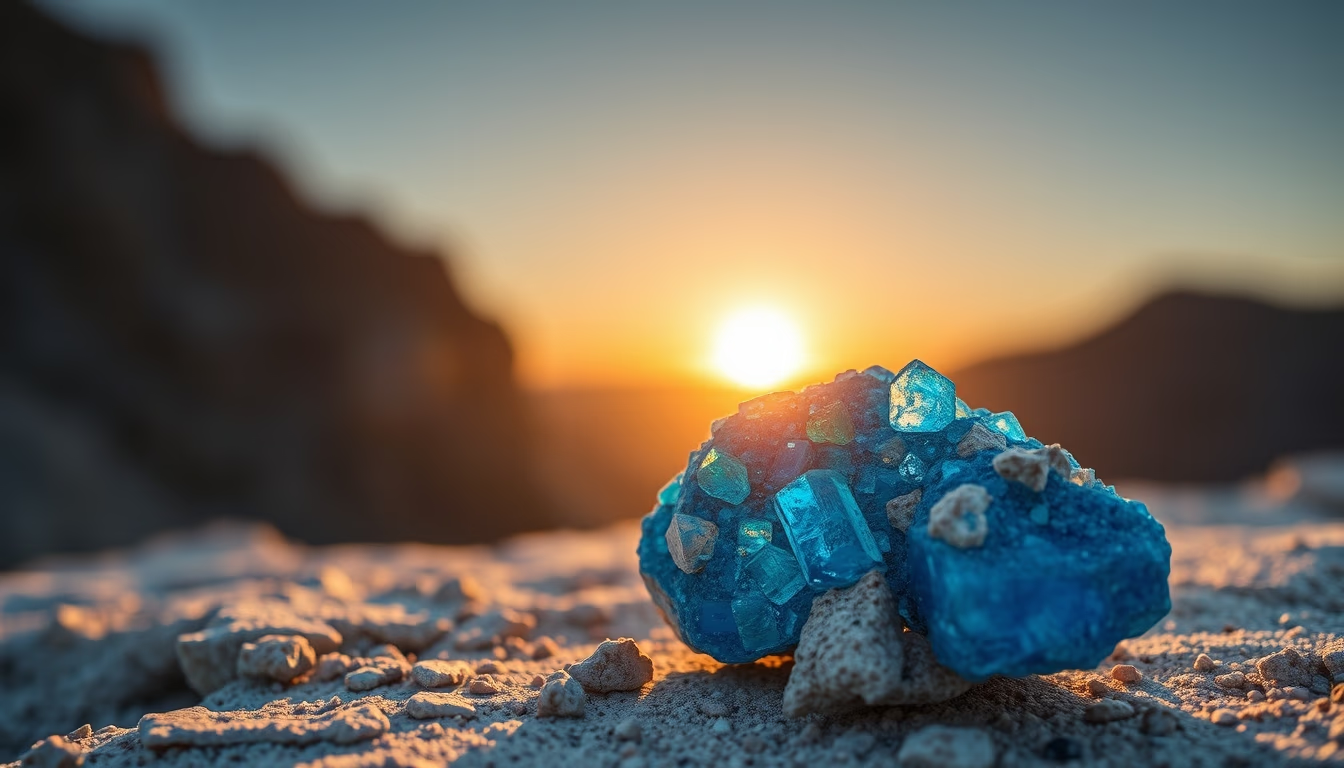
Azurite is a deep blue copper mineral, historically prized as a pigment and highly sought after by collectors.
About this subject
Azurite is a secondary copper mineral with the chemical formula Cu3(CO3)2(OH)2, renowned for its striking blue color ranging from light sky blue to deep indigo. It forms in the oxidized zones of copper ore deposits, often closely associated with malachite, a green mineral with a similar composition. Azurite has a hardness of 3.5 to 4 on the Mohs scale, making it relatively soft, and exhibits a vitreous to earthy luster.
Historically, azurite was extensively used as a pigment in paintings, particularly during the Renaissance. Ground and mixed with a binder, it yielded a vivid blue hue employed in frescoes, tempera, and manuscripts. Over time, the pigment tends to darken or turn greenish due to conversion into malachite. While its use as a pigment has declined, azurite remains an important copper ore in mining operations.
Notable deposits of azurite include the Bisbee mine in Arizona (USA), the Tsumeb mine in Namibia, and the Chessy locality in France. In Brazil, significant occurrences are found in Minas Gerais, such as the Córrego do Sítio Mine and the Pilar Mine, along with other areas hosting copper mineralization. Well-formed crystals and botryoidal aggregates are especially prized by mineral collectors.
An interesting aspect of azurite is its instability: when exposed to moisture and air, it can slowly convert into malachite, losing its blue color over time. Therefore, specimens require careful storage in a dry, dark environment. Azurite's softness also makes it prone to scratches and damage. Collectors highly value intact crystals with deep, uniform blue coloration.
Frequently Asked Questions
What is azurite used for?
Azurite is used as a copper ore, historically as a pigment for blue paint, and as a collector's gemstone. It is also occasionally used in jewelry, though it is relatively soft.
Where is azurite found in Brazil?
In Brazil, azurite is found mainly in Minas Gerais at mines such as Córrego do Sítio and Pilar, as well as in other copper-bearing regions in Rio Grande do Sul and Pará.
Does azurite turn into malachite?
Yes, azurite is unstable and, when exposed to moisture and air, can chemically alter into malachite, a green mineral. This transformation is known as pseudomorphosis.
Direct URL
https://pub-c7d6a6ea828543ac903a74a341ccb2e1.r2.dev/imagens/azurite-blue-mineral-travel-photography-p6.avifHow to credit
Include a visible link back to UtilizAí. Copy one of the snippets below:
<a href="https://xn--utiliza-eza.com/en/midia/imagens/azurite-blue-mineral-travel-photography-p6">Azurite blue mineral</a> by <a href="https://xn--utiliza-eza.com">UtilizAí</a>, licensed under <a href="https://creativecommons.org/licenses/by/4.0/">CC BY 4.0</a>.
[Azurite blue mineral](https://xn--utiliza-eza.com/en/midia/imagens/azurite-blue-mineral-travel-photography-p6) by [UtilizAí](https://xn--utiliza-eza.com), CC BY 4.0
License: CC-BY-4.0