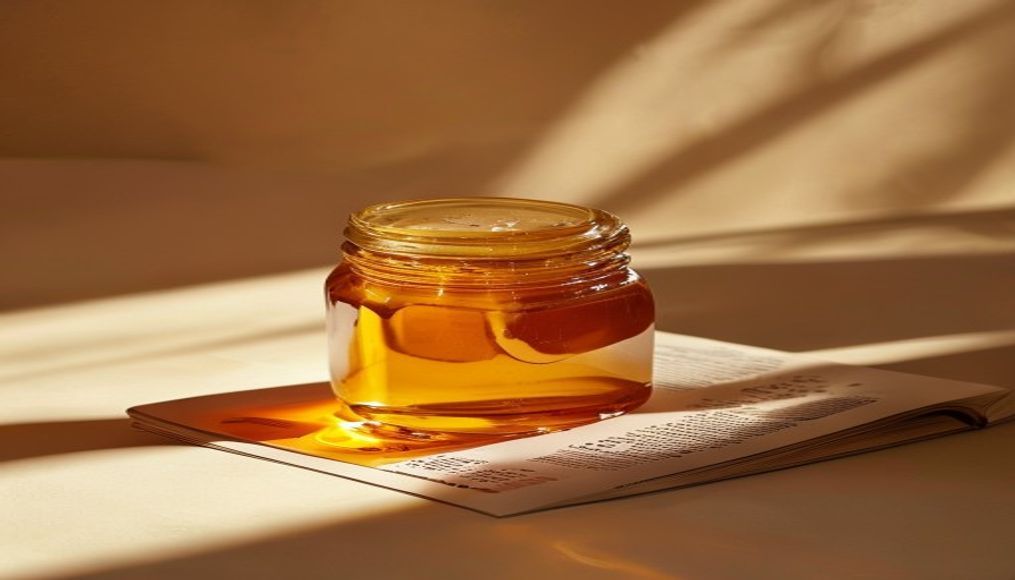
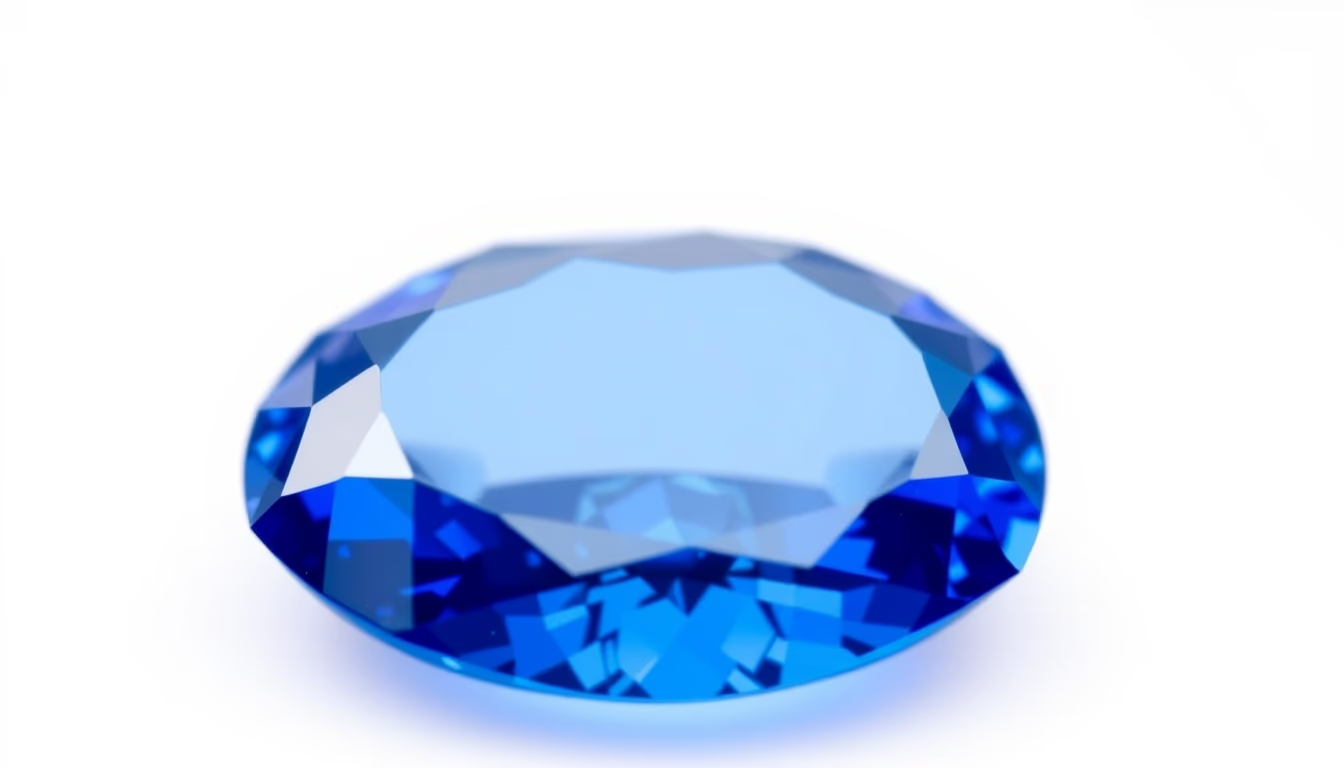
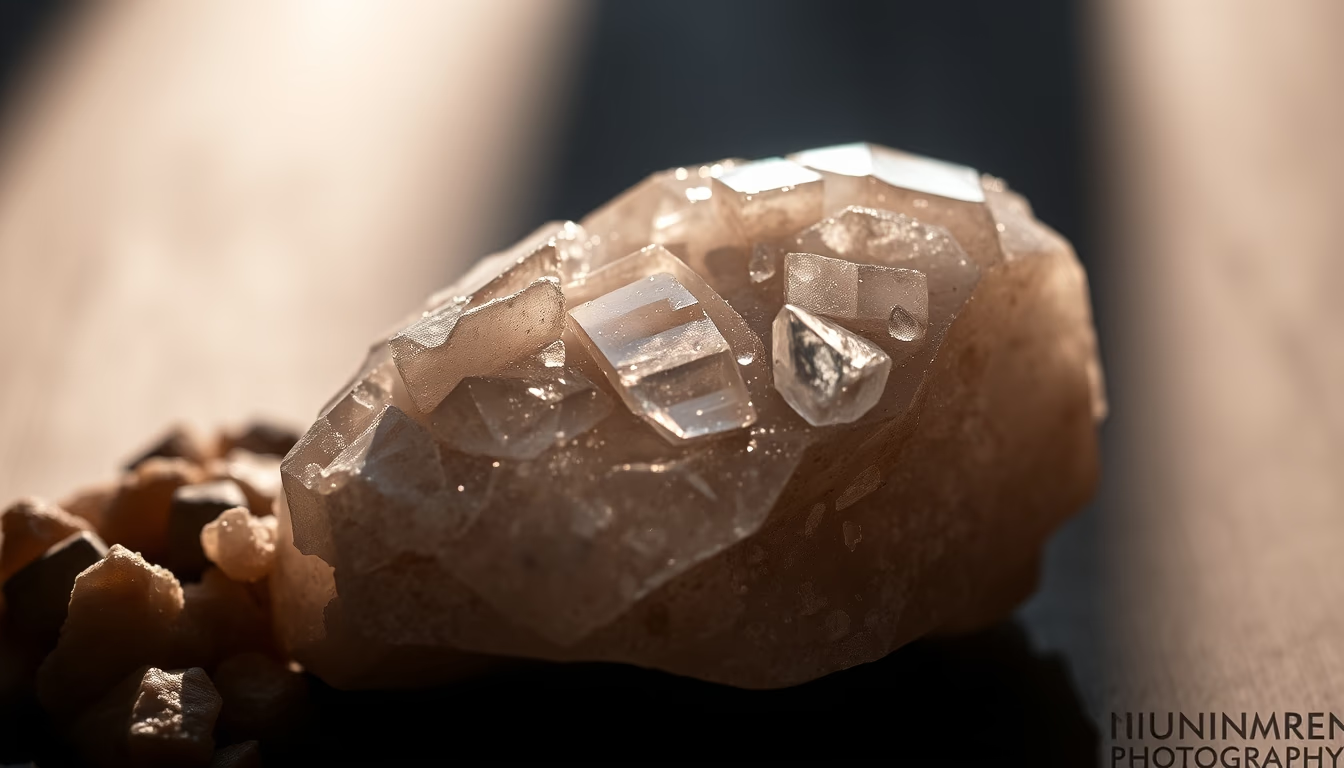
Azurite blue mineral
1344×768 · AVIF · CC BY 4.0
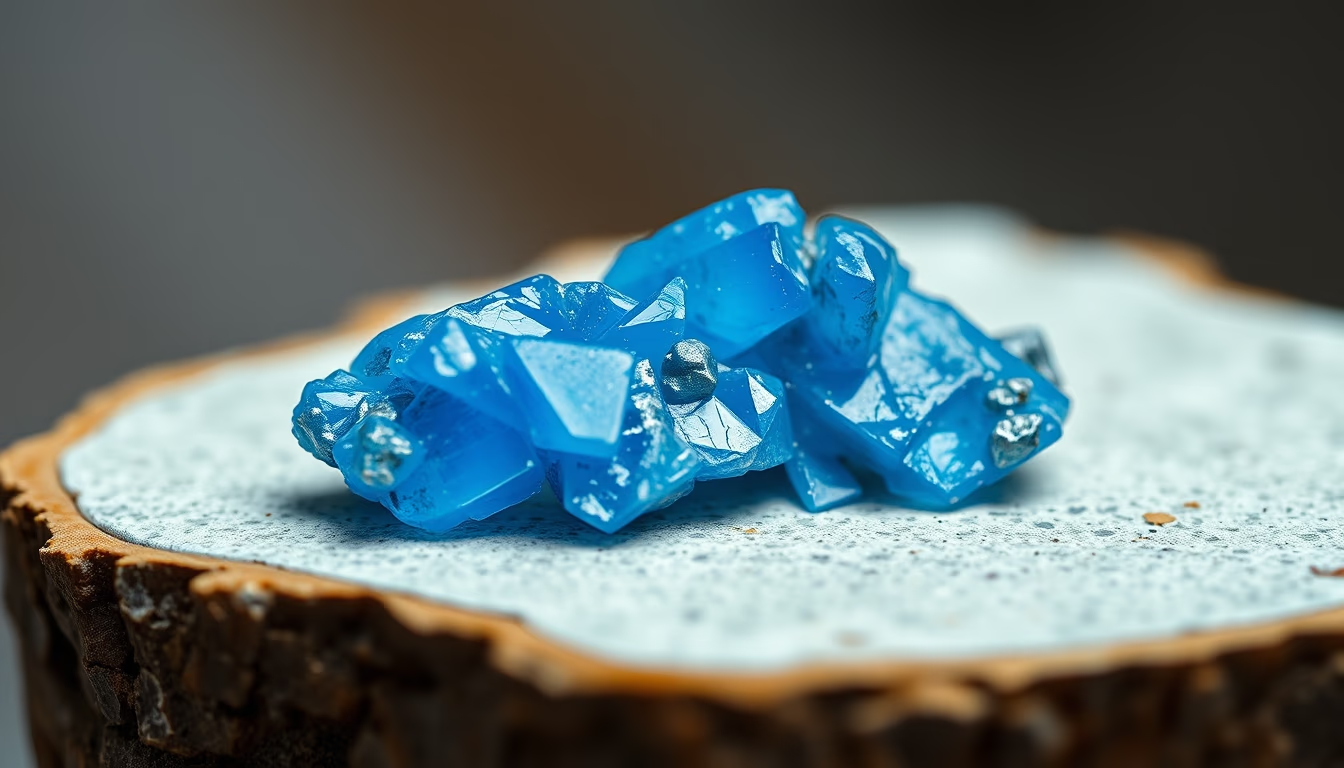
Azurite, a deep blue copper carbonate mineral, is prized for its beauty and historical use as a pigment.
About this subject
Azurite is a copper carbonate mineral with the chemical formula Cu3(CO3)2(OH)2, known for its deep blue color and vitreous luster. It crystallizes in the monoclinic system, forming prismatic crystals, radiating aggregates, or earthy masses. Its characteristic color ranges from light to dark blue, often with greenish tints due to intergrown malachite.
The mineral occurs in the oxidation zones of copper deposits, associated with other secondary minerals such as malachite, cuprite, and chrysocolla. Major localities include the Copper Queen mine in Arizona (USA), the Chevreuil mine in France, the Tsumeb mine in Namibia, and the Broken Hill mine in Australia. In Brazil, it is found in Minas Gerais and Rio Grande do Sul.
Historically, azurite was ground to produce a blue pigment used in Renaissance paintings, such as Giotto's frescoes. However, the pigment is unstable, as azurite reacts with moisture and carbon dioxide, slowly transforming into green malachite. Consequently, many artworks from that period show areas that have changed from blue to green. The name azurite derives from the Persian 'lazhward', meaning blue, the same root as 'lapis lazuli'.
Beyond ornamental use in jewelry and cabochons, azurite is prized by mineral collectors. When heated, it releases water and carbon dioxide, turning black. The species is considered semitoxic due to its copper content, requiring careful handling and avoiding ingestion.
Frequently Asked Questions
What is the difference between azurite and malachite?
Azurite is blue, while malachite is green. Both are copper carbonates, but azurite has formula Cu3(CO3)2(OH)2 and malachite Cu2CO3(OH)2. Azurite is unstable and can transform into malachite when exposed to moisture.
Is azurite toxic?
Yes, azurite contains copper, which can be toxic if ingested or inhaled as dust. Wash hands after handling and avoid breathing in particles. It is not recommended for jewelry that comes into contact with the mouth.
Where is azurite found in Brazil?
In Brazil, azurite is mainly found in Minas Gerais, near Ouro Preto, and in some mines in Rio Grande do Sul, such as the Mina do Camaquã.
Direct URL
https://pub-c7d6a6ea828543ac903a74a341ccb2e1.r2.dev/imagens/azurite-blue-mineral-film-grain-authentic-p10.avifHow to credit
Include a visible link back to UtilizAí. Copy one of the snippets below:
<a href="https://xn--utiliza-eza.com/en/midia/imagens/azurite-blue-mineral-film-grain-authentic-p10">Azurite blue mineral</a> by <a href="https://xn--utiliza-eza.com">UtilizAí</a>, licensed under <a href="https://creativecommons.org/licenses/by/4.0/">CC BY 4.0</a>.
[Azurite blue mineral](https://xn--utiliza-eza.com/en/midia/imagens/azurite-blue-mineral-film-grain-authentic-p10) by [UtilizAí](https://xn--utiliza-eza.com), CC BY 4.0
License: CC-BY-4.0