Aurora over snow lake
1344×768 · AVIF · CC BY 4.0
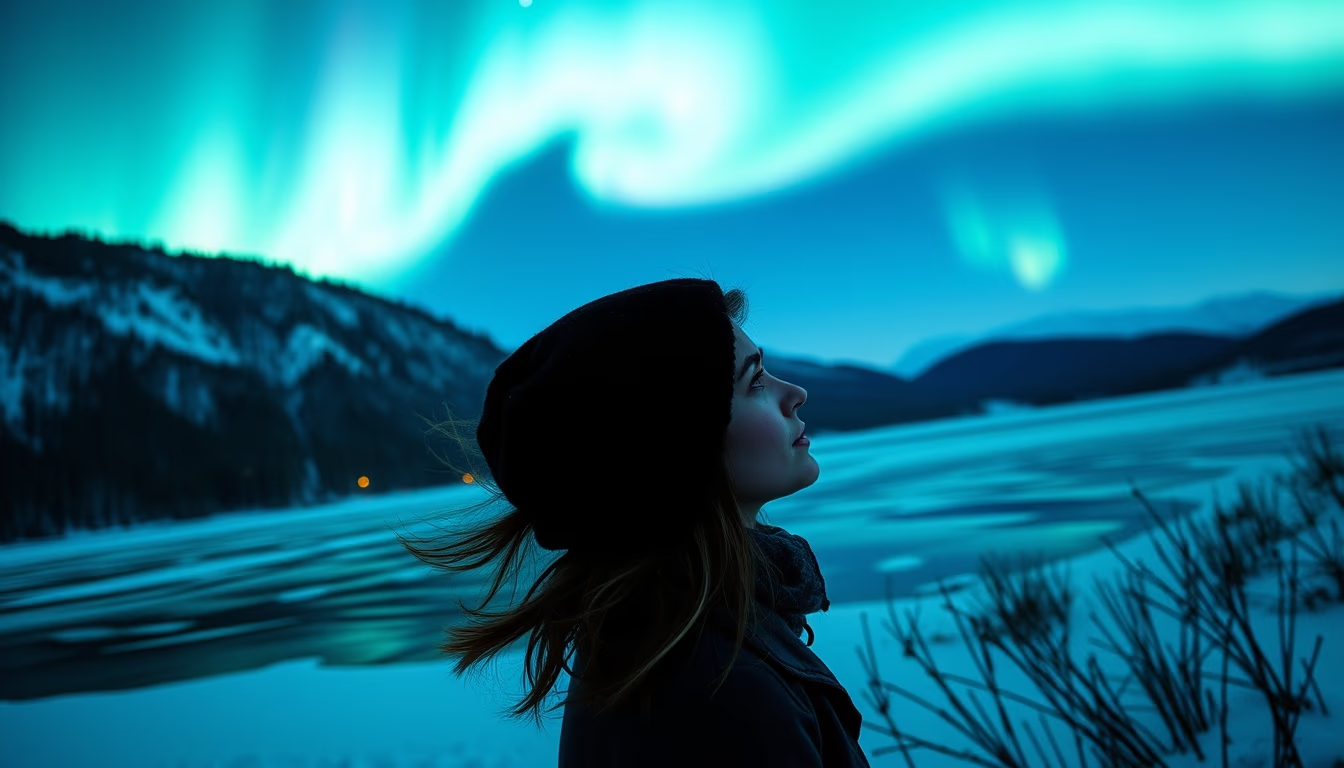
The northern lights dance over a frozen lake, a natural phenomenon occurring in polar regions when solar particles interact with Earth's atmosphere.
About this subject
The aurora borealis, also known as the northern lights, is a luminous display that occurs in high latitudes, typically between 60° and 75° north latitude. The phenomenon is caused by collisions between charged particles from the solar wind and gases in Earth's atmosphere, such as oxygen and nitrogen. These collisions excite the atoms, releasing energy as light and creating green, red, and purple curtains that sweep across the night sky. Frozen lakes, like those in Finnish Lapland, Alaska, or northern Canada, provide an ideal setting for observation: the icy, snow-covered surface reflects and intensifies the colors, producing a stunning visual effect.
Classic aurora destinations include Tromsø in Norway, Reykjavík in Iceland, and Yellowknife in Canada. The best season runs from September to March, when nights are long and dark. The presence of a frozen lake adds a sense of stillness and reflection, as the calm of the ice contrasts with the movement of the lights. Culturally, the Sami people of Scandinavia believed auroras were the souls of the dead, while Inuit Eskimos saw them as spirits playing in the sky. Scientifically, solar activity follows an 11-year cycle, with a peak expected in 2025, promising increased frequency and intensity of auroras.
To photograph auroras over a frozen lake, use a tripod, long exposures (5 to 30 seconds), and a camera with manual ISO adjustment. Capturing the reflection of the aurora on the ice can be achieved by including trees or mountains in the background for depth. Temperatures can drop drastically, so proper gear and clothing are essential. Additionally, applying some snow to the tripod legs helps stabilize it on slippery surfaces.
Frequently Asked Questions
What causes the aurora borealis?
The aurora borealis is caused by the interaction of solar wind, which carries charged particles, with Earth's magnetic field. These particles collide with oxygen and nitrogen atoms in the upper atmosphere, exciting them and causing them to emit light in green, red, and purple colors.
What is the best time to see auroras over frozen lakes?
The best time is during winter, from September to March, when nights are longest and darkest. Additionally, clear skies and sufficient solar activity, monitored by Kp indices, are needed.
Are there myths or legends associated with the aurora borealis?
Yes, many cultures have stories. The Sami people believed the lights were the souls of the deceased. The Inuit saw them as spirits playing, and some believed that whistling or clapping could bring them closer.
Direct URL
https://pub-c7d6a6ea828543ac903a74a341ccb2e1.r2.dev/imagens/aurora-over-snow-lake-studio-editorial-portrait-p5.avifHow to credit
Include a visible link back to UtilizAí. Copy one of the snippets below:
<a href="https://xn--utiliza-eza.com/en/midia/imagens/aurora-over-snow-lake-studio-editorial-portrait-p5">Aurora over snow lake</a> by <a href="https://xn--utiliza-eza.com">UtilizAí</a>, licensed under <a href="https://creativecommons.org/licenses/by/4.0/">CC BY 4.0</a>.
[Aurora over snow lake](https://xn--utiliza-eza.com/en/midia/imagens/aurora-over-snow-lake-studio-editorial-portrait-p5) by [UtilizAí](https://xn--utiliza-eza.com), CC BY 4.0
License: CC-BY-4.0