Aurora over snow lake
1344×768 · AVIF · CC BY 4.0
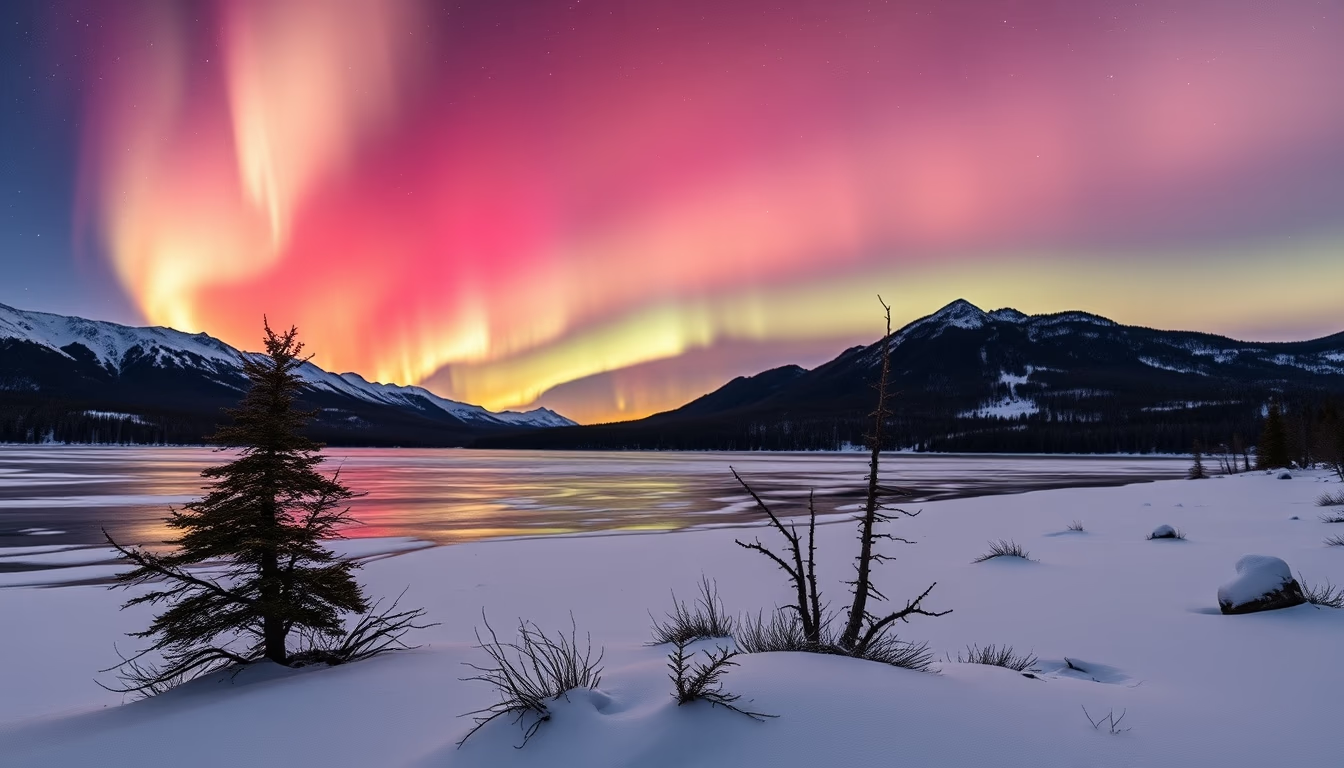
Aurora borealis over snow-covered lakes creates one of the most spectacular natural phenomena, combining colorful lights in the sky with breathtaking icy landscapes.
About this subject
The aurora borealis, also known as the northern lights, is a luminous phenomenon occurring in polar regions when charged solar wind particles interact with Earth's atmosphere. Guided by the magnetic field, these particles collide with oxygen and nitrogen molecules, producing vibrant colors that dance across the night sky. The most common colors are green (oxygen at low altitudes), red, and purple (oxygen and nitrogen at higher altitudes). Frozen lakes, such as those in northern Scandinavia, Canada, and Alaska, provide a perfect reflection of the lights, creating scenes of rare beauty.
To witness this spectacle, one must travel to latitudes between 60 and 75 degrees north during winter, when nights are long and dark. Popular destinations include Tromsø (Norway), Yellowknife (Canada), and Finnish Lapland. Solar activity follows an 11-year cycle, with the next peaks expected in 2025 and 2026, increasing chances of intense displays. Beyond science, auroras hold significant cultural importance for indigenous peoples like the Sami, who viewed them as spirits or omens.
Snow-covered lakes, often called ice lakes, are common in subarctic and arctic regions during winter. Ice thickness can exceed one meter, allowing activities such as walking and ice fishing. The combination of auroras and frozen lakes is particularly photogenic but requires proper gear for extreme cold and long exposures. Light pollution is a challenge, so remote areas are preferred. With luck and clear skies, the experience is unforgettable.
Frequently Asked Questions
What causes the colors of the aurora borealis?
The colors are determined by atmospheric gases and the altitude of the collision. Oxygen at low altitudes (around 100 km) produces green, while at higher altitudes (above 200 km) it creates red. Nitrogen contributes bluish and purple tones.
What is the best time to see auroras over frozen lakes?
The ideal time is between September and March in the Northern Hemisphere, during local winter when nights are longest and darkest. January and February typically have higher activity and clearer skies.
Can the aurora borealis be seen in Brazil?
No. The phenomenon occurs only in polar regions above 60 degrees latitude. Only extreme solar storms can trigger auroras at lower latitudes, but this is extremely rare in Brazil.
Direct URL
https://pub-c7d6a6ea828543ac903a74a341ccb2e1.r2.dev/imagens/aurora-over-snow-lake-documentary-photography-p3.avifHow to credit
Include a visible link back to UtilizAí. Copy one of the snippets below:
<a href="https://xn--utiliza-eza.com/en/midia/imagens/aurora-over-snow-lake-documentary-photography-p3">Aurora over snow lake</a> by <a href="https://xn--utiliza-eza.com">UtilizAí</a>, licensed under <a href="https://creativecommons.org/licenses/by/4.0/">CC BY 4.0</a>.
[Aurora over snow lake](https://xn--utiliza-eza.com/en/midia/imagens/aurora-over-snow-lake-documentary-photography-p3) by [UtilizAí](https://xn--utiliza-eza.com), CC BY 4.0
License: CC-BY-4.0





