Aurora borealis green sky
1344×768 · AVIF · CC BY 4.0
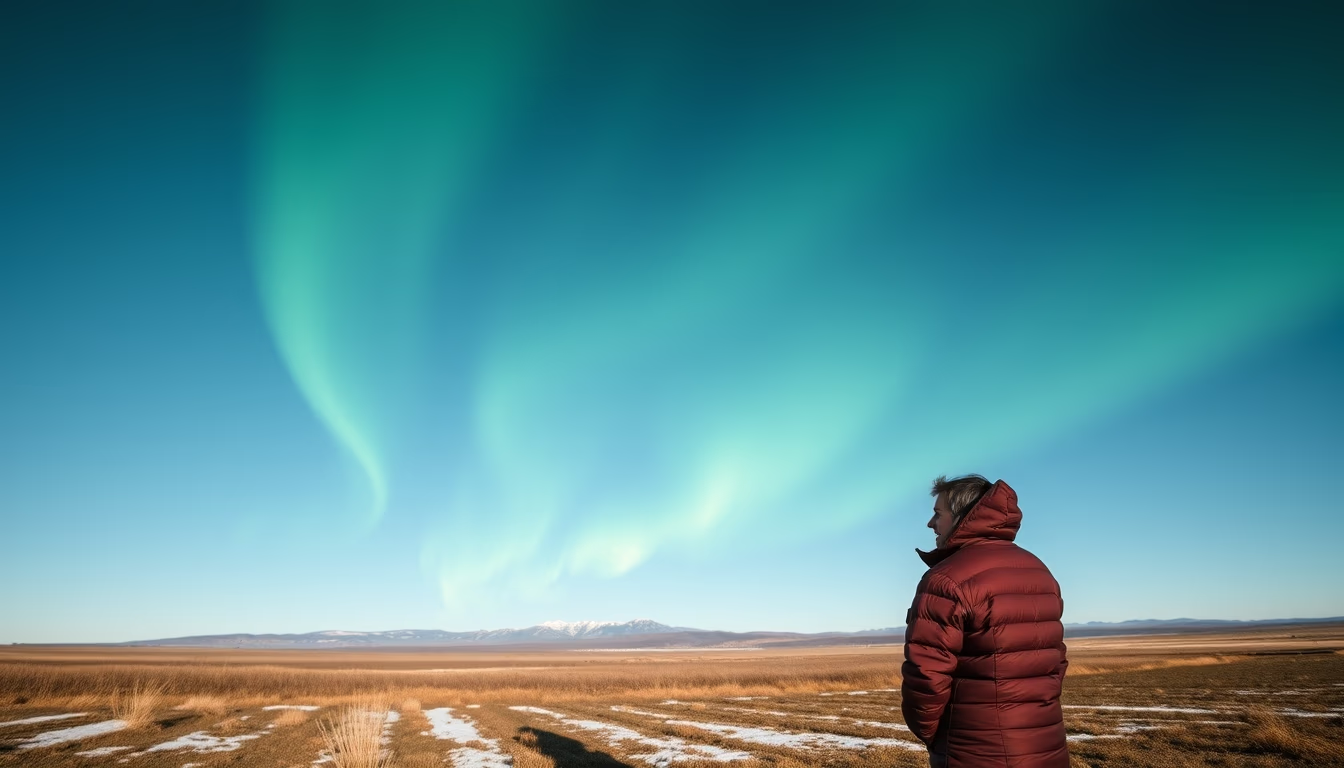
The aurora borealis is a natural light display in the sky, predominantly seen in polar regions, caused by solar particles interacting with Earth's magnetic field.
About this subject
The aurora borealis, also known as the northern lights, is a natural optical phenomenon that occurs when charged particles from the solar wind collide with Earth's atmosphere. These particles excite oxygen and nitrogen molecules, which emit light as they return to their ground state. The most common color, green, is produced by oxygen at altitudes between 100 and 300 km. At higher altitudes, oxygen emits red light, while nitrogen can produce blue or purple hues.
Auroras are most frequent near the magnetic poles, in regions such as Norway, Sweden, Finland, Canada, Alaska, and Iceland. The best time to observe them in the Northern Hemisphere is between September and March, during long, dark nights. Solar activity follows an approximately 11-year cycle, with peaks that increase the likelihood of auroras. The next peak is expected around 2025-2026, which should provide more frequent and intense sightings.
Culturally, the aurora borealis has inspired legends and mythologies throughout history. Vikings believed they were reflections from the shields of the Valkyries. The term 'aurora borealis' was coined by Galileo Galilei in 1619, honoring the Roman goddess of dawn, Aurora, and the north wind, Boreas. Today, scientists monitor solar activity using satellites to predict geomagnetic storms and issue aurora alerts.
Interestingly, the phenomenon also occurs in the Southern Hemisphere, where it is called the aurora australis. Observers can use real-time aurora forecast apps to plan their viewings. While auroras are most famous at high latitudes, extreme solar storms can make them visible in more southern regions, as happened in historical events.
Frequently Asked Questions
What is the best time to see the aurora borealis?
The best time is during winter in the Northern Hemisphere, from September to March, with long, dark nights. The peak of solar activity in 2025-2026 may provide more sightings.
Why is the aurora borealis green?
The green color is produced by excited oxygen molecules at altitudes between 100 and 300 km. At higher altitudes, oxygen emits red light, and nitrogen produces blue or purple.
Is the aurora borealis dangerous?
No, the aurora itself is harmless. However, intense geomagnetic storms can affect communication systems and power grids, but the auroras are safe to observe.
Direct URL
https://pub-c7d6a6ea828543ac903a74a341ccb2e1.r2.dev/imagens/aurora-borealis-green-sky-documentary-photography-p6.avifHow to credit
Include a visible link back to UtilizAí. Copy one of the snippets below:
<a href="https://xn--utiliza-eza.com/en/midia/imagens/aurora-borealis-green-sky-documentary-photography-p6">Aurora borealis green sky</a> by <a href="https://xn--utiliza-eza.com">UtilizAí</a>, licensed under <a href="https://creativecommons.org/licenses/by/4.0/">CC BY 4.0</a>.
[Aurora borealis green sky](https://xn--utiliza-eza.com/en/midia/imagens/aurora-borealis-green-sky-documentary-photography-p6) by [UtilizAí](https://xn--utiliza-eza.com), CC BY 4.0
License: CC-BY-4.0