Atomic clock laboratory
1344×768 · AVIF · CC BY 4.0
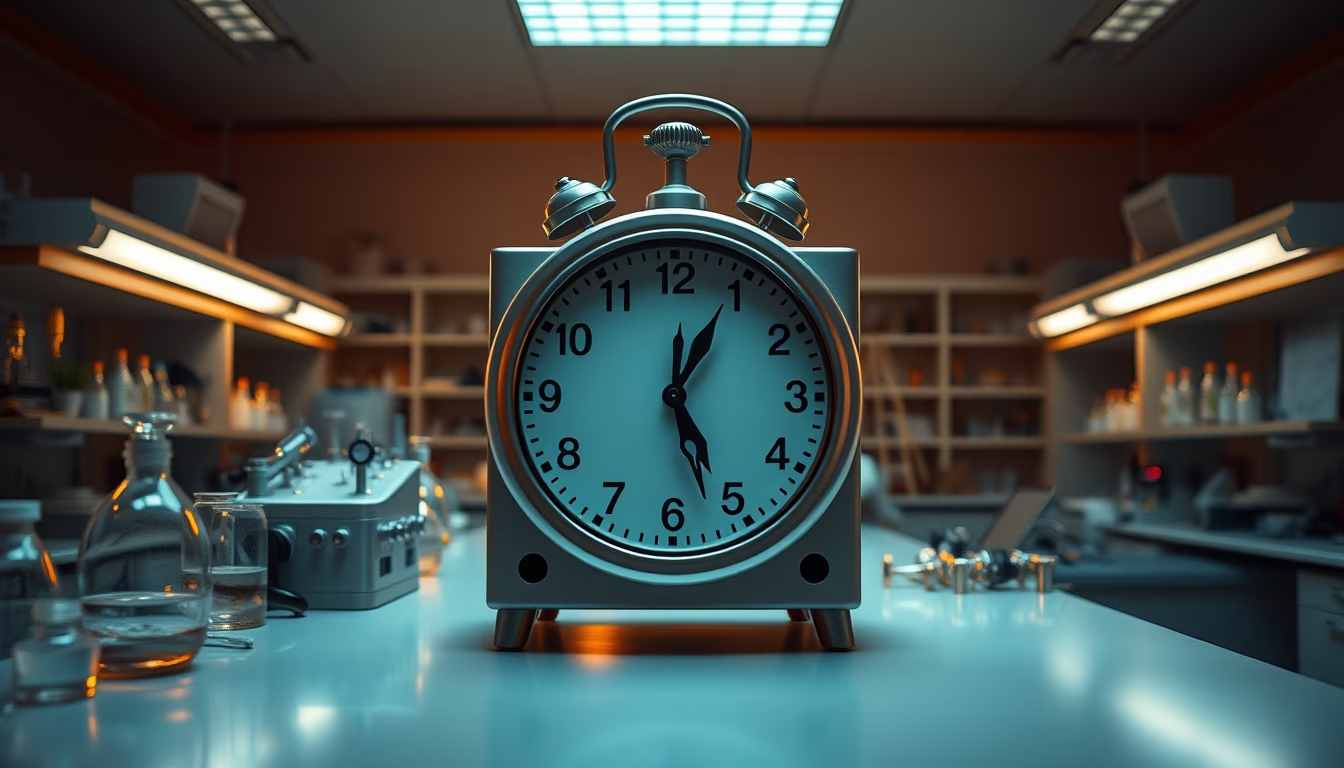
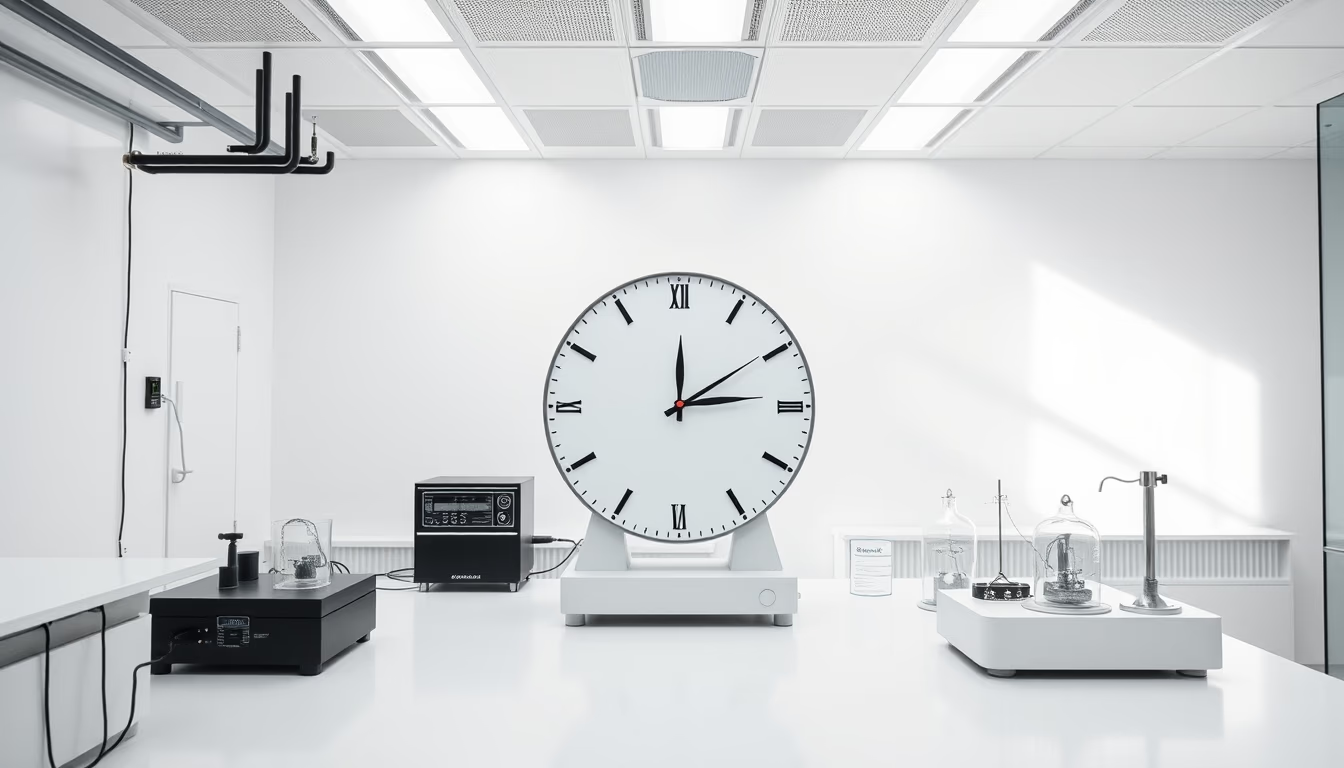
An atomic clock laboratory houses precision instruments that set International Atomic Time, the foundation for navigation systems and telecommunications.
About this subject
An atomic clock is the most precise timekeeping device ever built, using energy transitions in atoms to measure time. The basic principle involves absorbing microwave or optical radiation by atoms, usually cesium or rubidium, locking an oscillator to the exact frequency of that transition. This technique allows these clocks to lose less than one second over millions of years.
The first atomic clock was built in 1949 at the US National Institute of Standards and Technology (NIST), based on ammonia. Today, the NIST-F2, a cesium fountain clock, defines the International System (SI) second. These instruments are essential for GPS operation; each satellite carries multiple atomic clocks. Without relativistic corrections, signals would be offset by microseconds, causing location errors of kilometers.
Laboratories such as PTB in Germany, NICT in Japan, and the US Naval Observatory maintain clocks that contribute to International Atomic Time (TAI). Beyond practical applications, atomic clocks test fundamental theories like general relativity and variation of physical constants. Recently, optical lattice clocks using strontium or ytterbium have achieved even higher precision, capable of detecting Earth's gravity variations at centimeter scales.
Frequently Asked Questions
How does an atomic clock work?
An atomic clock measures time by counting the exact frequency of radiation emitted or absorbed by atoms as they change energy levels. For instance, the cesium-133 atom emits radiation at 9,192,631,770 Hz, which defines the second.
How accurate is an atomic clock?
The best cesium atomic clocks have an accuracy of about 10^-16, meaning they lose less than one second in 30 million years. Newer optical clocks are even more precise, with uncertainties of 10^-18, equivalent to one second over the age of the universe.
Why are atomic clocks important for GPS?
Each GPS satellite carries atomic clocks to synchronize signals. Without them, position determination would be inaccurate. Moreover, general and special relativity cause time differences between satellites and Earth, which must be corrected for GPS to work properly.
Direct URL
https://pub-c7d6a6ea828543ac903a74a341ccb2e1.r2.dev/imagens/atomic-clock-laboratory-cinematic-wide-shot-p8.avifHow to credit
Include a visible link back to UtilizAí. Copy one of the snippets below:
<a href="https://xn--utiliza-eza.com/en/midia/imagens/atomic-clock-laboratory-cinematic-wide-shot-p8">Atomic clock laboratory</a> by <a href="https://xn--utiliza-eza.com">UtilizAí</a>, licensed under <a href="https://creativecommons.org/licenses/by/4.0/">CC BY 4.0</a>.
[Atomic clock laboratory](https://xn--utiliza-eza.com/en/midia/imagens/atomic-clock-laboratory-cinematic-wide-shot-p8) by [UtilizAí](https://xn--utiliza-eza.com), CC BY 4.0
License: CC-BY-4.0