Astronaut spacewalk earth view
1344×768 · AVIF · CC BY 4.0
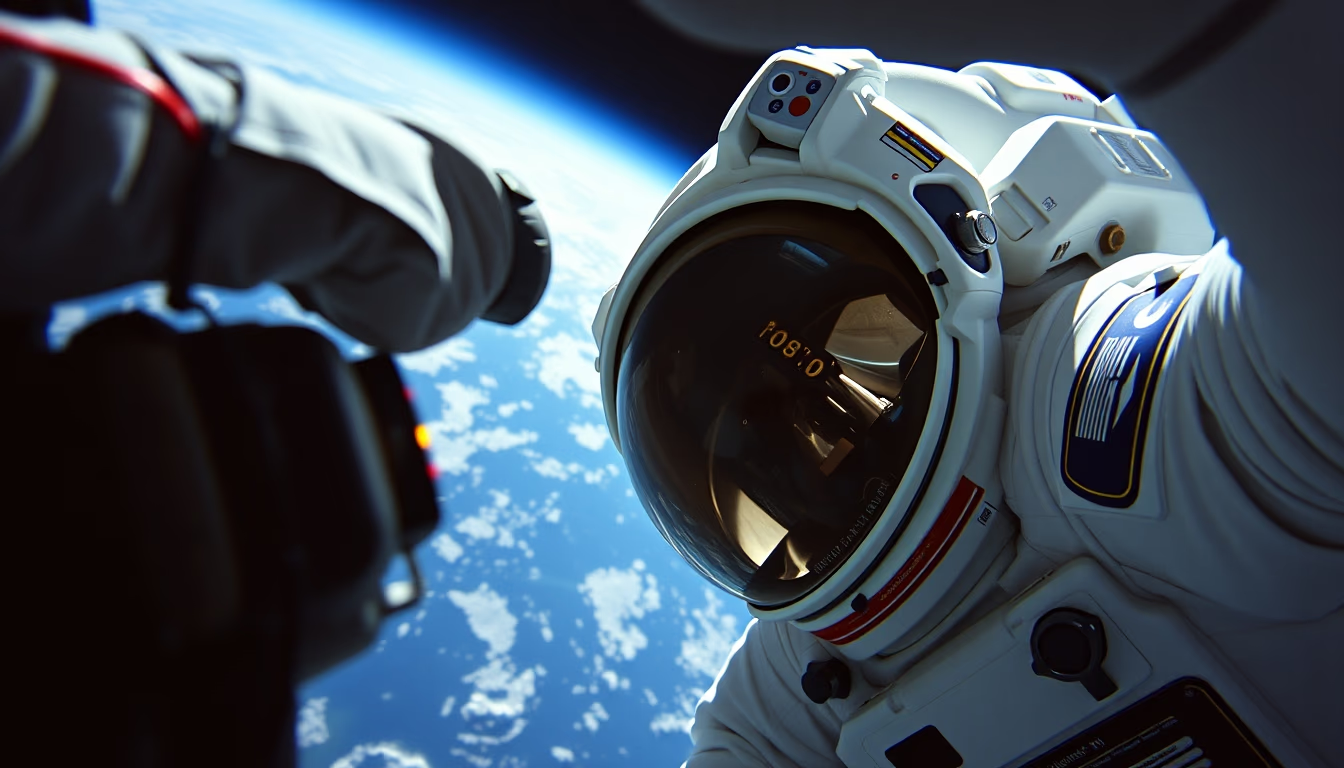
Astronauts on spacewalks float above Earth, performing maintenance and experiments on the International Space Station.
About this subject
A spacewalk, or extravehicular activity (EVA), is one of the most challenging and emblematic tasks of space exploration. During these missions, astronauts exit the safety of their spacecraft or space station to perform repairs, install equipment, or conduct scientific experiments. The first spacewalk was conducted by Soviet cosmonaut Alexei Leonov in 1965 aboard Voskhod 2. Since then, hundreds of EVAs have been performed, primarily on the International Space Station (ISS), which orbits Earth at about 400 kilometers altitude.
Space suits used in EVAs are miniature spacecraft, providing oxygen, thermal regulation, and protection from micrometeoroids. The American Extravehicular Mobility Unit (EMU) weighs approximately 130 kilograms and allows up to 8 hours of continuous work. Every EVA is meticulously planned with checklists and simulations in neutral buoyancy pools, such as NASA's Neutral Buoyancy Laboratory, which replicates the microgravity environment.
The view of Earth during a spacewalk is described by astronauts as a transformative experience. The planet appears as a blue-and-white sphere, with details such as oceans, continents, and atmospheric layers. This unique perspective, known as the Overview Effect, often leads to reflections on Earth's fragility and interconnectedness. Beyond technical work, EVAs also serve to test new technologies and procedures for future missions to the Moon and Mars.
Interestingly, not all spacewalks are performed by professional astronauts. In 2020, a SpaceX Crew Dragon mission carried private space tourists that included a brief assisted extravehicular activity. The frequency of EVAs has increased with the continuous operation of the ISS and the development of commercial space stations, making these activities more routine yet still dangerous and demanding.
Frequently Asked Questions
How long does a typical spacewalk last?
A typical spacewalk lasts between 6 and 8 hours, depending on the complexity of tasks and spacesuit limits. The current record is 8 hours and 56 minutes, set by NASA astronauts in 2001.
Do astronauts feel cold during an EVA?
Spacesuits are designed to protect astronauts from extreme temperatures, ranging from -157°C in shadow to 121°C in sunlight. The suit maintains a comfortable internal temperature, but hands and feet can get cold during prolonged exposure.
How many spacewalks have been conducted?
As of 2025, over 500 spacewalks have been performed, mostly on the International Space Station. The first was in 1965, and the frequency has increased with ongoing ISS maintenance.
Direct URL
https://pub-c7d6a6ea828543ac903a74a341ccb2e1.r2.dev/imagens/astronaut-spacewalk-earth-view-lo-fi-disposable-camera-p4.avifHow to credit
Include a visible link back to UtilizAí. Copy one of the snippets below:
<a href="https://xn--utiliza-eza.com/en/midia/imagens/astronaut-spacewalk-earth-view-lo-fi-disposable-camera-p4">Astronaut spacewalk earth view</a> by <a href="https://xn--utiliza-eza.com">UtilizAí</a>, licensed under <a href="https://creativecommons.org/licenses/by/4.0/">CC BY 4.0</a>.
[Astronaut spacewalk earth view](https://xn--utiliza-eza.com/en/midia/imagens/astronaut-spacewalk-earth-view-lo-fi-disposable-camera-p4) by [UtilizAí](https://xn--utiliza-eza.com), CC BY 4.0
License: CC-BY-4.0