Astronaut spacewalk earth view
1344×768 · AVIF · CC BY 4.0
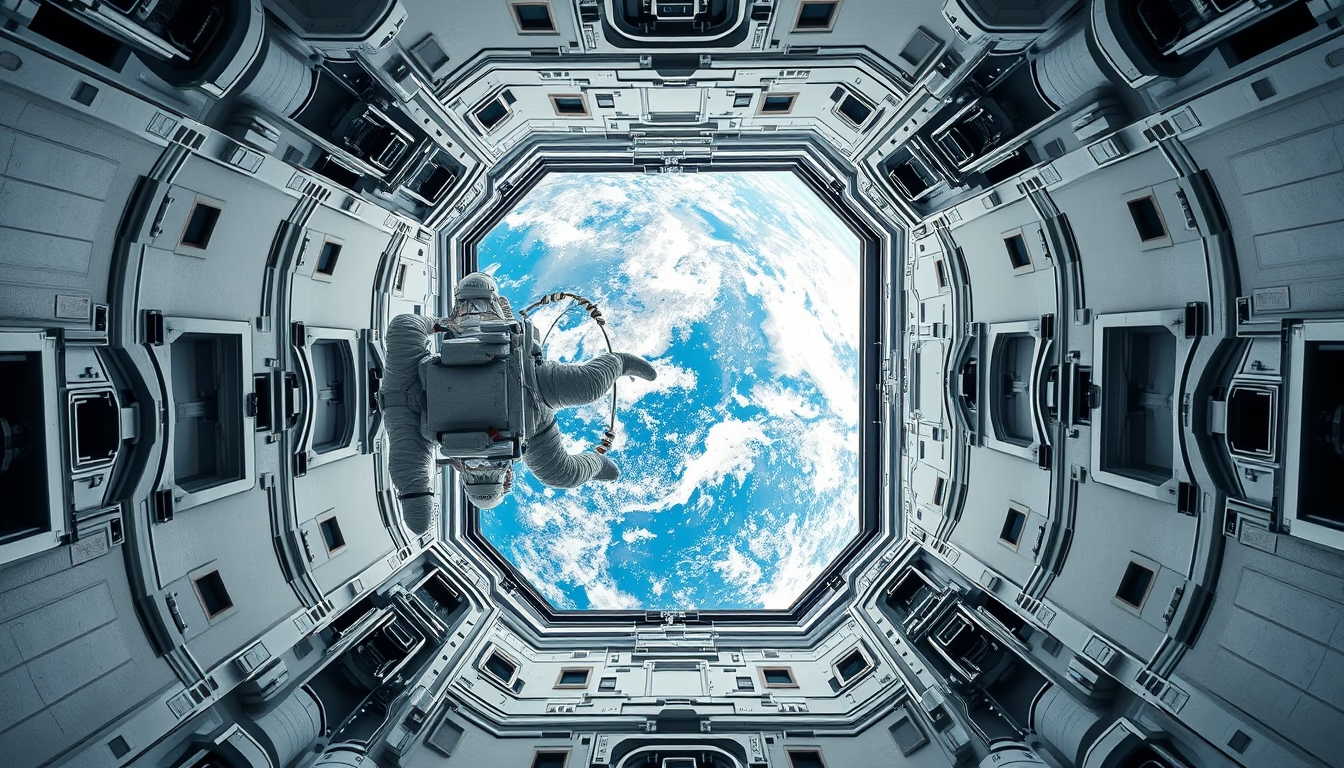
Astronaut performing a spacewalk with Earth in the background: the complexity of extravehicular activities on the International Space Station.
About this subject
A spacewalk, or extravehicular activity (EVA), is one of the riskiest and most technically demanding operations in space exploration. The depicted astronaut is outside the International Space Station (ISS), wearing NASA’s Extravehicular Mobility Unit (EMU) suit, which provides oxygen, pressurization, and protection against radiation and micrometeoroids. The ISS orbits Earth at an altitude of approximately 400 km, traveling at about 28,000 km/h, offering a panoramic view of the planet, including oceans, continents, and atmospheric layers such as the troposphere and stratosphere.
The first spacewalk was performed by Soviet cosmonaut Alexei Leonov in 1965. Since then, over 300 EVAs have been conducted, primarily for ISS maintenance, experiment installation, and repairs. A single EVA can last 5 to 8 hours, requiring intense physical and mental preparation. The spacesuit is a vehicle in itself, with communication systems, thermal control, and safety thrusters to prevent the astronaut from drifting away from the station.
The view of Earth during an EVA is considered one of the most transformative experiences for astronauts. The "overview effect" is often described: a shift in perspective upon seeing the planet without borders, fragile and immersed in the darkness of space. Around 240 astronauts from different nationalities have performed EVAs, contributing to scientific advances such as the installation of the Alpha Magnetic Spectrometer (AMS) and the maintenance of solar arrays.
Interestingly, EVAs also face challenges like space debris and extreme temperature differences between the sunlit side (about 120 °C) and the shadowed side (-150 °C). Helmet-mounted cameras record every movement, generating iconic images that blend space architecture (the ISS structure) with the grandeur of Earth. This specific photograph highlights not only the human achievement but the engineering behind space exploration.
Frequently Asked Questions
What is a spacewalk (EVA)?
A spacewalk, or extravehicular activity (EVA), is when an astronaut exits a spacecraft to perform external tasks like repairs or experiments, wearing a specialized spacesuit.
How long does a typical spacewalk last?
The average EVA lasts 5 to 8 hours, though some have extended up to 9 hours. Duration is limited by spacesuit resources such as oxygen and battery life.
Why is the view of Earth during a spacewalk so impactful?
Astronauts report the 'overview effect', a cognitive shift from seeing Earth as a whole, without borders, highlighting its fragility and unity, often leading to increased environmental awareness.
Direct URL
https://pub-c7d6a6ea828543ac903a74a341ccb2e1.r2.dev/imagens/astronaut-spacewalk-earth-view-architectural-photography-p2.avifHow to credit
Include a visible link back to UtilizAí. Copy one of the snippets below:
<a href="https://xn--utiliza-eza.com/en/midia/imagens/astronaut-spacewalk-earth-view-architectural-photography-p2">Astronaut spacewalk earth view</a> by <a href="https://xn--utiliza-eza.com">UtilizAí</a>, licensed under <a href="https://creativecommons.org/licenses/by/4.0/">CC BY 4.0</a>.
[Astronaut spacewalk earth view](https://xn--utiliza-eza.com/en/midia/imagens/astronaut-spacewalk-earth-view-architectural-photography-p2) by [UtilizAí](https://xn--utiliza-eza.com), CC BY 4.0
License: CC-BY-4.0





