Asteroid surface rocky
1344×768 · AVIF · CC BY 4.0
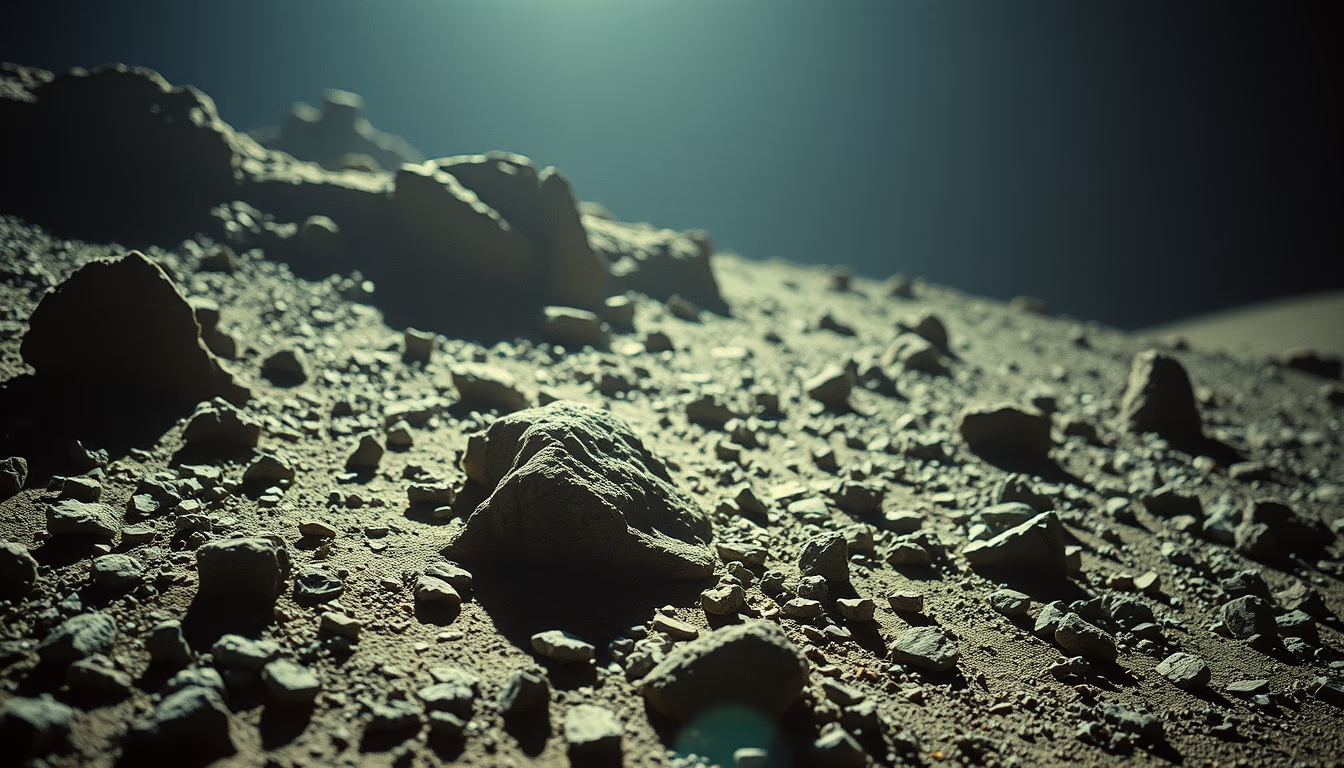
Rocky asteroid surfaces reveal craters, regolith, and primordial minerals from the early Solar System.
About this subject
The surface of an asteroid is typically covered by regolith, a layer of dust and rocky fragments from continuous impacts. This material ranges from fine grains to boulders several meters across. Rocky asteroids, such as S-type (silicaceous), have surfaces rich in olivine and pyroxene, common minerals in igneous rocks. C-type (carbonaceous) asteroids contain carbon and organic compounds, making them darker. The surface texture depends on collision history: older asteroids tend to have thicker regolith and fewer visible craters due to space weathering.
Impact craters are prominent features on asteroid surfaces. The absence of atmosphere and erosion preserves these features for billions of years, offering clues about Solar System history. Missions like Hayabusa2 (Ryugu) and OSIRIS-REx (Bennu) revealed surprisingly rough surfaces with numerous loose rocks and little fine dust. On Bennu, rock density was higher than expected, indicating the asteroid is a rubble pile with low internal cohesion.
Beyond scientific value, rocky asteroid surfaces are targets for space mining. Minerals such as nickel, iron, and platinum could be extracted in the future. Understanding surface topography and composition is essential for planning landing and sample-collection missions. The porosity of regolith also affects how asteroids respond to solar heating and radiation, influencing their rotation and orbit.
Interestingly, some asteroids display surface colors ranging from red to blue due to space weathering, which alters mineral reflectance through exposure to solar wind and micrometeorites. This phenomenon complicates remote composition identification. Studies of samples returned by recent missions are helping calibrate these observations.
Frequently Asked Questions
What is the composition of rocky asteroid surfaces?
Rocky asteroids (S-type) are composed mainly of silicates like olivine and pyroxene, along with metals such as iron and nickel. C-type asteroids contain carbon and organic compounds.
Why do asteroid surfaces have craters?
Craters form from meteoroid impacts. With no atmosphere or significant erosion, these features persist for billions of years, recording the collision history of the Solar System.
What is regolith and why is it important?
Regolith is the layer of dust and rock fragments covering asteroid surfaces. It holds information about the body's composition and history, and is a potential resource for space mining.
Direct URL
https://pub-c7d6a6ea828543ac903a74a341ccb2e1.r2.dev/imagens/asteroid-surface-rocky-lo-fi-disposable-camera-p3.avifHow to credit
Include a visible link back to UtilizAí. Copy one of the snippets below:
<a href="https://xn--utiliza-eza.com/en/midia/imagens/asteroid-surface-rocky-lo-fi-disposable-camera-p3">Asteroid surface rocky</a> by <a href="https://xn--utiliza-eza.com">UtilizAí</a>, licensed under <a href="https://creativecommons.org/licenses/by/4.0/">CC BY 4.0</a>.
[Asteroid surface rocky](https://xn--utiliza-eza.com/en/midia/imagens/asteroid-surface-rocky-lo-fi-disposable-camera-p3) by [UtilizAí](https://xn--utiliza-eza.com), CC BY 4.0
License: CC-BY-4.0