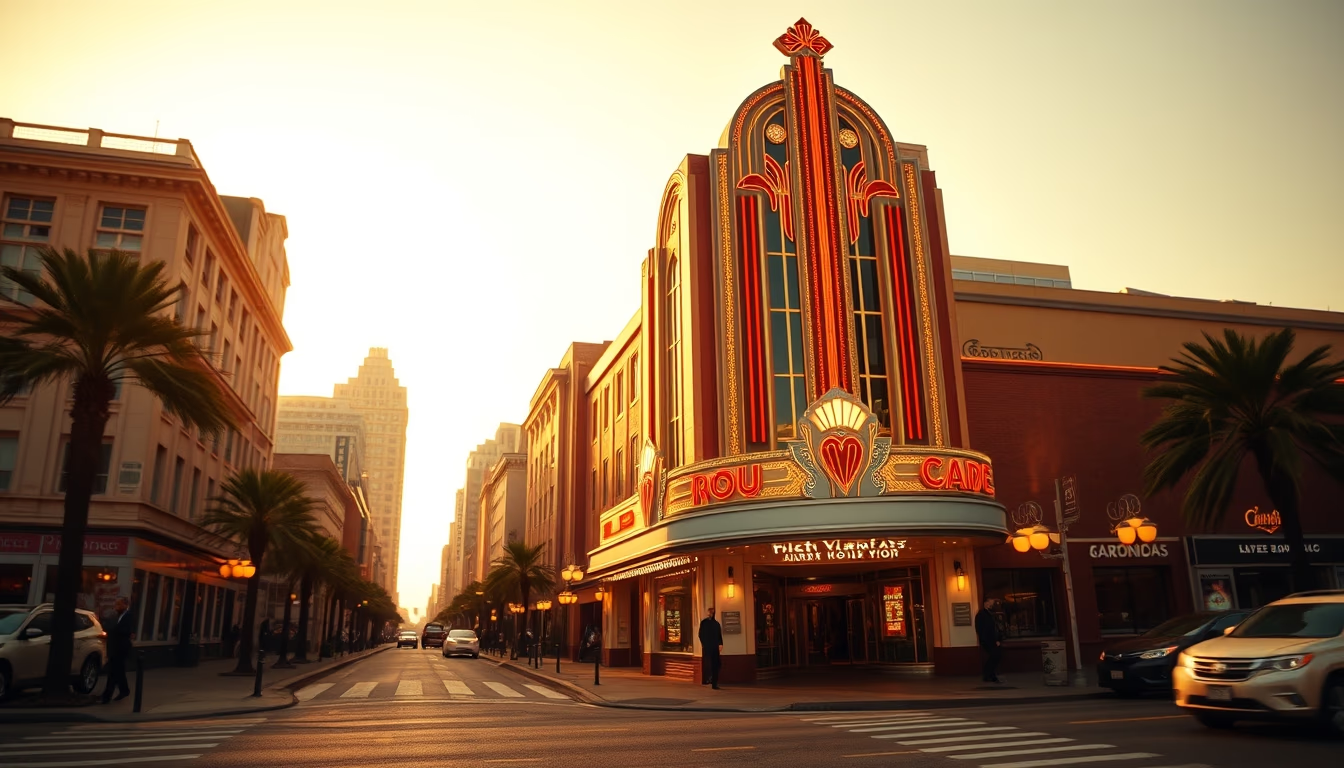
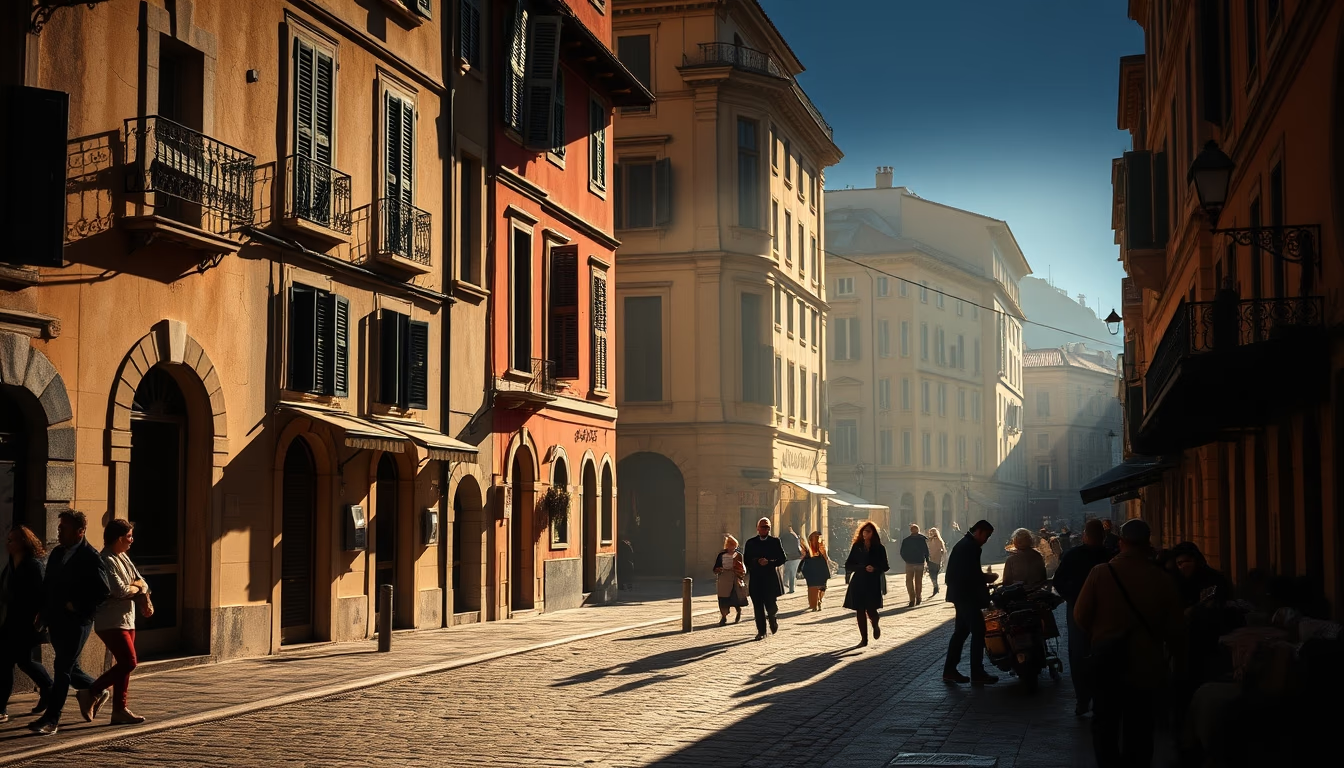
Art deco postcard
1344×768 · AVIF · CC BY 4.0
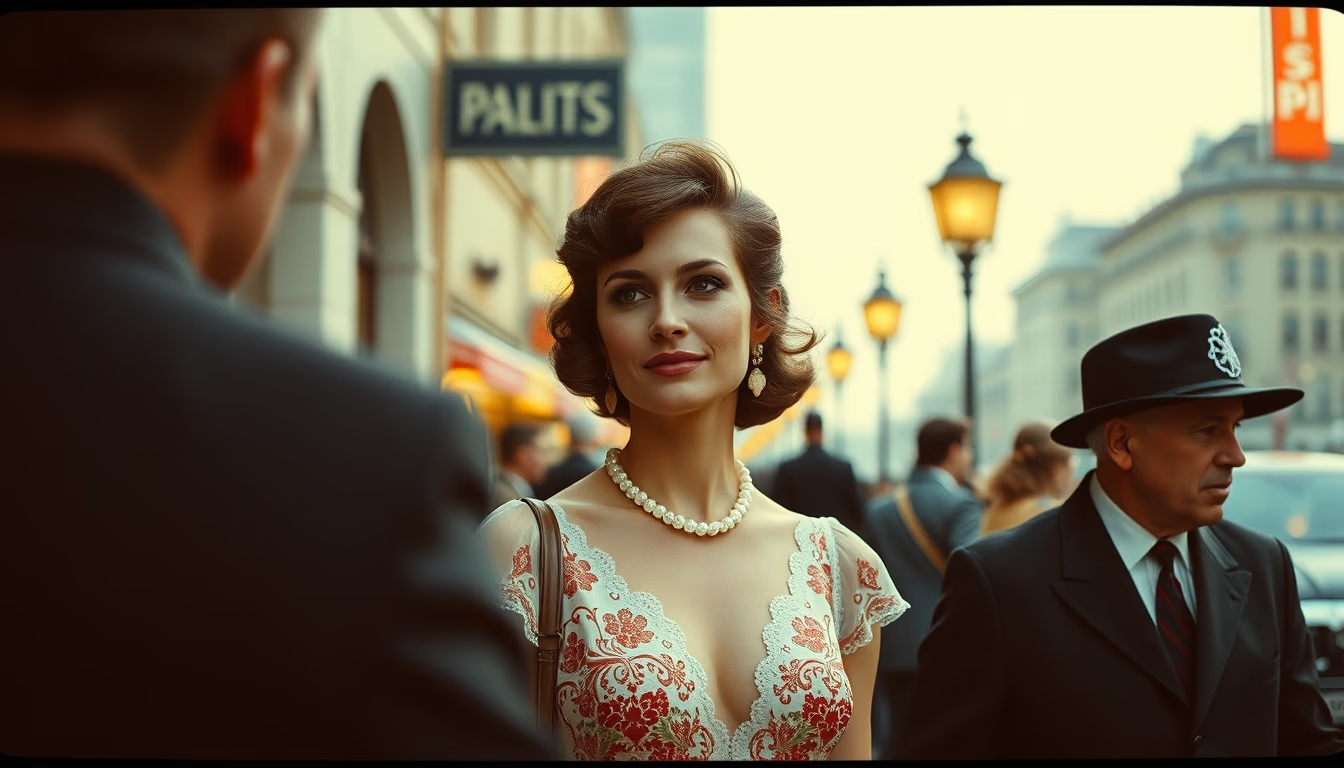
Art deco postcards capture the geometric elegance and glamour of the 1920s and 1930s, blending bold design with refined craftsmanship.
About this subject
Art deco was an international design movement that flourished between 1920 and 1939, influencing architecture, fashion, graphic arts, and, of course, postcard production. Its hallmarks included geometric shapes, straight or zigzag lines, symmetry, the use of vibrant colors (such as gold, black, red, and blue), and stylized motifs like fountains, skyscrapers, zebras, and fan patterns. These elements were widely adopted by artists and publishers who saw postcards as an accessible vehicle for disseminating the modern style.
In Europe, particularly France, art deco appeared in postcards celebrating technological progress and cosmopolitanism, featuring images of ocean liners, high-speed trains, and skyscrapers. In the United States, the style was associated with the Jazz Age and Hollywood glamour, resulting in postcards depicting luxury hotels, casinos, and nightlife scenes. In Brazil, art deco arrived in the 1930s, influencing postcards of cities like Rio de Janeiro and São Paulo, notably with depictions of the Christ the Redeemer statue (inaugurated in 1931) and downtown office buildings.
A notable fact: the mass production of art deco postcards coincided with the peak of printing techniques such as offset lithography, which allowed for saturated colors and crisp details. Many original pieces were printed in limited editions, now making them rare and valuable collector's items. Collectors categorize art deco postcards by theme (transportation, architecture, advertising) or by artist (such as Cassandre or René Vincent). The standard format was the 4 x 6 inch postcard, though variations existed.
Beyond aesthetics, art deco postcards serve as historical records of an optimistic post-World War I era. They reflect a belief in industrial progress and modernity, before the Great Depression and World War II. Today, they are studied by art historians as examples of how design influenced popular communication and tourism in the early 20th century.
Frequently Asked Questions
What sets an art deco postcard apart from other styles?
Art deco postcards stand out for their use of geometric shapes, straight or stylized curved lines, and contrasting colors. They often depict modern subjects like skyscrapers, ocean liners, and celebrities, with an air of elegance and optimism.
Which countries are known for producing high-quality art deco postcards?
France and the United States led the production of art deco postcards, with renowned artists such as Cassandre (France) and Rockwell Kent (USA). Brazil also had a significant output in the 1930s, especially in Rio de Janeiro.
How can I identify an authentic art deco postcard?
Look for printing dates between 1920 and 1939, offset lithography techniques, vivid colors, artist or publisher signatures, and typical themes of progress, luxury, or urban life. The presence of age-related wear, like chipped edges or period-appropriate paper texture, also indicates originality.
Direct URL
https://pub-c7d6a6ea828543ac903a74a341ccb2e1.r2.dev/imagens/art-deco-postcard-film-grain-authentic-fresh9.avifHow to credit
Include a visible link back to UtilizAí. Copy one of the snippets below:
<a href="https://xn--utiliza-eza.com/en/midia/imagens/art-deco-postcard-film-grain-authentic-fresh9">Art deco postcard</a> by <a href="https://xn--utiliza-eza.com">UtilizAí</a>, licensed under <a href="https://creativecommons.org/licenses/by/4.0/">CC BY 4.0</a>.
[Art deco postcard](https://xn--utiliza-eza.com/en/midia/imagens/art-deco-postcard-film-grain-authentic-fresh9) by [UtilizAí](https://xn--utiliza-eza.com), CC BY 4.0
License: CC-BY-4.0