Arepa colombian
1344×768 · AVIF · CC BY 4.0

The Colombian arepa is a versatile corn cake, a daily staple with regional variations and fillings, emblematic of local cuisine.
About this subject
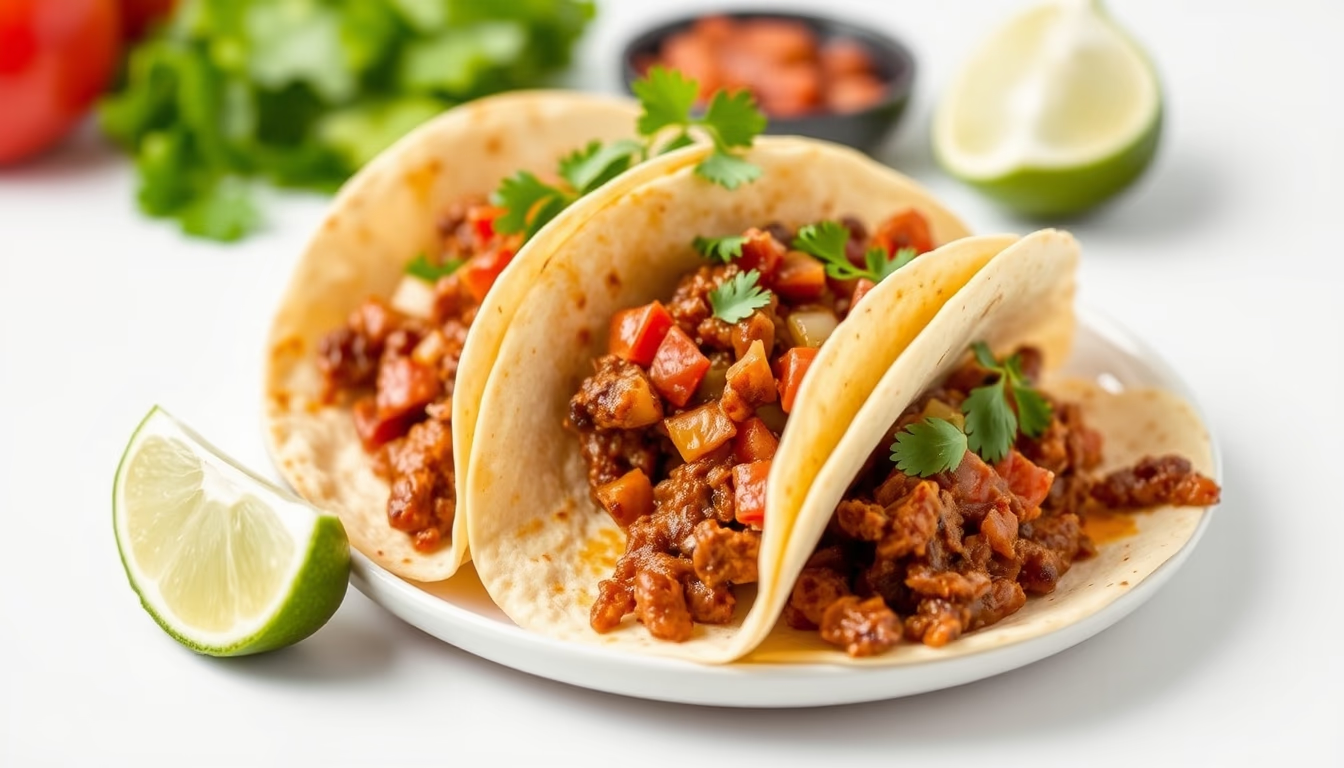
The Colombian arepa is a fundamental food in the country's diet, eaten at all meals and present in almost every home. Made from pre-cooked corn flour, water, and salt, it can be grilled, fried, or baked, resulting in a neutral base that pairs with numerous toppings. Unlike the Venezuelan arepa, the Colombian version tends to be thicker and smaller, and consumption is so ingrained that over 40 regional variations are recorded, such as arepa paisa (plain, without salt), arepa de choclo (made with sweet corn), and arepa de huevo (stuffed with fried egg, typical of the Caribbean coast).
The origin of the arepa dates back to pre-Columbian indigenous peoples, especially the Caribs and Arawaks, who already made corn disks. With Spanish colonization, consumption expanded and became a culinary heritage. Today, the arepa is so iconic that it was declared a Cultural Heritage of Colombia in 2006, representing national identity. Street areperías offer everything from simple options with butter or cheese to gourmet versions with chicken, shredded beef, avocado, and sauces.
Nutritionally, arepa is rich in complex carbohydrates and, when made with whole-grain flour, provides fiber. The traditional version is gluten-free, making it accessible to celiacs. Pre-cooked corn flour (like P.A.N. brand) is widely used, but there are also artisanal versions with hulled corn. A curious fact: in the Coffee Axis region, it is common to have arepa with cheese and bocadillo (guava paste), combining sweet and savory flavors.
The arepa transcends its role as food: it is an element of family and social unity. Its preparation is passed down through generations, and its presence at parties and events is mandatory. Versatility allows adaptations, such as arepas stuffed with chicken or vegetarian, while maintaining the essence of corn.
Frequently Asked Questions
What is the difference between Colombian and Venezuelan arepas?
Colombian arepas are generally thicker, smaller, and often unsalted (as in arepa paisa), while Venezuelan arepas are thinner, larger, and usually lightly salted. Fillings and cooking methods also vary by region.
Is the Colombian arepa gluten-free?
Yes, the traditional arepa made with pre-cooked corn flour (like P.A.N. brand) is naturally gluten-free because corn does not contain gluten. However, it's important to check the flour source to avoid cross-contamination.
What are the main types of arepas in Colombia?
There are dozens of variations. The most famous include arepa paisa (plain), arepa de choclo (sweet corn), arepa de huevo (stuffed with fried egg), arepa e’ queso (with cheese), and arepa con carne desmechada (with shredded beef).
Direct URL
https://pub-c7d6a6ea828543ac903a74a341ccb2e1.r2.dev/imagens/arepa-colombian-fine-art-photography-fresh14.avifHow to credit
Include a visible link back to UtilizAí. Copy one of the snippets below:
<a href="https://xn--utiliza-eza.com/en/midia/imagens/arepa-colombian-fine-art-photography-fresh14">Arepa colombian</a> by <a href="https://xn--utiliza-eza.com">UtilizAí</a>, licensed under <a href="https://creativecommons.org/licenses/by/4.0/">CC BY 4.0</a>.
[Arepa colombian](https://xn--utiliza-eza.com/en/midia/imagens/arepa-colombian-fine-art-photography-fresh14) by [UtilizAí](https://xn--utiliza-eza.com), CC BY 4.0
License: CC-BY-4.0