Archaeological dig site
1344×768 · AVIF · CC BY 4.0
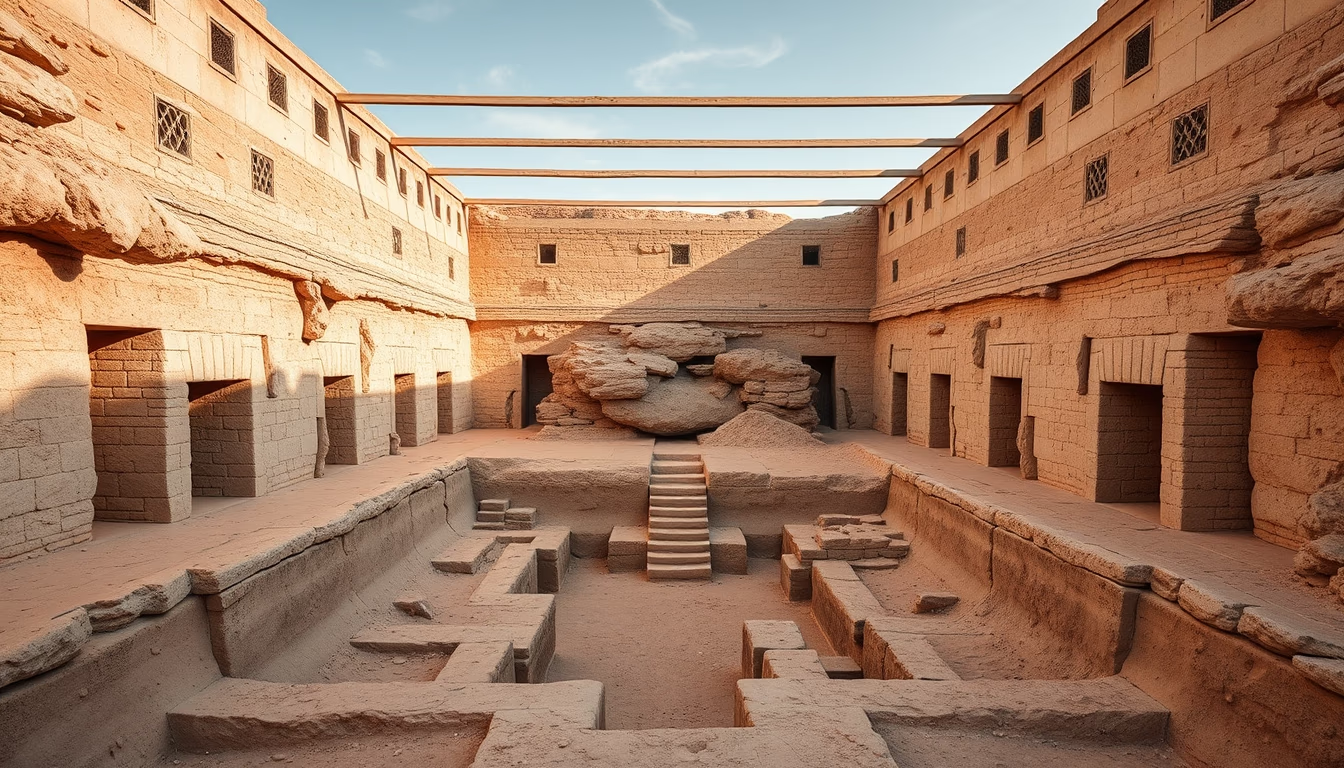
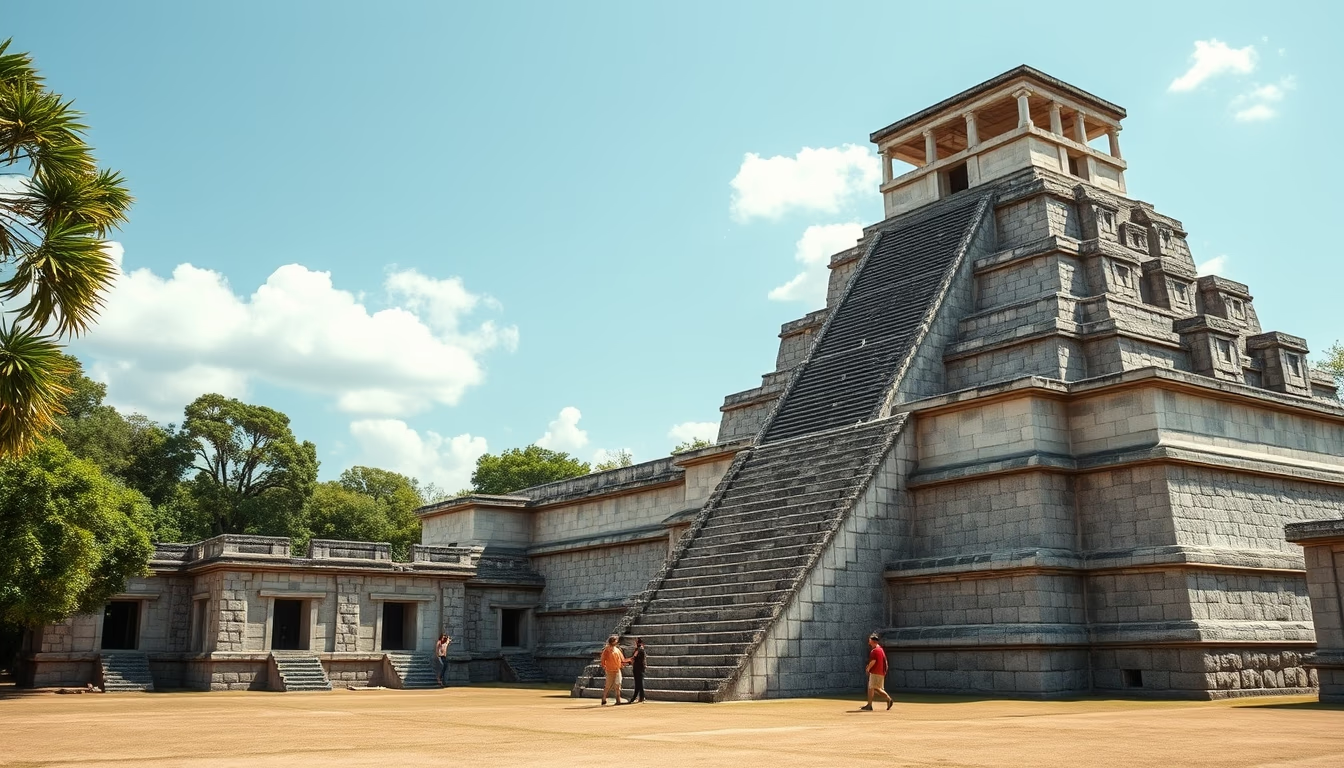
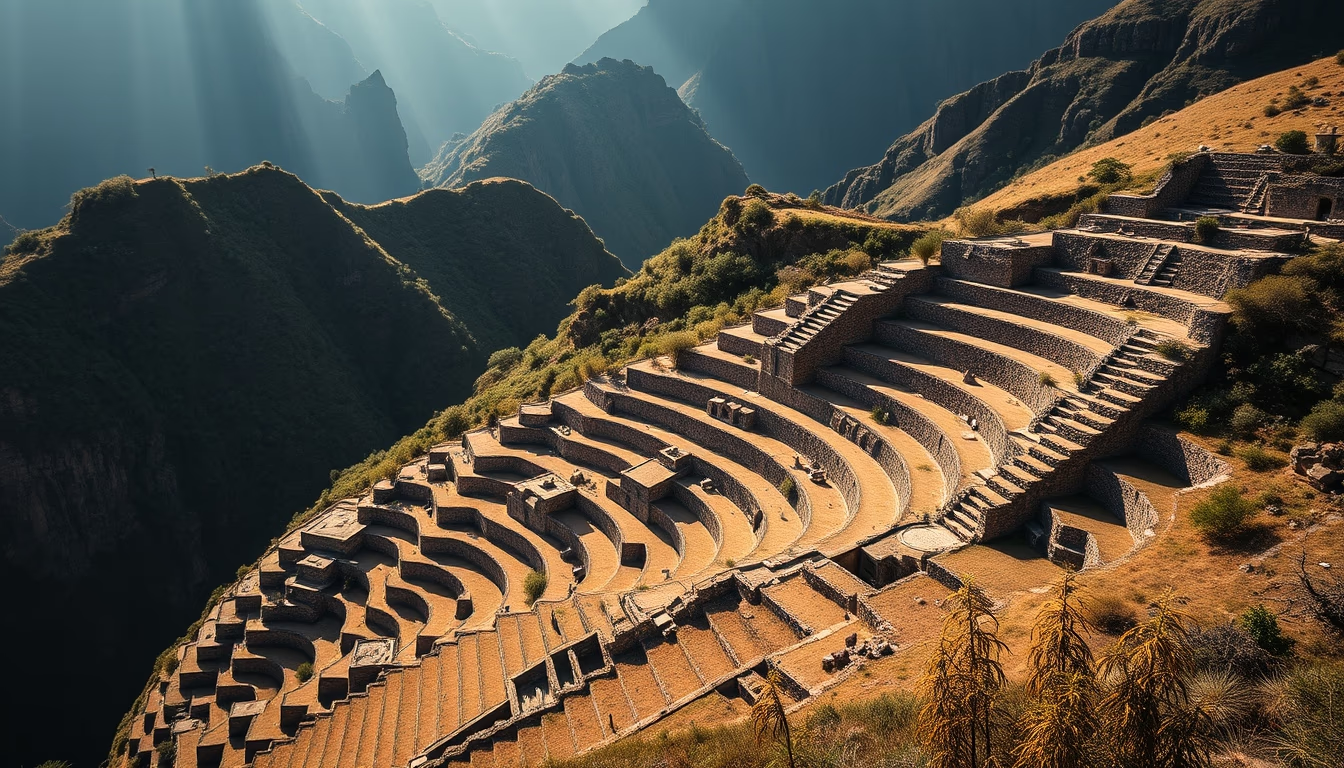
An archaeological dig site exposes layers of human occupation, ancient structures, and artifacts that help reconstruct the past.
About this subject
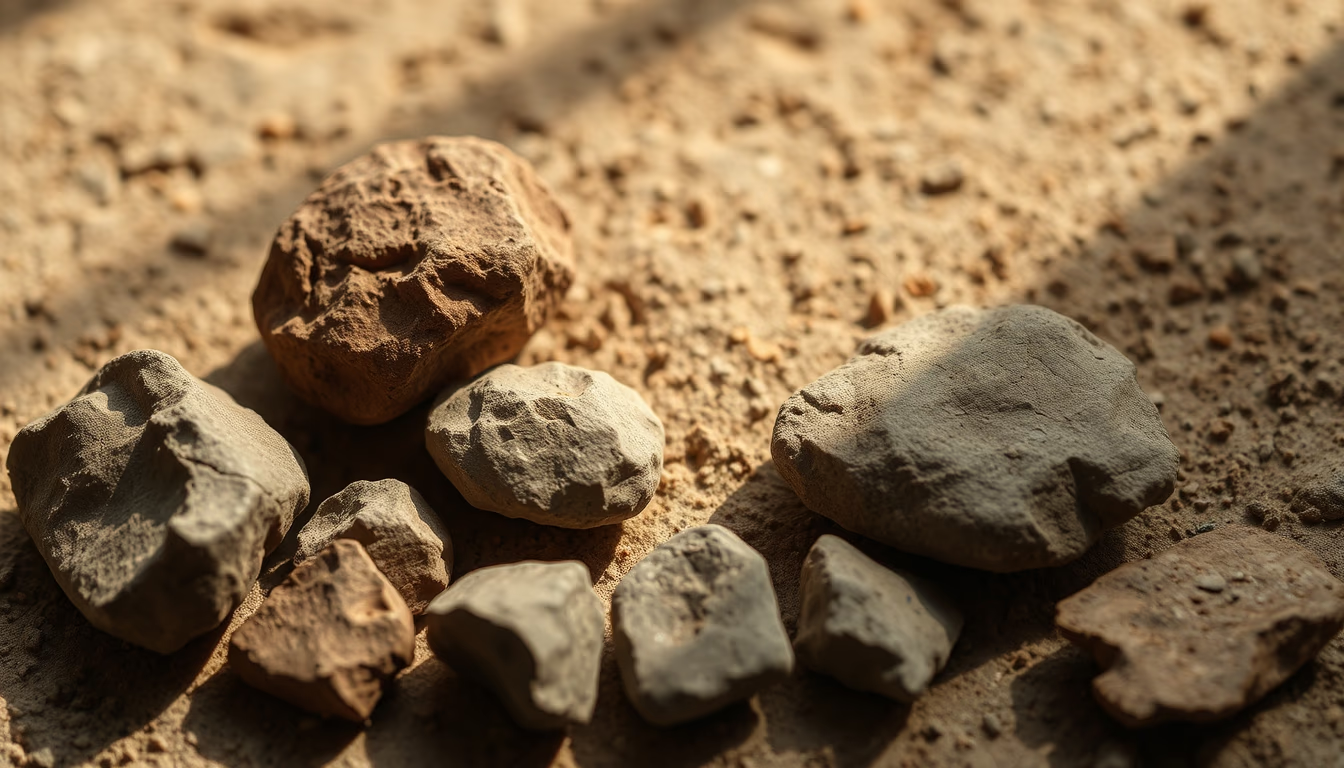
Archaeological dig sites are areas where material remains of past human activities are preserved, often buried under sediments. Methodical excavation allows archaeologists to identify chronological sequences, from building foundations to everyday objects such as pottery and stone tools. Each layer (stratum) tells part of the story, and careful analysis can reveal climate changes, diets, trade, and social organization.
The selection of a site for excavation may be based on surface clues, such as pottery fragments or artificial mounds (tells), or on remote sensing technologies like ground-penetrating radar. Once initiated, the team uses tools such as shovels, pickaxes, trowels, and sieves to remove soil in a controlled manner. Every artifact is recorded with three-dimensional coordinates and stratigraphic context, ensuring spatial information is not lost.
The architecture of the site often includes structures such as stone walls, column bases, hearths, silos, and pits. The orientation and building materials indicate local construction practices and cultural influences. For instance, Neolithic sites in the Middle East feature circular mud-brick houses, while Roman cities have rectangular forums with porticoes and temples.
Interestingly, even after centuries or millennia, certain organic materials like wood, bone, and seeds can survive in anaerobic conditions (peat bogs, deserts) or charred. Radiocarbon dating, dendrochronology, and thermoluminescence help establish absolute ages. In Brazil, sites such as those in the Amazon (geoglyphs, terra preta) or along the coast (sambaquis) show that human occupation is far older and more complex than previously thought.
Frequently Asked Questions
What is an archaeological site?
It is a location where material evidence of past human activities, such as objects, structures, and organic remains, is found, usually buried and preserved over time.
How do archaeologists choose where to excavate?
They rely on surface clues like pottery fragments or mounds, and use technologies such as ground-penetrating radar, aerial photography, and soil analysis to identify promising areas.
Why is stratigraphy important in archaeology?
Stratigraphy helps understand the chronological sequence of occupations, as each soil layer represents a different period. Artifacts are relatively dated by their position in the layers.
Direct URL
https://pub-c7d6a6ea828543ac903a74a341ccb2e1.r2.dev/imagens/archaeological-dig-site-architectural-photography-p6.avifHow to credit
Include a visible link back to UtilizAí. Copy one of the snippets below:
<a href="https://xn--utiliza-eza.com/en/midia/imagens/archaeological-dig-site-architectural-photography-p6">Archaeological dig site</a> by <a href="https://xn--utiliza-eza.com">UtilizAí</a>, licensed under <a href="https://creativecommons.org/licenses/by/4.0/">CC BY 4.0</a>.
[Archaeological dig site](https://xn--utiliza-eza.com/en/midia/imagens/archaeological-dig-site-architectural-photography-p6) by [UtilizAí](https://xn--utiliza-eza.com), CC BY 4.0
License: CC-BY-4.0