Aquaponics system fish
1344×768 · AVIF · CC BY 4.0
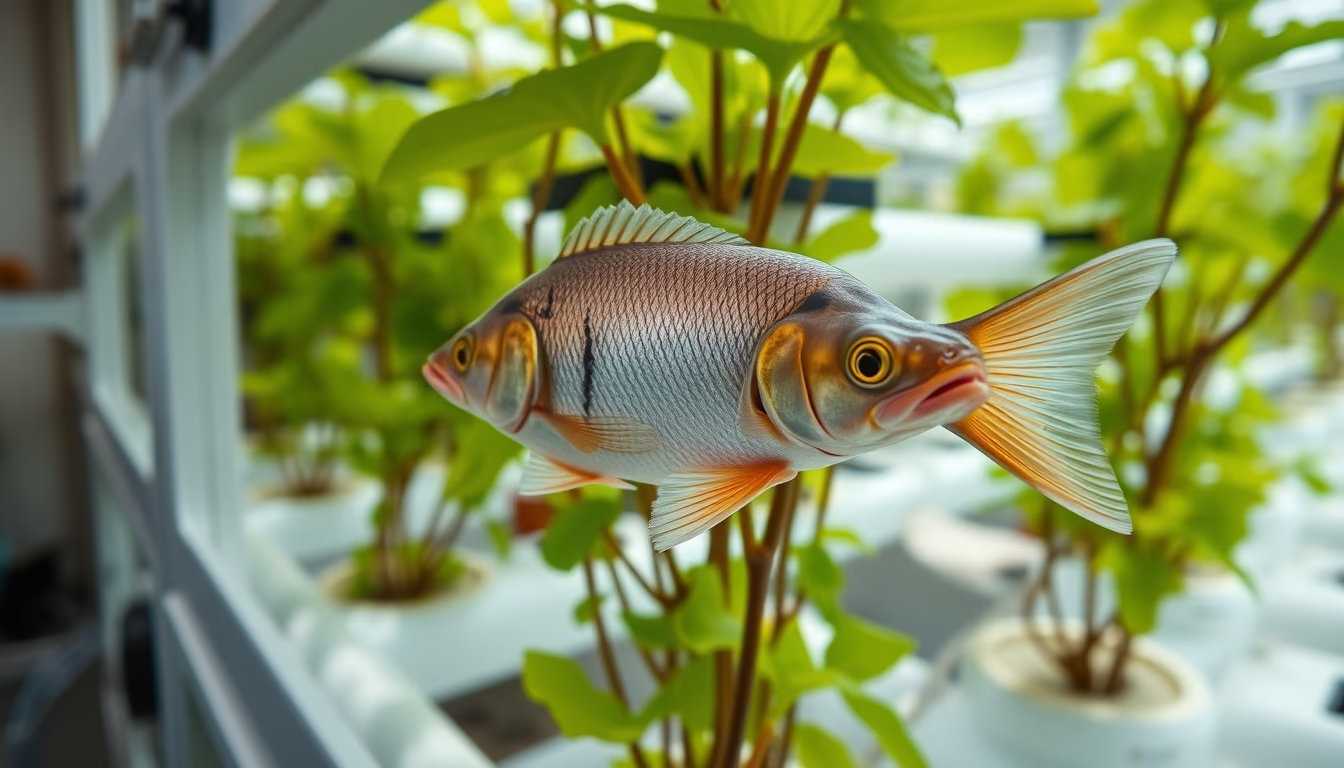
Aquaponics systems combine fish farming with plant cultivation, creating a sustainable food production cycle.
About this subject
Aquaponics is an integrated system that combines aquaculture (raising aquatic organisms like fish) with hydroponics (growing plants without soil). In this closed loop, water from fish tanks, rich in organic waste (ammonia and nutrients), is pumped to plant beds. Nitrifying bacteria convert ammonia into nitrate, which plants absorb as fertilizer. Clean water returns to the tanks, reducing water consumption by up to 90% compared to conventional agriculture.
Species like tilapia, carp, and trout are common due to their resilience and rapid growth, especially in tropical regions. The system requires balance between fish feed input and the plants' filtering capacity. Leafy greens (lettuce, basil) and vegetables (tomatoes, peppers) adapt well. The result is simultaneous production of animal protein and vegetables with low environmental impact.
Aquaponics has gained global prominence as a solution for food security in urban areas and arid regions. Startups and community projects in Brazil, the United States, and Australia demonstrate its viability. By 2026, trends point to small-scale modular systems integrated into buildings and green roofs, utilizing underused spaces. The combination of water efficiency, short production cycles, and no chemical fertilizers makes aquaponics a promising tool for sustainable agriculture.
However, challenges such as high initial installation costs, continuous electricity needs, and specialized management limit large-scale adoption. Research aims to automate monitoring of parameters like pH, temperature, and dissolved oxygen, reducing risks. A well-designed system can produce 20 to 50 kg of fish and 150 to 300 heads of lettuce per year, showing potential to supplement family diets or small businesses.
Frequently Asked Questions
Which fish are most used in aquaponics?
The most common species are tilapia, carp, trout, and catfish. Tilapia is especially popular due to its fast growth and tolerance to temperature and water quality variations.
Does aquaponics replace traditional agriculture?
No, it complements it. Aquaponics is ideal for small-scale production, urban areas, or regions with water scarcity where conventional systems are unfeasible.
How long does an aquaponics system take to stabilize?
The biological maturation cycle, including the development of nitrifying bacteria, takes 4 to 6 weeks. After that, the system reaches equilibrium and can operate continuously.
Direct URL
https://pub-c7d6a6ea828543ac903a74a341ccb2e1.r2.dev/imagens/aquaponics-system-fish-architectural-photography-p2.avifHow to credit
Include a visible link back to UtilizAí. Copy one of the snippets below:
<a href="https://xn--utiliza-eza.com/en/midia/imagens/aquaponics-system-fish-architectural-photography-p2">Aquaponics system fish</a> by <a href="https://xn--utiliza-eza.com">UtilizAí</a>, licensed under <a href="https://creativecommons.org/licenses/by/4.0/">CC BY 4.0</a>.
[Aquaponics system fish](https://xn--utiliza-eza.com/en/midia/imagens/aquaponics-system-fish-architectural-photography-p2) by [UtilizAí](https://xn--utiliza-eza.com), CC BY 4.0
License: CC-BY-4.0