Antique hammer wooden handle
1344×768 · AVIF · CC BY 4.0
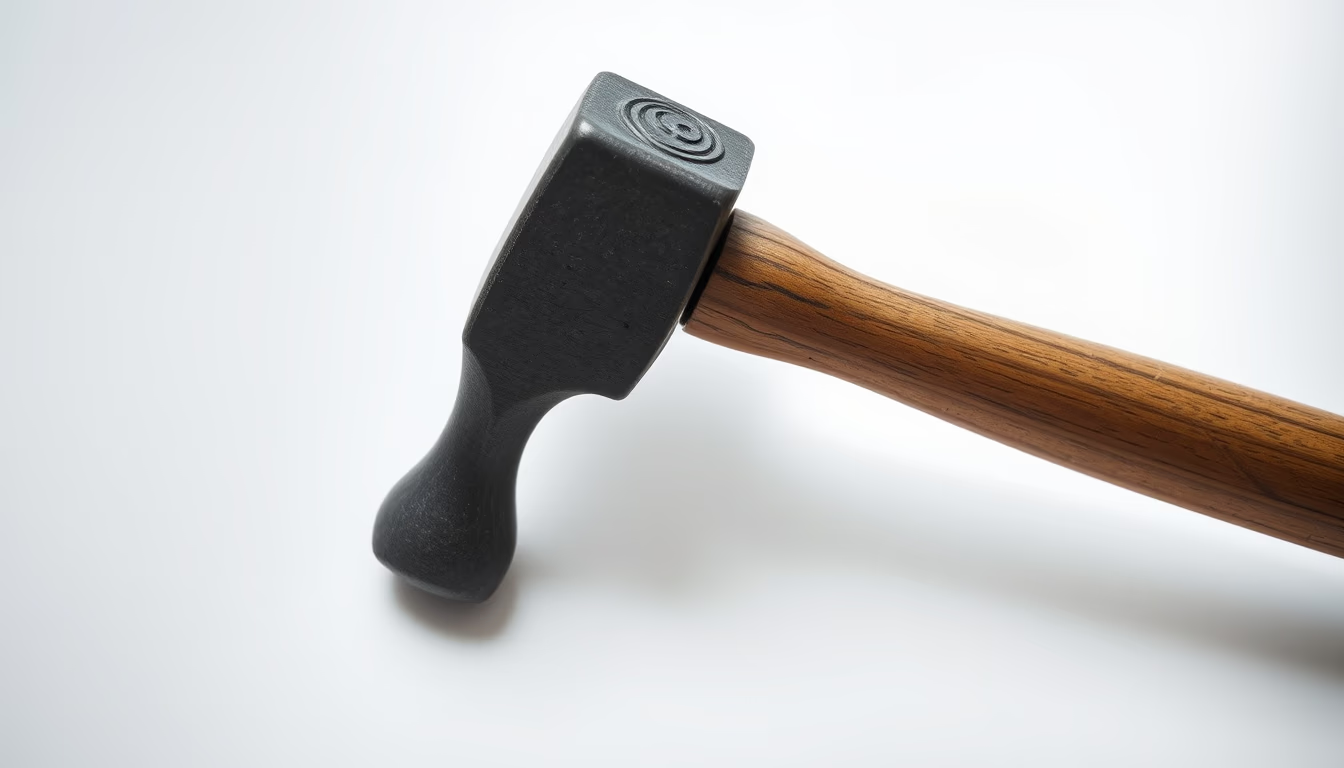
Antique hammer with wooden handle: a classic hand tool used in woodworking and construction for centuries, featuring functional and durable design.
About this subject
The antique hammer with a wooden handle represents one of the most fundamental tools in human history. Its basic design, a metal head attached to a cylindrical handle, has remained virtually unchanged for millennia. The earliest hammers date back to the Stone Age, when stones were tied to branches with leather straps. With the advent of metallurgy, heads were made of bronze, iron, and later steel, while wooden handles, typically from oak, walnut, or ash, offered strength and shock absorption.
In the Brazilian context, hammers with wooden handles were widely used in carpentry and blacksmith workshops during the colonial and imperial periods. Hardwoods such as peroba and ipê were common for handles due to their hardness and local availability. The tool was essential for building everything from furniture to entire houses, often passed down through generations as family heirlooms.
The production of antique hammers involved artisanal techniques: the head was forged on an anvil, the eye (hole for the handle) was punched while hot, and the handle was carved by hand for a perfect fit. A metal or wooden wedge was driven into the handle's end to secure it. These hammers often show signs of use, such as dents on the head and wear on the handle, telling stories of hard labor.
Today, antique hammers with wooden handles are collector's items and decorative objects in rustic settings. They are also used by woodworking enthusiasts who appreciate the balance and ergonomics provided by wood, contrasting with modern fiberglass handles. Preserving these tools helps keep the memory of traditional crafts alive.
Frequently Asked Questions
How to identify a quality antique hammer?
Look at the metal head: forging marks, no modern welds, and a well-defined eye indicate authenticity. The handle should be solid wood (oak, walnut) with a tight fit and visible wedge. Antique hammers usually have an irregular surface due to hand use.
What wood is most common in antique hammer handles?
Oak, walnut, and ash are the most traditional woods for European hammer handles. In Brazil, hardwoods such as peroba, ipê, and cabriúva were used for their strength and local abundance.
How to preserve an antique hammer with a wooden handle?
Avoid excessive moisture to prevent cracks in the wood. Apply linseed oil or beeswax periodically to the handle. The metal head can be cleaned with fine steel wool and protected with a light coat of mineral oil.
Direct URL
https://pub-c7d6a6ea828543ac903a74a341ccb2e1.r2.dev/imagens/antique-hammer-wooden-handle-minimalist-composition-fresh2.avifHow to credit
Include a visible link back to UtilizAí. Copy one of the snippets below:
<a href="https://xn--utiliza-eza.com/en/midia/imagens/antique-hammer-wooden-handle-minimalist-composition-fresh2">Antique hammer wooden handle</a> by <a href="https://xn--utiliza-eza.com">UtilizAí</a>, licensed under <a href="https://creativecommons.org/licenses/by/4.0/">CC BY 4.0</a>.
[Antique hammer wooden handle](https://xn--utiliza-eza.com/en/midia/imagens/antique-hammer-wooden-handle-minimalist-composition-fresh2) by [UtilizAí](https://xn--utiliza-eza.com), CC BY 4.0
License: CC-BY-4.0