Angkor wat sunrise temple
1344×768 · AVIF · CC BY 4.0
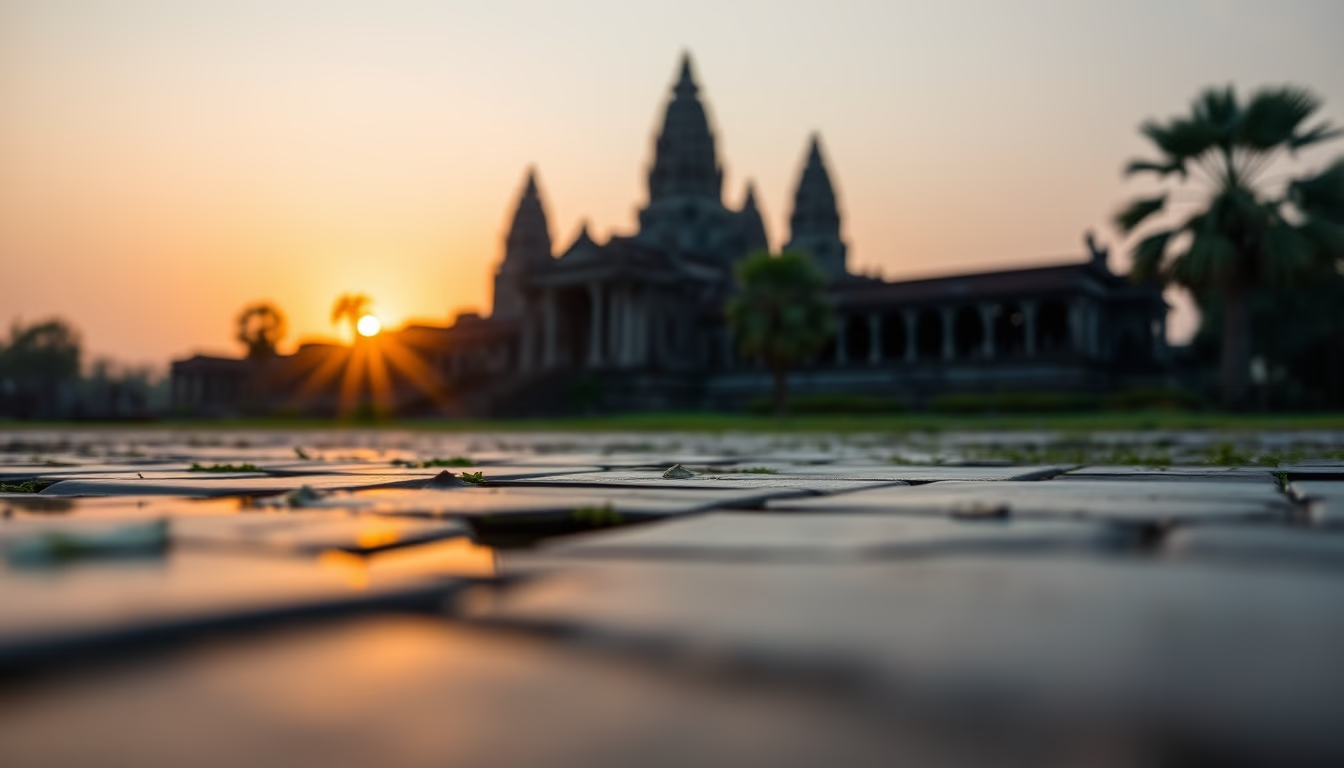
Angkor Wat in Cambodia is the world's largest religious monument, renowned for sunrise illuminating its iconic towers.
About this subject
Angkor Wat is a temple complex in Siem Reap, Cambodia, built in the 12th century by King Suryavarman II as his state temple and mausoleum. Originally dedicated to the Hindu god Vishnu, the complex is a supreme example of Khmer architecture. Covering 162.6 hectares, it is the largest religious monument in the world. The sunrise over Angkor Wat is a spectacle sought by visitors worldwide, with the reflection of the towers in the adjacent pond creating an iconic view.
The temple is part of the Angkor Archaeological Park, a UNESCO World Heritage site since 1992. During the 13th century, Angkor Wat gradually transformed into a Buddhist temple, maintaining its religious importance to this day. The structure is famous for its extensive bas-reliefs depicting scenes from Hindu mythology, including the famous "Churning of the Ocean of Milk". Unlike many other temples in Angkor, Angkor Wat was preserved because it remained in continuous use.
The best time to photograph the sunrise is between November and March, during the dry season. Thousands of tourists gather daily at the front pond to capture the moment when the sun rises behind the main towers. The tilt-shift effect, often applied to photographs, creates a miniature illusion, highlighting the temple's symmetry and grandeur. The image of sunrise at Angkor Wat has become a symbol of Cambodia, appearing on stamps, postcards, and travel guides.
Interestingly, the name "Angkor Wat" means "Temple City" in Khmer. The temple's construction required millions of tons of sandstone, transported from a quarry about 40 km away. The outer moat is 1.5 km wide and helps protect the site during the rainy season. Despite mass tourism, the temple retains its spiritual aura, serving as an active worship site for Buddhists and Hindus.
Frequently Asked Questions
What is the best time to visit Angkor Wat to see the sunrise?
The best time is between November and March, during the dry season, when the sky is clearer. Arrive at the site by around 5 AM to secure a good spot at the front pond.
Why is Angkor Wat considered the largest religious monument in the world?
Angkor Wat covers an area of 162.6 hectares, surpassing other temples like Borobudur in Indonesia. Its extensive construction and architectural complexity make it the largest of its kind.
What does the name 'Angkor Wat' mean?
In Khmer, 'Angkor' means 'city' and 'Wat' means 'temple'. Therefore, 'Angkor Wat' translates to 'Temple City'.
Direct URL
https://pub-c7d6a6ea828543ac903a74a341ccb2e1.r2.dev/imagens/angkor-wat-sunrise-temple-tilt-shift-miniature-p11.avifHow to credit
Include a visible link back to UtilizAí. Copy one of the snippets below:
<a href="https://xn--utiliza-eza.com/en/midia/imagens/angkor-wat-sunrise-temple-tilt-shift-miniature-p11">Angkor wat sunrise temple</a> by <a href="https://xn--utiliza-eza.com">UtilizAí</a>, licensed under <a href="https://creativecommons.org/licenses/by/4.0/">CC BY 4.0</a>.
[Angkor wat sunrise temple](https://xn--utiliza-eza.com/en/midia/imagens/angkor-wat-sunrise-temple-tilt-shift-miniature-p11) by [UtilizAí](https://xn--utiliza-eza.com), CC BY 4.0
License: CC-BY-4.0