Angkor wat sunrise temple
1344×768 · AVIF · CC BY 4.0
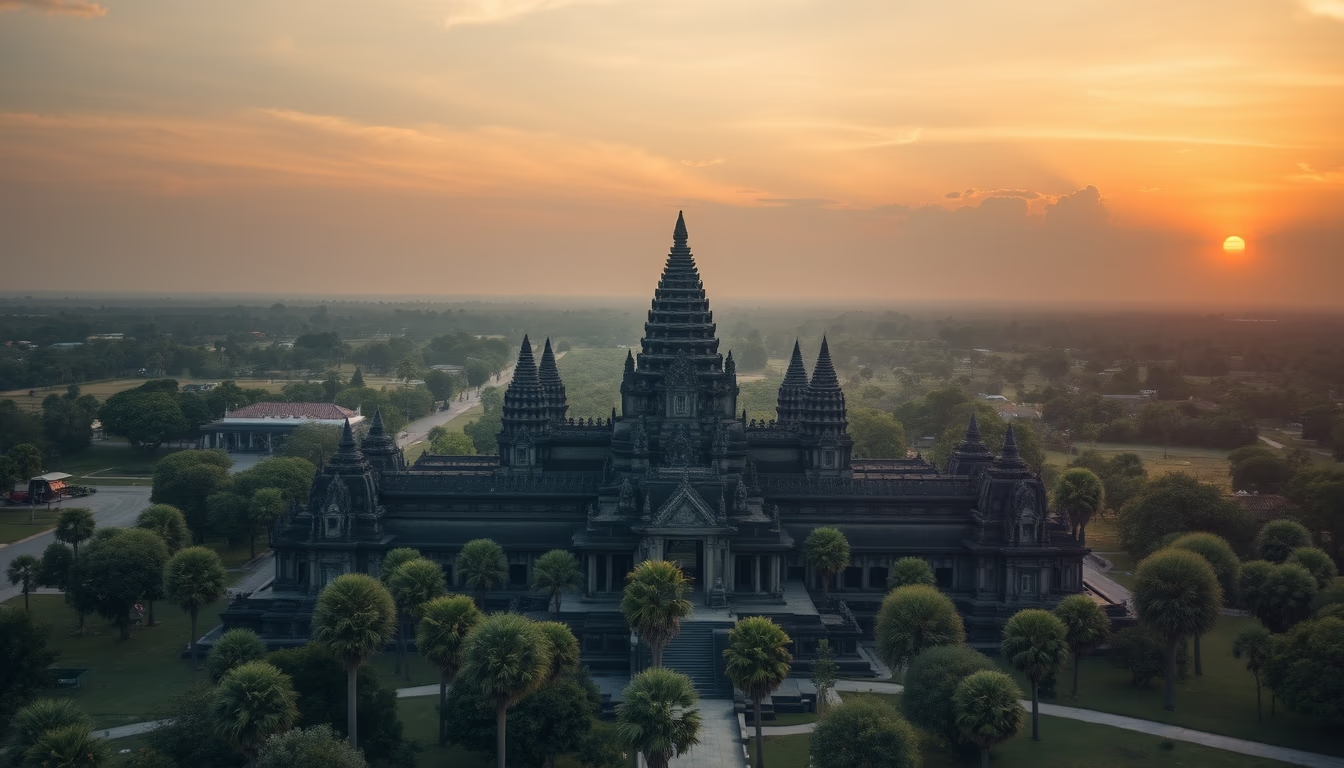
Sunrise over Angkor Wat in Cambodia is one of Southeast Asia's most iconic spectacles, drawing visitors from around the globe.
About this subject
Angkor Wat is the largest religious monument in the world, located in the Angkor Archaeological Park in Cambodia. Built in the early 12th century by King Suryavarman II, the temple was originally dedicated to the Hindu god Vishnu but gradually transformed into a Buddhist temple. Its architecture represents Mount Meru, the home of the gods in Hinduism, with five central towers symbolizing the peaks of the sacred mountain.
The sunrise over Angkor Wat is particularly famous for the way golden light illuminates the silhouettes of the towers, reflecting in the artificial ponds that surround the temple. This visual phenomenon results from the temple's precise westward orientation, an exception among Khmer temples, leading to theories about its possible funerary or astronomical purpose. Photographers and travelers gather before dawn to capture the scene, which has become a symbol of Cambodia and appears on stamps, banknotes, and travel guides.
The Angkor complex was declared a UNESCO World Heritage site in 1992 and covers over 400 km² of temple ruins, reservoirs, and roads. Angkor Wat, however, remains the best-preserved and the only one to maintain continuous religious use since its construction. It is estimated that about 5 million tons of sandstone were used in its construction, quarried from Mount Kulen 40 km away and transported via a network of canals. The decline of the Khmer Empire in the 15th century led to gradual abandonment of the site, but Angkor Wat was never completely deserted, as Buddhist monks continued to inhabit its precincts.
Today, tourism is the main source of income for the region but also poses conservation challenges. The flow of visitors, pollution, and vegetation growth require constant restoration efforts. Since 2019, entrance fees for foreign tourists generate significant revenue, while the Cambodian government implements measures to balance preservation and economic exploitation. Watching the sunrise at Angkor Wat is, for many, a spiritual and historical experience that connects the present to the glorious past of the Khmer Empire.
Frequently Asked Questions
What is the best time to see the sunrise at Angkor Wat?
The dry season, from November to March, offers clearer skies and less chance of rain, making it ideal for sunrise viewing. December and January are the busiest months.
Why was Angkor Wat built facing west?
Unlike most Khmer temples, Angkor Wat is oriented westward. This may indicate an association with the god Vishnu, whose temple should face west, or a funerary purpose, as west symbolizes death in Hinduism.
How many tourists visit Angkor Wat each year?
Before the pandemic, Angkor Wat received about 2.6 million foreign visitors annually. Numbers have been gradually recovering after the 2022 reopening.
Direct URL
https://pub-c7d6a6ea828543ac903a74a341ccb2e1.r2.dev/imagens/angkor-wat-sunrise-temple-isometric-flat-lay-p9.avifHow to credit
Include a visible link back to UtilizAí. Copy one of the snippets below:
<a href="https://xn--utiliza-eza.com/en/midia/imagens/angkor-wat-sunrise-temple-isometric-flat-lay-p9">Angkor wat sunrise temple</a> by <a href="https://xn--utiliza-eza.com">UtilizAí</a>, licensed under <a href="https://creativecommons.org/licenses/by/4.0/">CC BY 4.0</a>.
[Angkor wat sunrise temple](https://xn--utiliza-eza.com/en/midia/imagens/angkor-wat-sunrise-temple-isometric-flat-lay-p9) by [UtilizAí](https://xn--utiliza-eza.com), CC BY 4.0
License: CC-BY-4.0