Ancient olive tree gnarled trunk
1344×768 · AVIF · CC BY 4.0
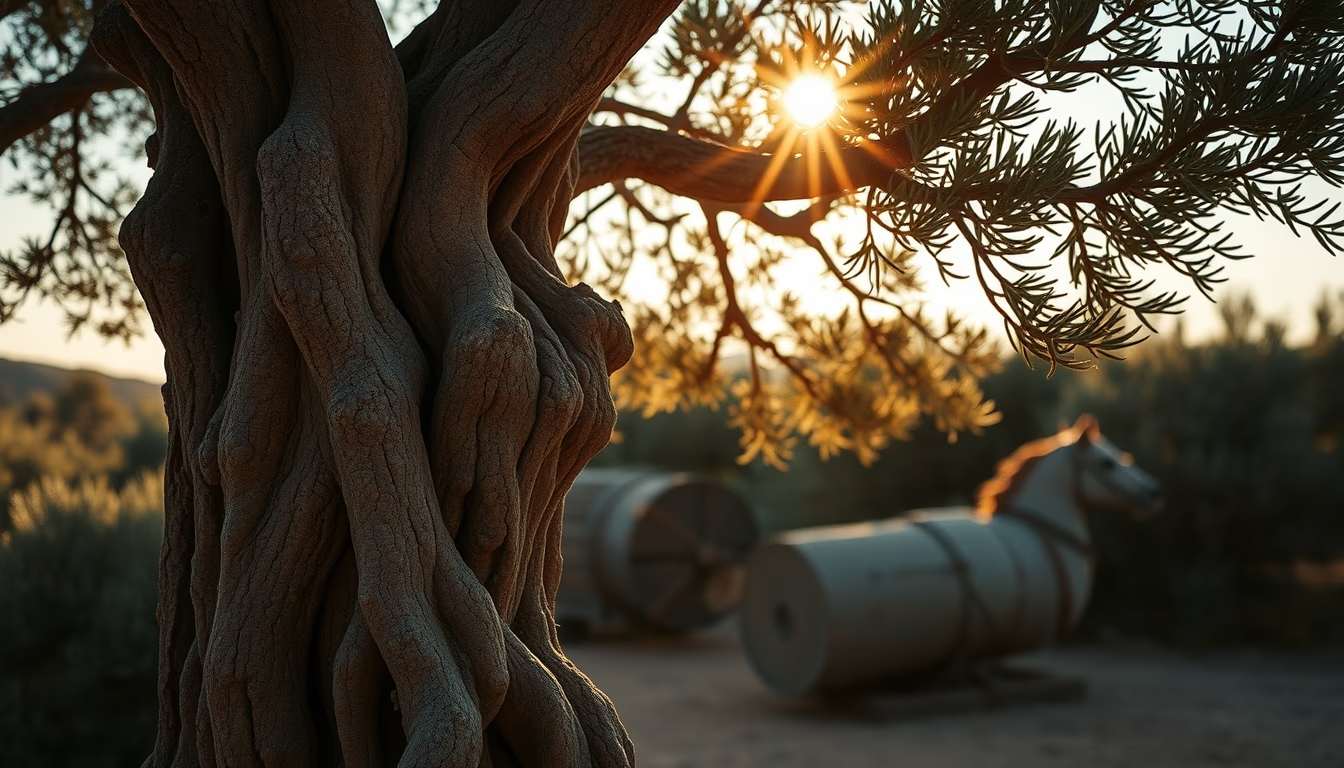
Centuries-old olive trees, with twisted and rugged trunks, are living witnesses of history and symbols of resilience in the Mediterranean.
About this subject
Olive trees are slow-growing trees that can live for thousands of years, adapting to poor soils and arid climates. Their twisted trunks result from centuries of growth under harsh conditions, forming unique natural sculptures. In countries like Greece, Italy, Spain, and Portugal, specimens over 2,000 years old exist, such as the Olive Tree of Vouves in Crete, which still produces olives.
The olive tree (Olea europaea) is one of the earliest domesticated trees, with cultivation records dating back to 3000 BCE in the Levant. In ancient Greece, it was considered sacred and associated with the goddess Athena; olive wreaths were awarded to Olympic winners. The dense wood was used for sculptures and tools. Olive oil, extracted from the fruit, fueled lamps, served as a cosmetic base, and preserved food.
Today, olive trees are cultivated in Mediterranean climate regions worldwide, including California, Chile, and Australia. Global olive oil production exceeds 3 million tons annually, with Spain leading. Ancient trees are protected by natural heritage laws and attract tourists interested in their longevity and beauty. The gnarled trunk is not a disease but an adaptation that helps the tree withstand strong winds and water scarcity, channeling resources to fruiting branches.
Frequently Asked Questions
What is the maximum age an olive tree can reach?
Olive trees can live over 2,000 years. The Olive Tree of Vouves in Crete is about 3,000 years old and still bears fruit. Their longevity comes from regeneration and adaptation abilities.
Why are olive tree trunks gnarled?
The gnarled trunk results from slow growth under harsh conditions (wind, poor soil, drought). This shape helps the tree endure environmental stress and direct nutrients to productive branches.
Where are the oldest olive trees in the world located?
The oldest known olive trees are in the Mediterranean region: Greece (Crete), Italy (Sardinia), Portugal, and Spain. Many are over 1,000 years old and considered natural heritage.
Direct URL
https://pub-c7d6a6ea828543ac903a74a341ccb2e1.r2.dev/imagens/ancient-olive-tree-gnarled-trunk-travel-photography-p9.avifHow to credit
Include a visible link back to UtilizAí. Copy one of the snippets below:
<a href="https://xn--utiliza-eza.com/en/midia/imagens/ancient-olive-tree-gnarled-trunk-travel-photography-p9">Ancient olive tree gnarled trunk</a> by <a href="https://xn--utiliza-eza.com">UtilizAí</a>, licensed under <a href="https://creativecommons.org/licenses/by/4.0/">CC BY 4.0</a>.
[Ancient olive tree gnarled trunk](https://xn--utiliza-eza.com/en/midia/imagens/ancient-olive-tree-gnarled-trunk-travel-photography-p9) by [UtilizAí](https://xn--utiliza-eza.com), CC BY 4.0
License: CC-BY-4.0