Ancient olive tree gnarled trunk
1344×768 · AVIF · CC BY 4.0
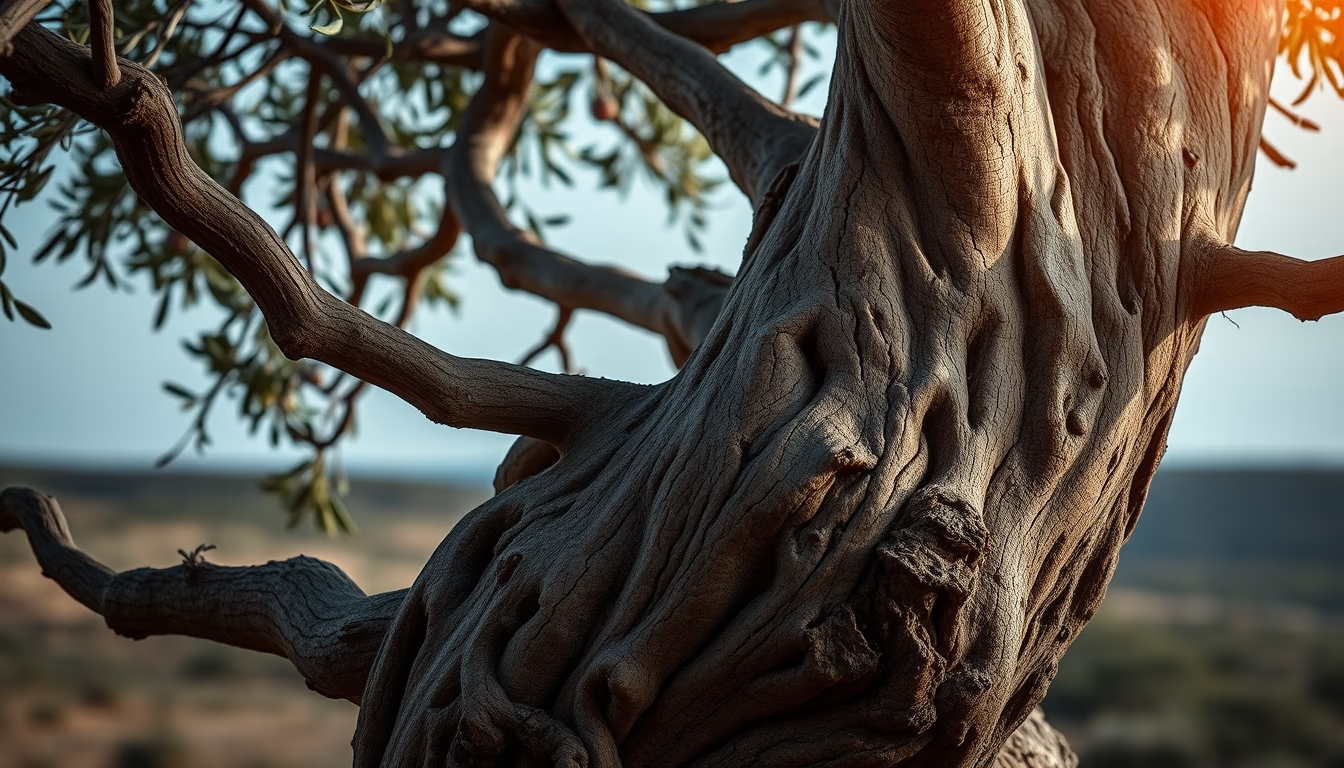
Centennial olive trees with gnarled trunks are living witnesses to Mediterranean history and culture, symbols of longevity and resilience.
About this subject
Olive trees (Olea europaea) are among the longest-living trees in the world, capable of surviving for thousands of years. The Olive Tree of Vouves in Crete, Greece, is about 3,000 years old and still produces olives. Its gnarled, twisted trunk results from slow growth and harsh conditions: strong winds, dry soils, and extreme temperatures. This characteristic appearance, called 'gnarl,' is not just aesthetic: it protects the tree from water loss and pests.
The olive tree holds immense cultural and economic importance in the Mediterranean. Olive oil, extracted from its fruit, is the foundation of the Mediterranean diet, recognized by UNESCO as Intangible Cultural Heritage. The tree appears in mythologies: in ancient Greece, the olive was a gift from Athena to the city of Athens, symbolizing peace and wisdom. Olive branches have been symbols of victory and peace since the ancient Olympic Games.
Botanically, olive trees grow very slowly, with nearly imperceptible growth rings. As they age, the trunk becomes hollow and fragmented, but the tree remains alive thanks to the bark that keeps the phloem functional. Many centennial olive trees in Portugal, Spain, and Italy are protected by conservation laws, and some farms turn them into tourist attractions.
Fun fact: olives from ancient trees are often more flavorful and produce a more intense oil, though with lower yield. In regions like Andalusia, there are olive trees planted during the Roman Empire that still bear fruit. Preserving these trees is vital for biodiversity and the Mediterranean cultural heritage.
Frequently Asked Questions
What is the oldest olive tree in the world?
The oldest known olive tree is the Olive Tree of Vouves in Crete, Greece, estimated to be 3,000 to 4,000 years old. Another famous one is the Ano Vouves olive tree, also in Crete. Both still produce olives regularly.
Why do ancient olive trees have gnarled trunks?
The gnarled trunk results from slow growth under harsh conditions such as strong winds and poor soil. This shape helps the tree conserve water and resist pests.
Where can I find ancient olive trees?
They are common in Mediterranean countries, especially Greece, Italy, Spain, Portugal, and Turkey. Many are on private properties or in protected parks, such as the Olive Museum in Portugal.
Direct URL
https://pub-c7d6a6ea828543ac903a74a341ccb2e1.r2.dev/imagens/ancient-olive-tree-gnarled-trunk-fine-art-photography-p6.avifHow to credit
Include a visible link back to UtilizAí. Copy one of the snippets below:
<a href="https://xn--utiliza-eza.com/en/midia/imagens/ancient-olive-tree-gnarled-trunk-fine-art-photography-p6">Ancient olive tree gnarled trunk</a> by <a href="https://xn--utiliza-eza.com">UtilizAí</a>, licensed under <a href="https://creativecommons.org/licenses/by/4.0/">CC BY 4.0</a>.
[Ancient olive tree gnarled trunk](https://xn--utiliza-eza.com/en/midia/imagens/ancient-olive-tree-gnarled-trunk-fine-art-photography-p6) by [UtilizAí](https://xn--utiliza-eza.com), CC BY 4.0
License: CC-BY-4.0