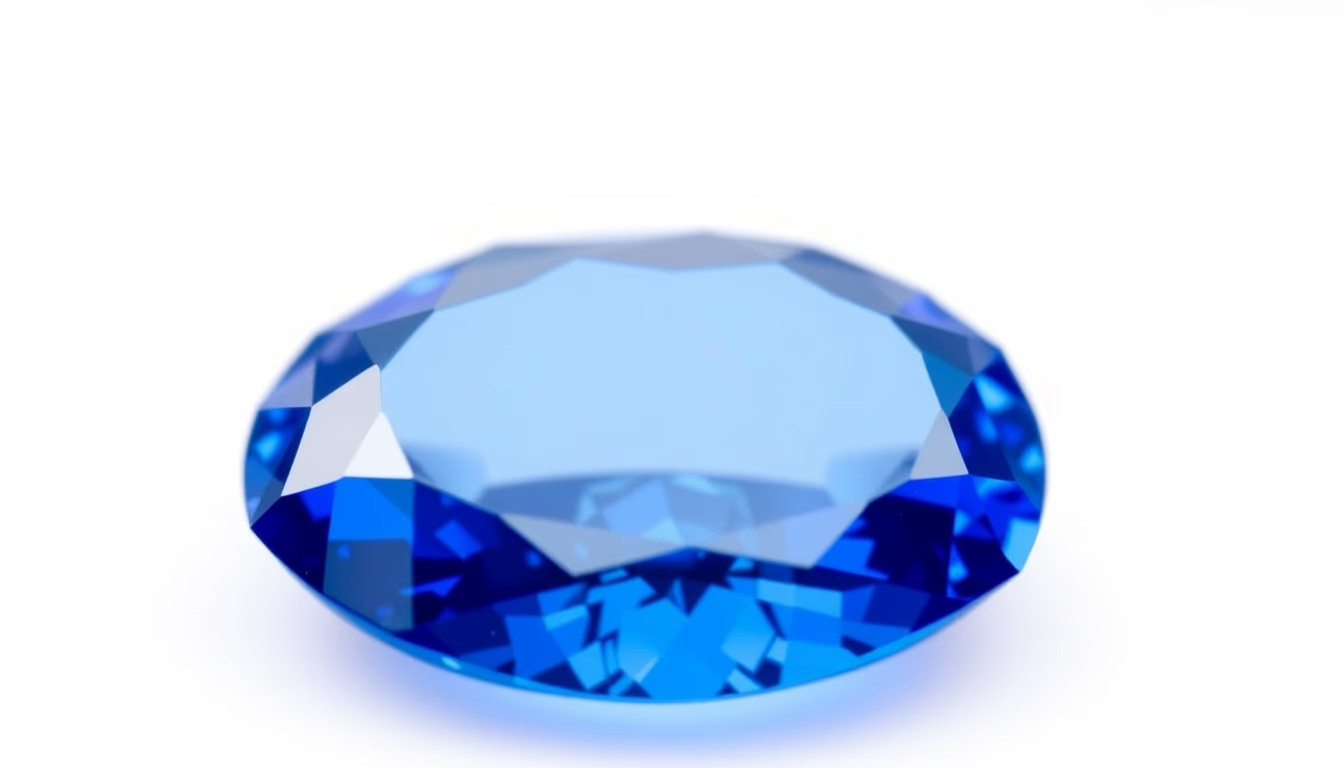
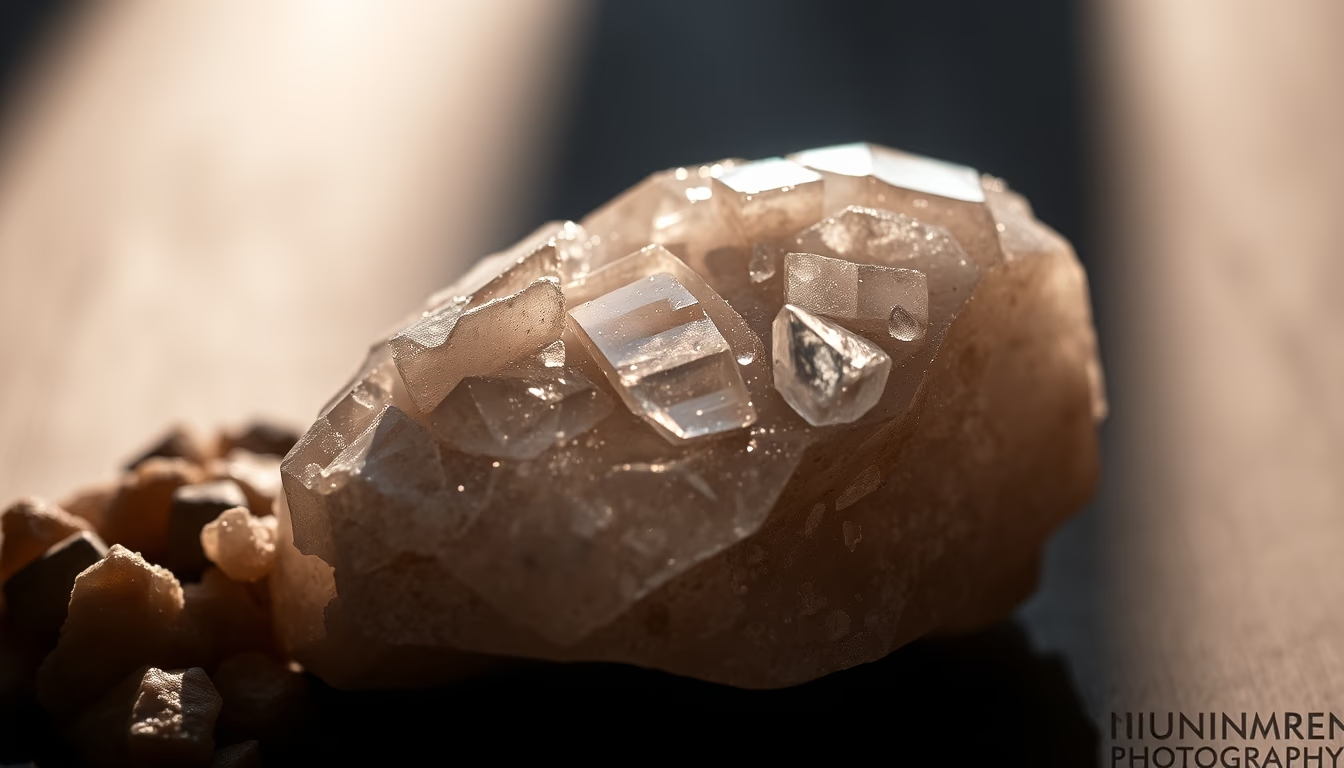
Amethyst geode purple
1344×768 · AVIF · CC BY 4.0

Purple amethyst geode, a mineral formation composed of violet quartz crystals, originated in cavities of volcanic rocks.
About this subject
Amethyst geodes are geological formations that occur when gas bubbles in volcanic rocks solidify, creating cavities. Over millions of years, silica-rich solutions with iron ions seep into these cavities, slowly crystallizing into quartz. The characteristic violet color of amethyst results from iron impurities combined with natural irradiation, which alters the crystal structure. The shade intensity varies with iron concentration and radiation exposure time.
The world's largest amethyst deposits are in Brazil, especially in Rio Grande do Sul (region of Ametista do Sul) and Minas Gerais (such as Governador Valadares). Uruguay is also known for high-quality geodes. These crystals are mined and sold to collectors as well as the jewelry and decoration industries. Large pieces are used as ornamental objects, while faceted gems are set in rings, necklaces, and earrings.
Beyond aesthetics, amethyst has strong cultural and esoteric appeal. Many cultures attribute calming and protective properties to it, considering it a stone of emotional balance. In ancient Rome, it was used to prevent drunkenness, hence the name from Greek "amethystos", meaning "not intoxicated". Even today, it is associated with higher chakras and meditation.
Interestingly, not all amethyst is natural: heat treatments can lighten or darken the color, and some quartz crystals are artificially irradiated to mimic the natural hue. Therefore, authenticity is important in the gem market. Brazil is the world leader in production, and whole geodes are highly sought after by museums and decorators.
Frequently Asked Questions
How is an amethyst geode formed?
An amethyst geode forms in cavities of volcanic rocks, usually after gas bubbles are filled with silica- and iron-rich solutions. Over millions of years, these minerals crystallize into violet quartz, creating the geode.
Why is amethyst purple?
The purple color of amethyst is caused by iron impurities in the quartz structure combined with exposure to natural radiation. The irradiation changes the oxidation state of iron, producing the violet hue.
Where are the largest amethyst geodes found?
The largest amethyst geodes are found in Brazil, especially in Rio Grande do Sul (Ametista do Sul) and Minas Gerais, and in Uruguay. These regions have basalt deposits with cavities suitable for crystal formation.
Direct URL
https://pub-c7d6a6ea828543ac903a74a341ccb2e1.r2.dev/imagens/amethyst-geode-purple-studio-editorial-portrait-p4.avifHow to credit
Include a visible link back to UtilizAí. Copy one of the snippets below:
<a href="https://xn--utiliza-eza.com/en/midia/imagens/amethyst-geode-purple-studio-editorial-portrait-p4">Amethyst geode purple</a> by <a href="https://xn--utiliza-eza.com">UtilizAí</a>, licensed under <a href="https://creativecommons.org/licenses/by/4.0/">CC BY 4.0</a>.
[Amethyst geode purple](https://xn--utiliza-eza.com/en/midia/imagens/amethyst-geode-purple-studio-editorial-portrait-p4) by [UtilizAí](https://xn--utiliza-eza.com), CC BY 4.0
License: CC-BY-4.0