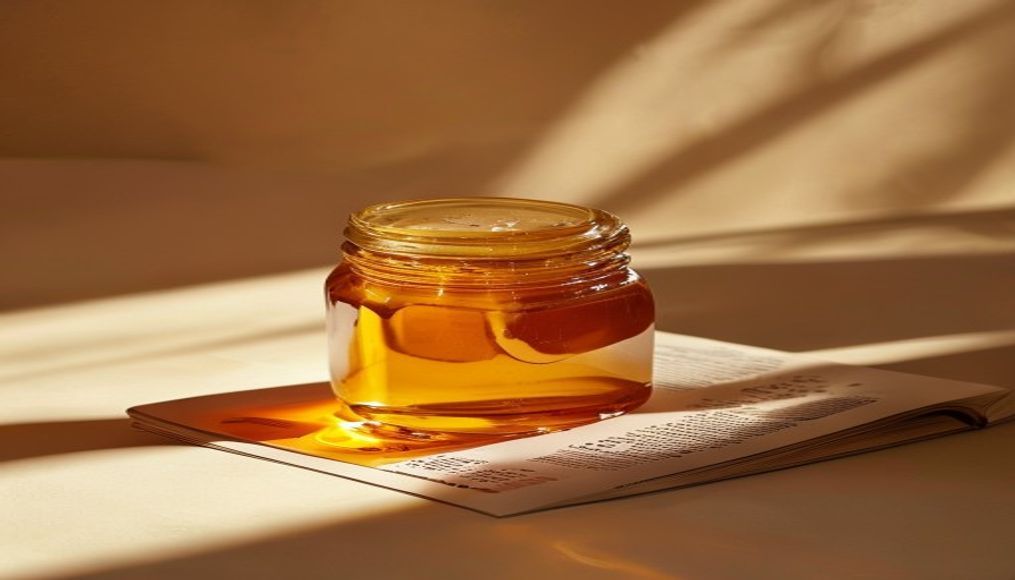
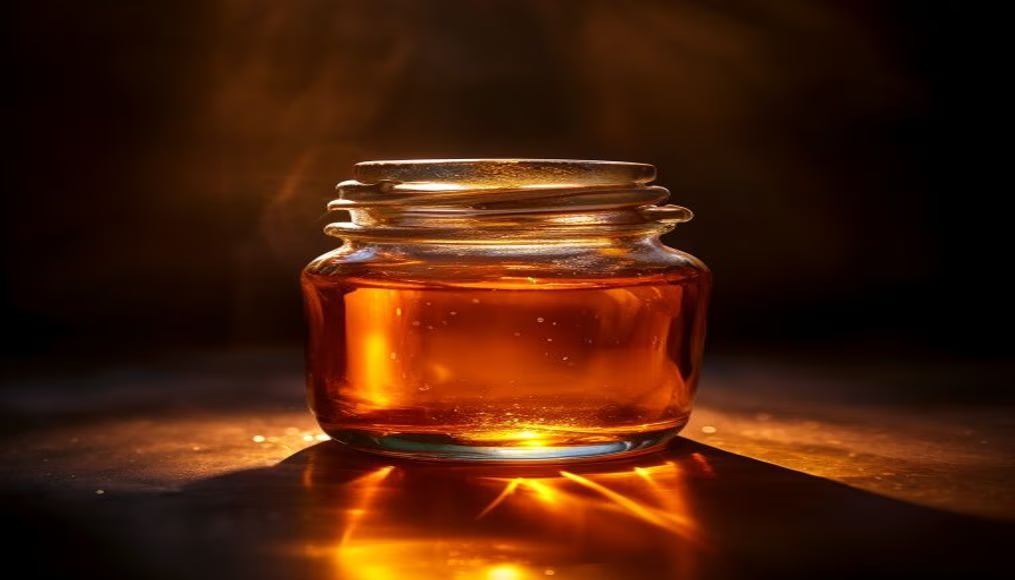
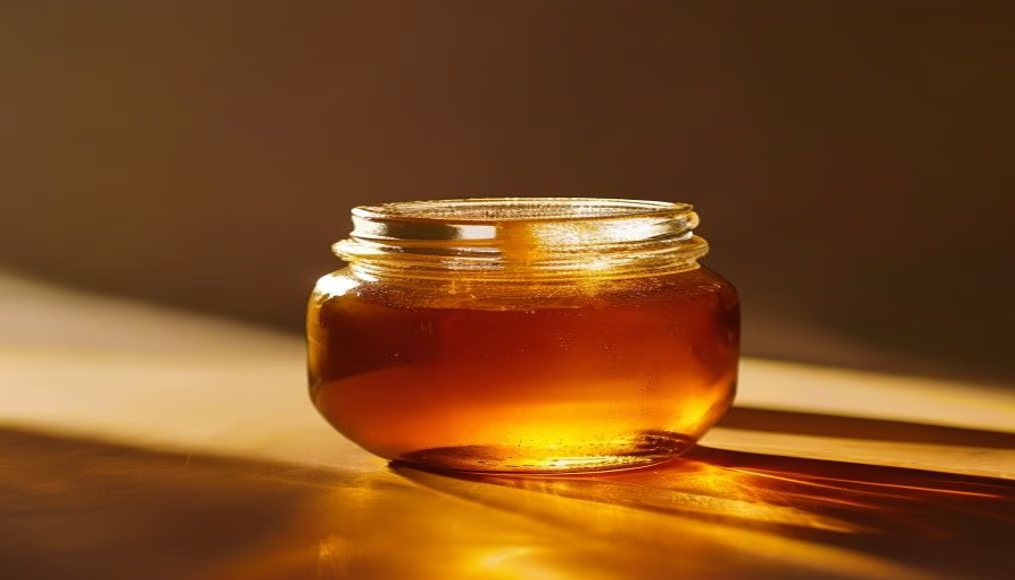
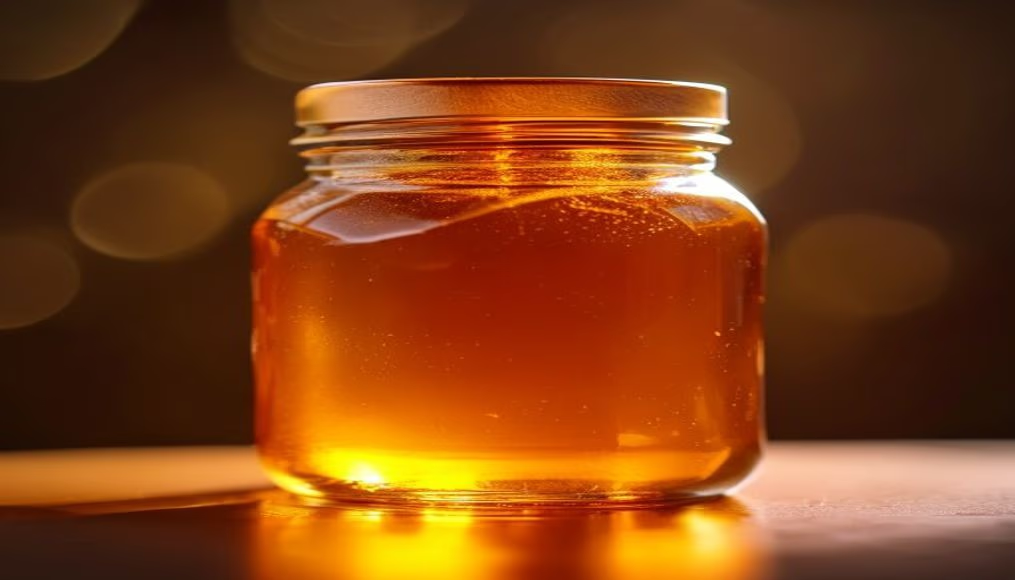
Amber resin insect inside
1344×768 · AVIF · CC BY 4.0
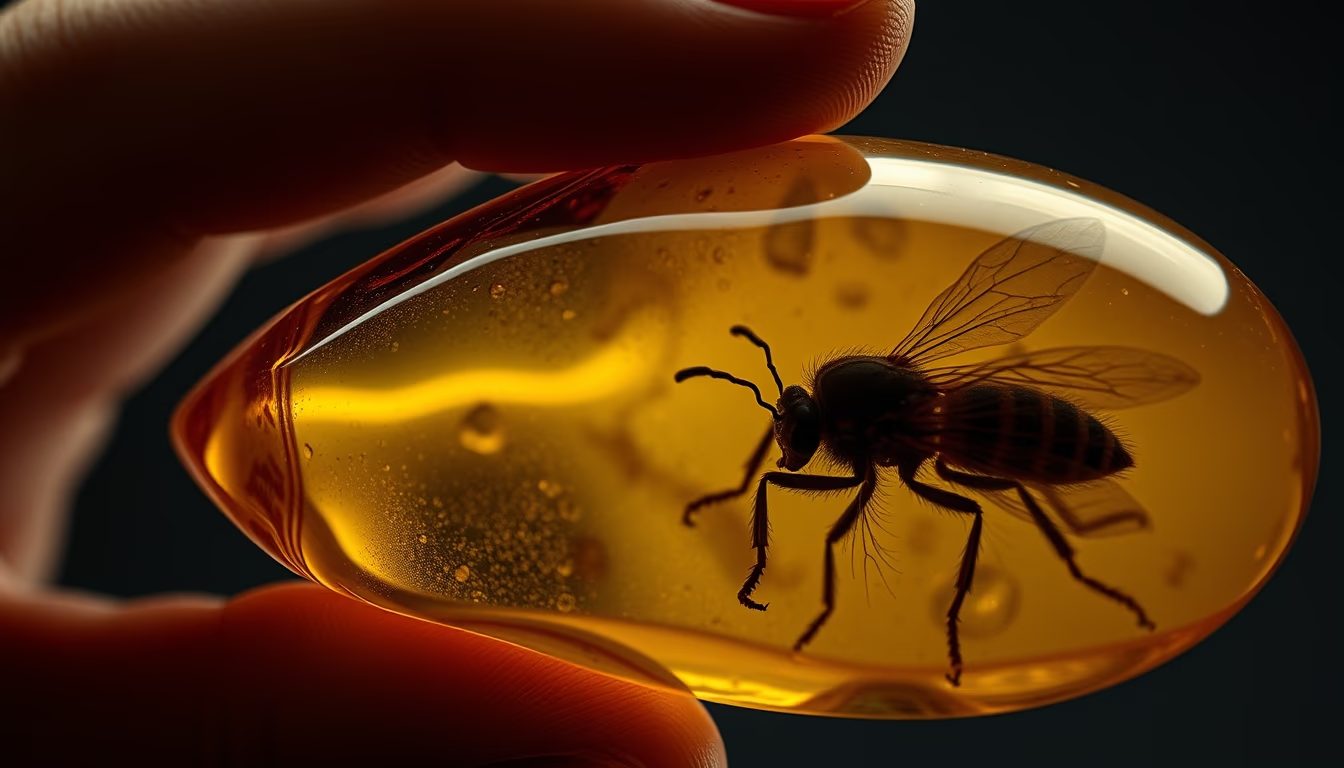
Amber with insect inclusion: a time capsule from 20 to 100 million years ago, essential for paleontology and valued as an organic gemstone.
About this subject
Amber is fossilized tree resin from coniferous trees of the Mesozoic era, mainly Cretaceous to Paleogene periods. When resin oozed from trunks and branches, it often trapped small organisms such as insects, spiders, and even small vertebrates. This fossilization process preserves remarkable morphological details, including cells and soft tissues, which is rare in traditional fossils. Insect inclusions in amber are scientifically valuable for studying the evolution and behavior of extinct species.
Major deposits of amber with biological inclusions are found in the Baltic region (Baltic amber), the Dominican Republic, Myanmar (Burmese amber), and Mexico. Baltic amber dates to about 44 million years ago (Eocene), while Burmese amber reaches 99 million years (Middle Cretaceous). These deposits have yielded fossils of mosquitoes, ants, bees, and even dinosaur feathers.
Culturally, amber has been used since prehistory as ornament and amulet. In antiquity, Greeks called it "elektron" due to its ability to generate static electricity when rubbed. In China and the Middle East, it was burned as incense. Today, besides jewelry, amber with inclusions is highly collectible and can fetch high prices in the gem market.
Identification of genuine amber involves density testing (floats in saltwater), fluorescence under UV light, and analysis of inclusions. Fakes with synthetic resins are common, but natural insect inclusions usually show preservation distortions, such as air bubbles and fractures, which differentiate them.
Frequently Asked Questions
How is the insect preserved in amber?
The insect becomes trapped in sticky resin; the resin hardens and fossilizes over millions of years, preserving the body in three dimensions, often with details of wings, eyes, and even stomach contents.
How old is amber with insects?
It can range from 20 to 100 million years old, depending on origin. Baltic amber is about 44 million years old, while Burmese amber reaches 99 million years.
Is amber with an insect expensive?
Yes, especially if the insect is rare or well-preserved. Common small inclusions cost tens of dollars, but exceptional specimens can be worth thousands or even hundreds of thousands of dollars.
Direct URL
https://pub-c7d6a6ea828543ac903a74a341ccb2e1.r2.dev/imagens/amber-resin-insect-inside-high-fashion-editorial-p3.avifHow to credit
Include a visible link back to UtilizAí. Copy one of the snippets below:
<a href="https://xn--utiliza-eza.com/en/midia/imagens/amber-resin-insect-inside-high-fashion-editorial-p3">Amber resin insect inside</a> by <a href="https://xn--utiliza-eza.com">UtilizAí</a>, licensed under <a href="https://creativecommons.org/licenses/by/4.0/">CC BY 4.0</a>.
[Amber resin insect inside](https://xn--utiliza-eza.com/en/midia/imagens/amber-resin-insect-inside-high-fashion-editorial-p3) by [UtilizAí](https://xn--utiliza-eza.com), CC BY 4.0
License: CC-BY-4.0