Airport terminal modern
1344×768 · AVIF · CC BY 4.0
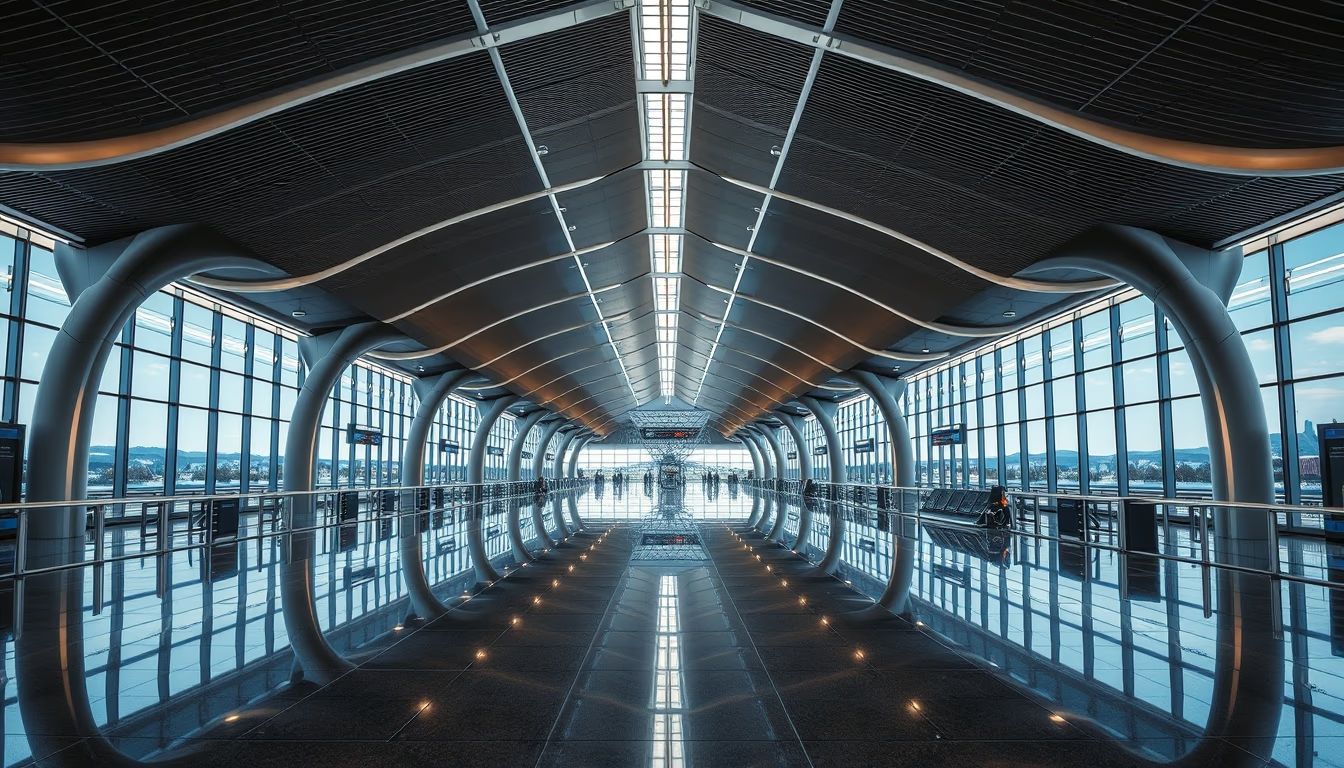
Modern airport terminals combine operational efficiency with iconic design, transforming the traveler experience and the global urban landscape.
About this subject
Modern airport terminals are defined by large spans, abundant natural light, and intuitive wayfinding systems. Structures such as Terminal 3 at Dubai International Airport or Terminal 2 at Singapore Changi exemplify the use of central atria and indoor gardens to reduce passenger stress. Optimization of passenger and baggage flows is achieved through sensors and artificial intelligence, enabling shorter connection times and greater predictability.
Airports like Istanbul in Turkey and Beijing Daxing in China have taken design to new heights. Istanbul's terminal, one of the world's largest, covers 1.4 million square meters and uses a roof system with curved beams reminiscent of waves. Daxing's terminal, designed by architect Zaha Hadid, features a star shape that minimizes walking distances between gates. In Brazil, São Paulo's Guarulhos International Airport underwent a modern expansion with Terminal 3, prioritizing accessibility and energy efficiency.
Sustainability has become a central pillar. New terminals are pursuing LEED certifications, using solar panels, rainwater harvesting systems, and low-thermal-impact facades. Oslo Airport in Norway, for instance, is considered the most sustainable in the world, with geothermal heating and recycled materials. Future trends include expandable modular terminals, integration with high-capacity public transport, and the use of biofuels in ground fleets.
The passenger experience is being reimagined with leisure areas, themed lounges, and biometric technology for fast boarding. Airports like Incheon in South Korea offer movie theaters and native plant gardens. This approach transforms the terminal from a mere passage point into a destination in itself, generating non-aeronautical revenue and strengthening the host city's image.
Frequently Asked Questions
What are the main innovations in modern airport terminals?
Key innovations include automation of processes such as biometric check-in and boarding, use of artificial intelligence to optimize flows, sustainability with green certifications, and design focused on passenger well-being with green spaces and natural lighting.
How is sustainability applied in the construction of modern terminals?
Sustainability is applied through solar panels, rainwater harvesting, efficient HVAC systems, recycled materials, and LEED certifications. Examples include Oslo Airport, which uses geothermal heating.
Which airport is considered the most modern in the world today?
Istanbul International Airport is often cited as the most modern, due to its size, cutting-edge technology, and innovative design. Other contenders include Beijing Daxing Airport and Singapore Changi Airport.
Direct URL
https://pub-c7d6a6ea828543ac903a74a341ccb2e1.r2.dev/imagens/airport-terminal-modern-architectural-photography-p5.avifHow to credit
Include a visible link back to UtilizAí. Copy one of the snippets below:
<a href="https://xn--utiliza-eza.com/en/midia/imagens/airport-terminal-modern-architectural-photography-p5">Airport terminal modern</a> by <a href="https://xn--utiliza-eza.com">UtilizAí</a>, licensed under <a href="https://creativecommons.org/licenses/by/4.0/">CC BY 4.0</a>.
[Airport terminal modern](https://xn--utiliza-eza.com/en/midia/imagens/airport-terminal-modern-architectural-photography-p5) by [UtilizAí](https://xn--utiliza-eza.com), CC BY 4.0
License: CC-BY-4.0