Agronomist with tablet in field analyzing crop data
1344×768 · AVIF · CC BY 4.0
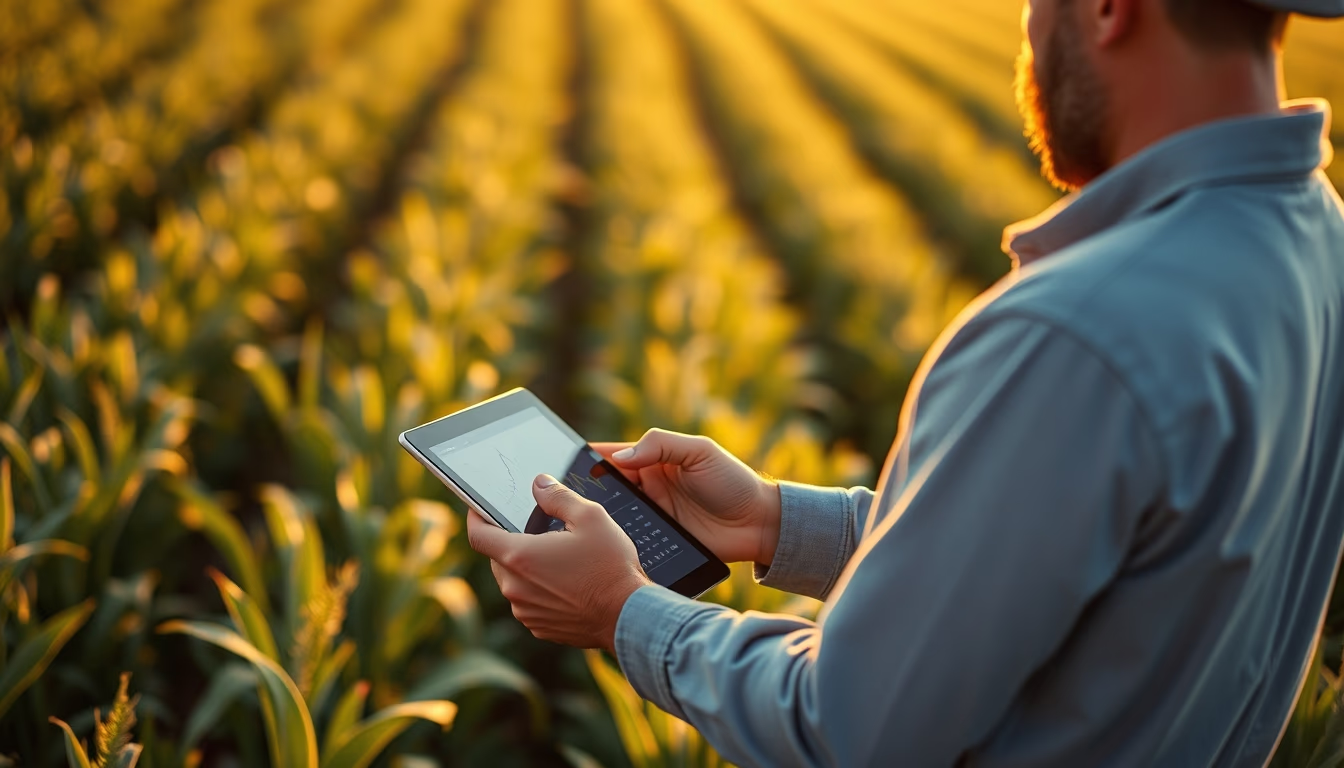
Agronomist uses tablet in the field to monitor crops and make data-driven decisions in real time.
About this subject
Precision agriculture has transformed how agronomists manage crops. With a tablet in hand, the professional can access yield maps, vegetation indices (NDVI), weather data, and technical recommendations directly in the field. This technology allows identifying planting failures, pests, or nutritional deficiencies much faster than traditional visual inspection.
In Brazil, the use of tablets and smartphones in agriculture has grown exponentially in recent years. According to the Brazilian Association of Precision Agriculture (ABRAP), more than 60% of large farms already adopt some type of digital monitoring tool. The agronomist, central to this process, combines technical knowledge with real-time data to recommend localized input application, saving resources and reducing environmental impacts.
The image captures a typical late-afternoon moment when sunlight favors visual plant assessment. The professional may be checking the effectiveness of a recent pesticide application or adjusting irrigation scheduling. Connectivity in the field, enabled by 4G/5G or satellite networks, allows collected data to be instantly uploaded to the cloud, integrating with farm management systems.
Interestingly, the tablet replaces field notebooks and clipboards but requires protection against dust and moisture. Many agronomists use rugged cases and portable chargers to ensure operation throughout the day. The combination of human expertise and mobile technology is a cornerstone of modern agriculture, boosting productivity and sustainability.
Frequently Asked Questions
What data can an agronomist access on a tablet during a field visit?
The agronomist can access yield maps from previous seasons, vegetation indices (NDVI) from drones or satellites, weather forecasts, customized technical recommendations, and historical field records.
How does precision agriculture benefit the environment?
It enables localized application of fertilizers and pesticides, reducing waste and soil/water contamination. It also optimizes water use in irrigation and lowers greenhouse gas emissions.
Does the tablet completely replace the agronomist's fieldwork?
No. The tablet is a support tool that speeds up data collection and analysis, but the agronomist's expertise is essential to interpret information, identify issues not captured by sensors, and make strategic decisions.
Direct URL
https://pub-c7d6a6ea828543ac903a74a341ccb2e1.r2.dev/imagens/agronomist-with-tablet-in-field-analyzing-crop-data-wide-late-afternoon-5.avifHow to credit
Include a visible link back to UtilizAí. Copy one of the snippets below:
<a href="https://xn--utiliza-eza.com/en/midia/imagens/agronomist-with-tablet-in-field-analyzing-crop-data-wide-late-afternoon-5">Agronomist with tablet in field analyzing crop data</a> by <a href="https://xn--utiliza-eza.com">UtilizAí</a>, licensed under <a href="https://creativecommons.org/licenses/by/4.0/">CC BY 4.0</a>.
[Agronomist with tablet in field analyzing crop data](https://xn--utiliza-eza.com/en/midia/imagens/agronomist-with-tablet-in-field-analyzing-crop-data-wide-late-afternoon-5) by [UtilizAí](https://xn--utiliza-eza.com), CC BY 4.0
License: CC-BY-4.0