Abstract waves blue
1344×768 · AVIF · CC BY 4.0
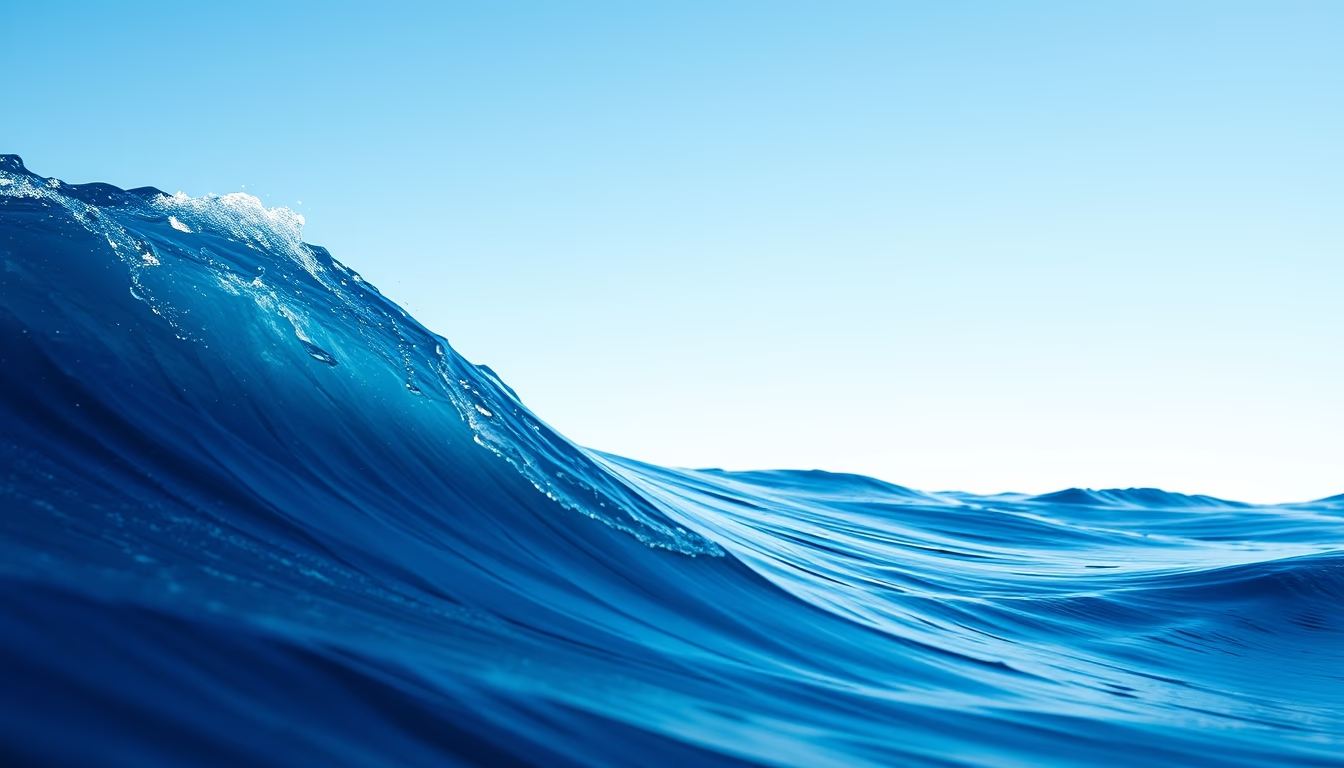
Abstract blue waves are a recurring motif in minimalist art, symbolizing movement and tranquility in a monochromatic palette.
About this subject
The depiction of abstract blue waves is rooted in a long artistic tradition that uses form and color to evoke emotions. From Hokusai's iconic 'The Great Wave off Kanagawa,' waves have represented nature's power and the passage of time. In abstraction, artists like Wassily Kandinsky and Piet Mondrian reduced natural shapes to essential lines and curves, seeking a universal visual language. Blue gained prominence with Yves Klein and his 'International Klein Blue,' a deep hue evoking infinity and spirituality. Minimalist art, which flourished in the 1960s with figures such as Donald Judd and Agnes Martin, emphasizes simplicity and repetition. Abstract blue waves fit this aesthetic perfectly: smooth curves against a plain background create a sense of harmony and balance. Color psychology studies associate blue with calmness, trust, and serenity, making it ideal for minimalist compositions. In contemporary design, especially digital interfaces and branding, this motif conveys modernity and fluidity. The versatility of abstract waves allows endless variations, from fine, elegant lines to bold, overlapping curves. The monochromatic blue choice further reinforces depth and movement, inviting quiet contemplation.
Frequently Asked Questions
What is the origin of abstract waves in art?
The abstract representation of waves emerged in the early 20th century with movements like Expressionism and Abstraction. Artists such as Wassily Kandinsky and František Kupka used undulating forms to express emotions and cosmic rhythms, influenced by music and spirituality.
Why is blue so commonly used in minimalist compositions?
Blue is often chosen in minimalist compositions for its ability to convey calmness and depth without overwhelming the viewer. Shades like ultramarine and cerulean are versatile and stand out against neutral backgrounds, maintaining visual simplicity.
How do abstract waves influence contemporary design?
In contemporary design, abstract waves are used in logos, wallpapers, and user interfaces to create a sense of movement and modernity. They help soften rigid layouts and can be paired with clean typography for a sophisticated aesthetic.
Direct URL
https://pub-c7d6a6ea828543ac903a74a341ccb2e1.r2.dev/imagens/abstract-waves-blue-minimalist-composition-p3.avifHow to credit
Include a visible link back to UtilizAí. Copy one of the snippets below:
<a href="https://xn--utiliza-eza.com/en/midia/imagens/abstract-waves-blue-minimalist-composition-p3">Abstract waves blue</a> by <a href="https://xn--utiliza-eza.com">UtilizAí</a>, licensed under <a href="https://creativecommons.org/licenses/by/4.0/">CC BY 4.0</a>.
[Abstract waves blue](https://xn--utiliza-eza.com/en/midia/imagens/abstract-waves-blue-minimalist-composition-p3) by [UtilizAí](https://xn--utiliza-eza.com), CC BY 4.0
License: CC-BY-4.0