78 rpm shellac vintage
1344×768 · AVIF · CC BY 4.0
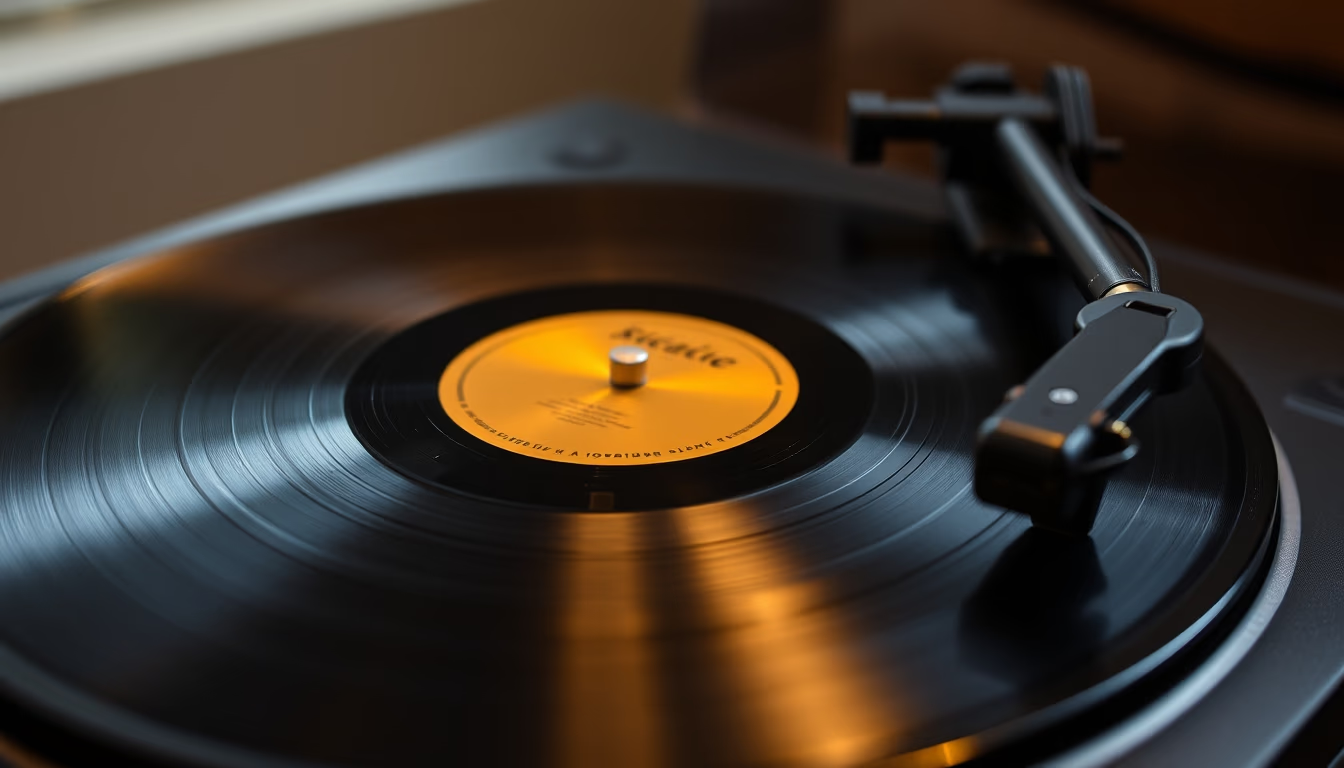
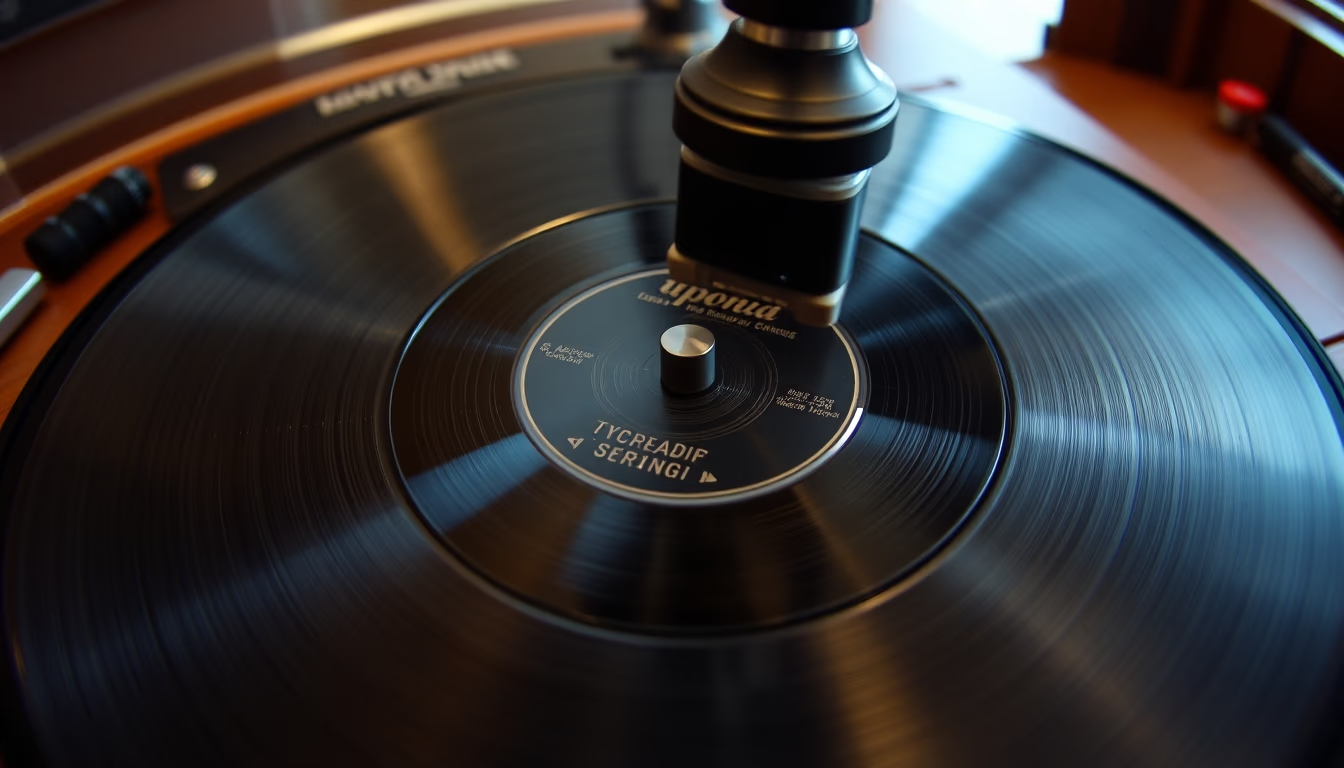
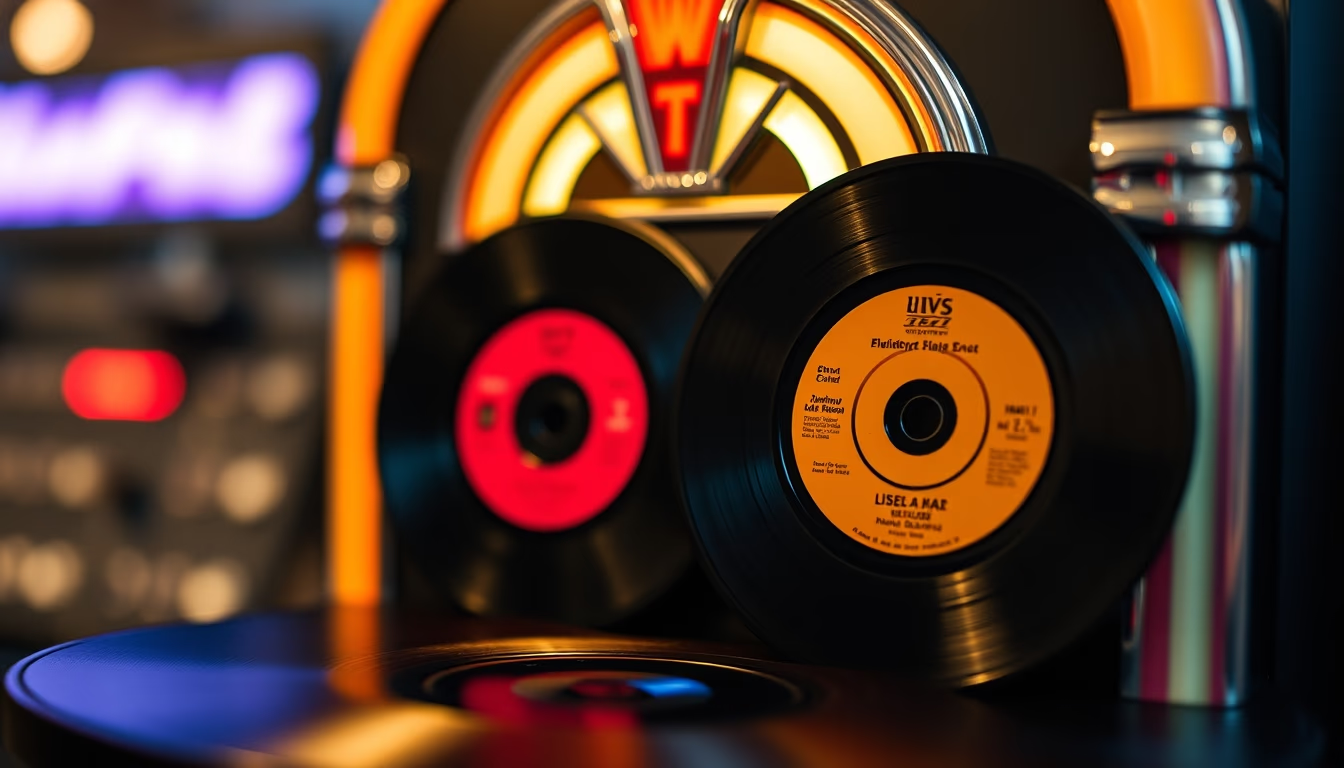
78 rpm shellac records, carriers of early 20th century popular music, reveal the fragility and history of analog sound recording.
About this subject
78 revolutions per minute (rpm) records were the dominant sound recording format from approximately 1900 to 1950. Made of shellac, a natural resin secreted by the Kerria lacca insect, these records were fragile and heavy, often mixed with fillers such as slate dust to add rigidity. The most common standard was the 10-inch diameter disc, which held about three to four minutes of audio per side, drastically limiting recording length. This constraint shaped popular music of the era, forcing composers and performers to create short, direct works. The rough surface produced a characteristic background noise, now often appreciated as part of the vintage aesthetic.
Historically, the 78 rpm speed was not standardized immediately. Before the 1920s, different record companies used speeds ranging from 70 to 80 rpm, until the industry converged on 78 revolutions. Discs were usually single-sided until the mid-1910s, when double-sided recording became common. Materials such as cellulose acetate were experimented with, but shellac remained dominant due to its relative durability and low cost. Fragility, however, made the discs prone to chipping and breakage, and the steel or wood needle wore down the groove with each play.
Culturally, 78 rpm records were the primary vehicle for the dissemination of jazz, blues, classical music, opera, and Brazilian popular music such as choro and samba. In Brazil, record labels like Odeon, RCA Victor, and Columbia released fundamental recordings by artists such as Pixinguinha, Carmen Miranda, and Noel Rosa. Collecting 78 rpm records has become a specialized hobby, with rare copies fetching high prices at auctions. Preservation of these recordings faces challenges due to chemical deterioration of shellac and the difficulty of finding proper playback equipment.
Interestingly, the transition to vinyl in the 1950s accelerated the format's decline, but the sonic legacy of 78 rpm remains a testament to the mechanical era of recording. Many modern studios use digital restoration techniques to recover audio from these discs, removing pops and crackles without losing the musical soul. The vintage aesthetic of 78 rpm continues to inspire musicians and designers, symbolizing analog authenticity in a digital world.
Frequently Asked Questions
Why were 78 rpm records made of shellac?
Shellac was an available, durable, and inexpensive material in the early 20th century. Mixed with fillers like slate dust, it produced a rigid surface that could withstand steel needles, although it was brittle and prone to chipping.
How long does a 78 rpm record play?
Typically, each side of a 10-inch 78 rpm record holds about 3 to 4 minutes of audio. 12-inch discs could reach up to 5 minutes per side, but the time constraint shaped popular compositions of the era.
Are 78 rpm records valuable as collectibles?
Yes, 78 rpm records can be valuable, especially if they are rare recordings, by famous artists, or in exceptional condition. Value depends on demand, rarity, and sound quality. Some copies can be worth hundreds or thousands of dollars.
Direct URL
https://pub-c7d6a6ea828543ac903a74a341ccb2e1.r2.dev/imagens/78-rpm-shellac-vintage-studio-still-life-fresh15.avifHow to credit
Include a visible link back to UtilizAí. Copy one of the snippets below:
<a href="https://xn--utiliza-eza.com/en/midia/imagens/78-rpm-shellac-vintage-studio-still-life-fresh15">78 rpm shellac vintage</a> by <a href="https://xn--utiliza-eza.com">UtilizAí</a>, licensed under <a href="https://creativecommons.org/licenses/by/4.0/">CC BY 4.0</a>.
[78 rpm shellac vintage](https://xn--utiliza-eza.com/en/midia/imagens/78-rpm-shellac-vintage-studio-still-life-fresh15) by [UtilizAí](https://xn--utiliza-eza.com), CC BY 4.0
License: CC-BY-4.0