45 rpm jukebox singles
1344×768 · AVIF · CC BY 4.0

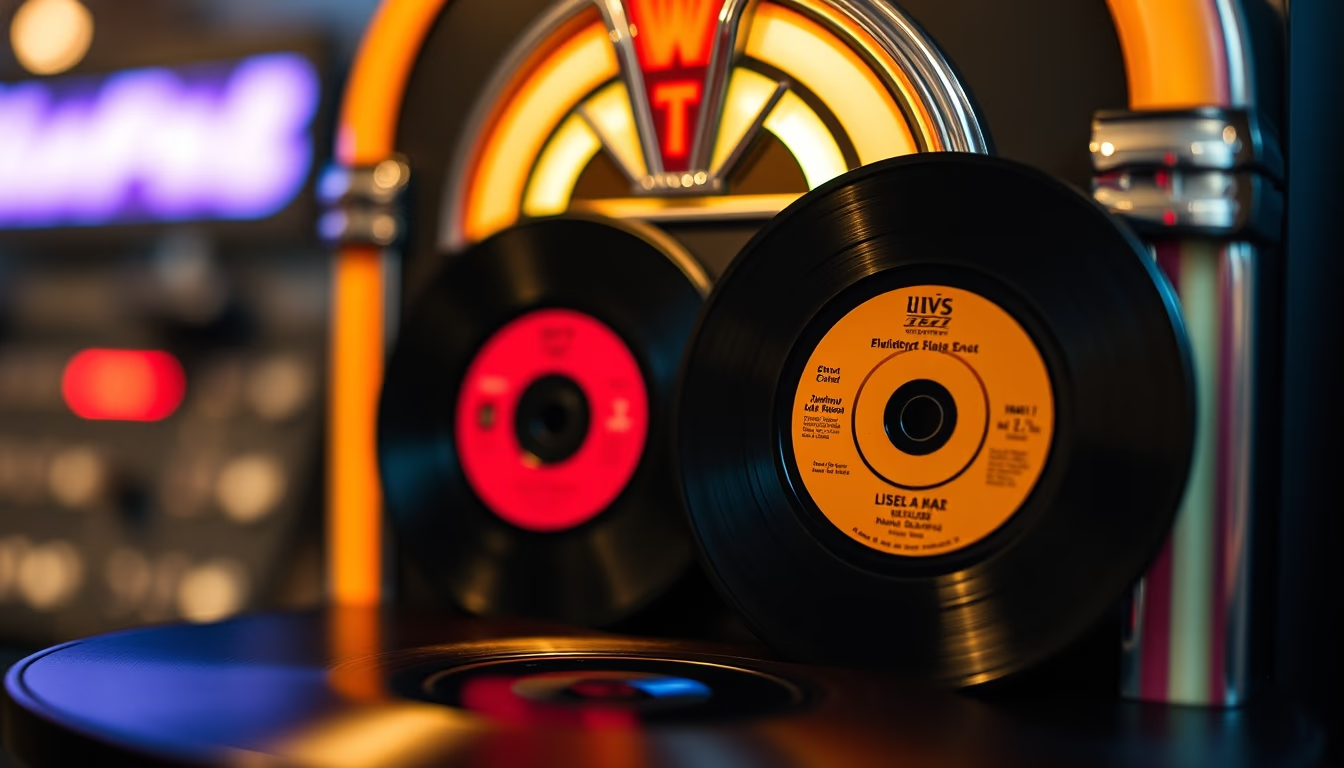
Discos de vinil de 45 rotações foram o formato padrão de singles em jukeboxes, dominando a música popular entre os anos 1950 e 1980.
Sobre o tema
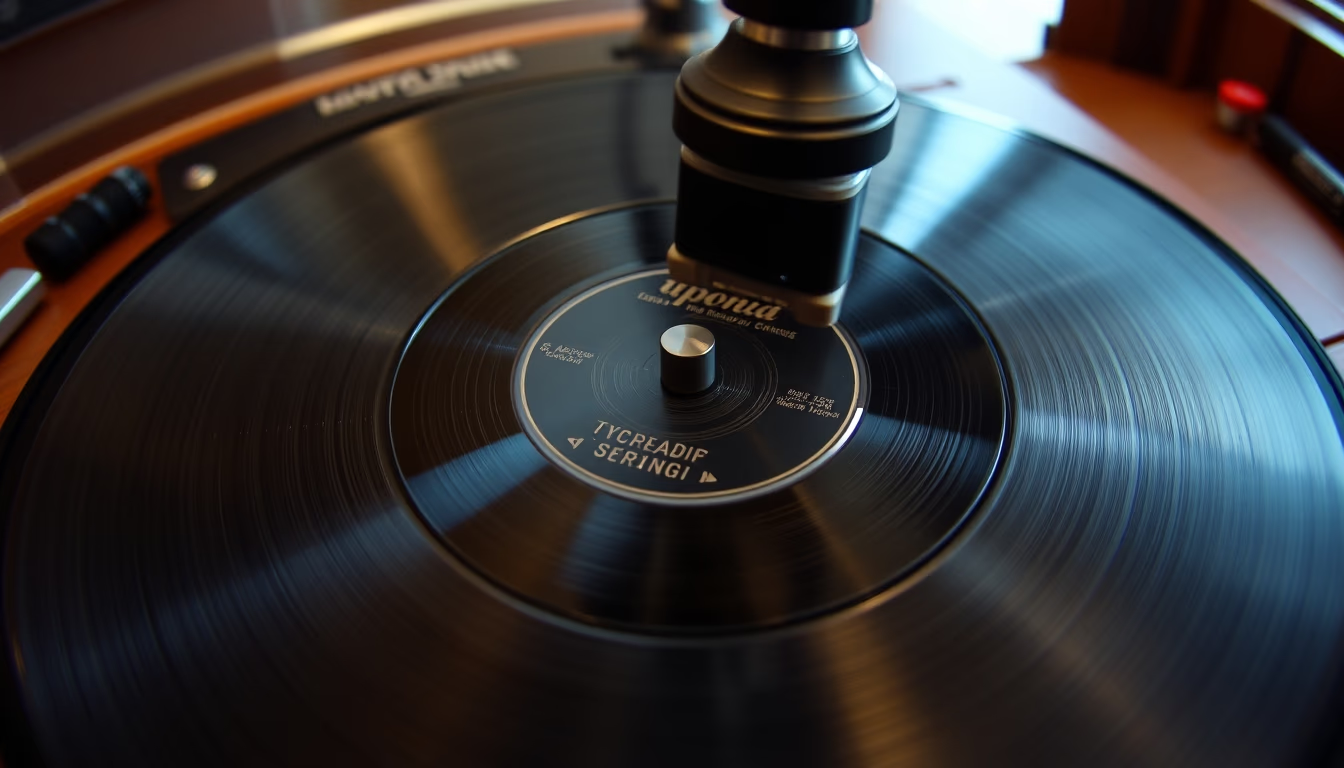
Os discos de 45 rotações por minuto (rpm) foram introduzidos pela RCA Victor em 1949 como uma alternativa mais compacta e durável aos78 rpm. Com um diâmetro de 17,5 cm e um furo central maior (1,5 polegadas), eles se tornaram o suporte ideal para jukeboxes, que precisavam de discos que suportassem repetições constantes e trocas rápidas. A jukebox clássica, como a Wurlitzer 1015, usava um mecanismo de seleção que escolhia o single entre dezenas de opções, reproduzindo o lado A (e às vezes o B) em sequência. Esse formato impulsionou a indústria fonográfica: entre os anos 1950 e 1970, a maioria dos sucessos pop, rock, soul e country foi lançada em 45 rpm. Estima-se que mais de 10 bilhões de singles de 45 rpm foram produzidos globalmente, com pico de vendas nos Estados Unidos em 1973, quando 228 milhões de unidades foram comercializadas. O declínio começou com a introdução do compact disc nos anos 1980, mas as jukeboxes modernas migraram para formatos digitais. Hoje, discos de 45 rpm originais de jukebox são itens de colecionador, valorizados por capas personalizadas (com furo central e bordas cortadas) e por seu som analógico característico. A rotação mais alta em relação aos LPs (33 ⅓ rpm) proporciona melhor resposta de agudos e menor distorção, razão pela qual audiófilos ainda buscam prensagens originais. Além disso, muitas jukeboxes dos anos 1950 e 1960 tinham capacidade para 50 a 100 singles, organizados em cartuchos ou bandejas. A cultura das jukeboxes marcou lanchonetes, bares e diners, especialmente nos EUA, onde o termo 'jukebox' deriva de 'juke joint', palavra africano-americana para locais de música e dança. Esse contexto histórico faz dos 45 rpm de jukebox um símbolo da era de ouro do rock and roll e da música popular.
Perguntas frequentes
Qual a diferença entre um disco de 45 rpm comum e um de jukebox?
Discos de jukebox geralmente têm o furo central maior (1,5 polegadas) e capas com recorte circular para encaixe no mecanismo. Muitos também possuem bordas cortadas ou marcas de desgaste por uso repetido.
Por que os discos de 45 rpm têm melhor qualidade de som que os LPs?
A rotação mais alta (45 rpm vs 33⅓ rpm) permite que mais informação seja gravada por segundo, resultando em melhor resposta de agudos e menor distorção, especialmente nas altas frequências.
Quando as jukeboxes deixaram de usar discos de vinil?
A transição para formatos digitais começou nos anos 1990, com a introdução de CDs em jukeboxes. Hoje, a maioria das jukeboxes modernas usa arquivos digitais ou streaming, mas ainda existem modelos vintage em operação.
URL direta
https://pub-c7d6a6ea828543ac903a74a341ccb2e1.r2.dev/imagens/45-rpm-jukebox-singles-film-grain-authentic-fresh12.avifComo creditar
Inclua um link visível de volta pro UtilizAí. Copie um dos snippets abaixo:
<a href="https://xn--utiliza-eza.com/midia/imagens/45-rpm-jukebox-singles-film-grain-authentic-fresh12">45 rpm jukebox singles</a> by <a href="https://xn--utiliza-eza.com">UtilizAí</a>, licensed under <a href="https://creativecommons.org/licenses/by/4.0/">CC BY 4.0</a>.
[45 rpm jukebox singles](https://xn--utiliza-eza.com/midia/imagens/45-rpm-jukebox-singles-film-grain-authentic-fresh12) by [UtilizAí](https://xn--utiliza-eza.com), CC BY 4.0
Licença: CC-BY-4.0