Venice carnival mask gold
1344×768 · AVIF · CC BY 4.0
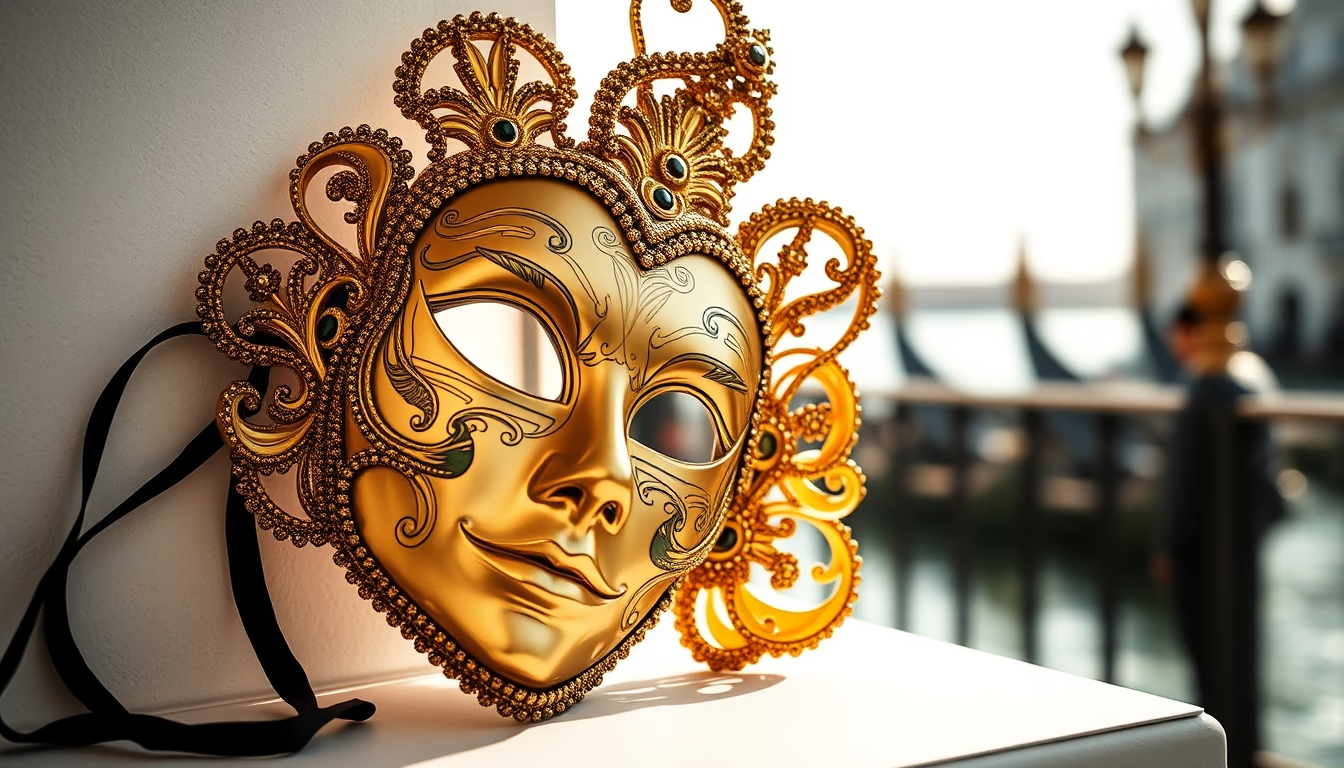
Gold Venetian carnival mask, symbol of tradition and luxury of the Venetian celebration.
About this subject
The golden mask is one of the most recognizable icons of the Venice Carnival, a festival dating back to the 12th century. Originally, masks allowed Venetians from different social classes to mingle anonymously during the celebration, breaking the rigid hierarchies of the Serenissima Republic. Over time, use extended to other periods of the year, especially in theater and daily life, until it was banned in the 18th century. The tradition revived in 1979 when the local government promoted the Carnival as a tourist attraction, rescuing handcrafting techniques.
Gold color, obtained with gold leaf applied by hand over plaster or papier-mâché, symbolizes wealth and ostentation, characteristics of Venetian splendor during the Renaissance. Each mask is crafted by specialized artisans, many concentrated in the Dorsoduro district, using clay molds and techniques passed down through generations. Besides gold, details like feathers, rhinestones, and red or black ribbons are common, but the minimalist design highlights the purity of the precious metal.
During Carnival, gold masks are worn at gala balls, such as the famous Doge's Ball at Palazzo Grimaldi, and in best costume competitions. While anyone can purchase a replica, authentic pieces cost hundreds of euros and are considered collectible works of art. The global popularity of the Venice Carnival attracts about 3 million visitors per year, solidifying the mask as a souvenir and symbol of Italian culture worldwide.
Interestingly, the gold leaf painting technique is the same used in religious icons and baroque frames. Masks also appear in films like "Eyes Wide Shut" and "The Iron Mask," perpetuating the mystery and glamour associated with Venetian anonymity. The minimalist gold version, without excessive adornment, harks back to the original 18th-century style when masks were simpler and more elegant.
Frequently Asked Questions
What is the origin of masks in the Venice Carnival?
Masks in Venice date back to the 12th century, when citizens used them to mingle anonymously during Carnival and at other times of the year, such as in casinos and theaters.
How are golden Venetian masks made?
They are handmade with papier-mâché or plaster, shaped in clay molds. The golden layer is applied with gold leaf glued by hand and then polished to achieve shine.
What does the gold color symbolize on the masks?
Gold symbolizes wealth, power, and ostentation, evoking the luxury of the Venetian Republic during the Renaissance. It was a common color at gala balls and noble costumes.
Direct URL
https://pub-c7d6a6ea828543ac903a74a341ccb2e1.r2.dev/imagens/venice-carnival-mask-gold-minimalist-composition-fresh17.avifHow to credit
Include a visible link back to UtilizAí. Copy one of the snippets below:
<a href="https://xn--utiliza-eza.com/en/midia/imagens/venice-carnival-mask-gold-minimalist-composition-fresh17">Venice carnival mask gold</a> by <a href="https://xn--utiliza-eza.com">UtilizAí</a>, licensed under <a href="https://creativecommons.org/licenses/by/4.0/">CC BY 4.0</a>.
[Venice carnival mask gold](https://xn--utiliza-eza.com/en/midia/imagens/venice-carnival-mask-gold-minimalist-composition-fresh17) by [UtilizAí](https://xn--utiliza-eza.com), CC BY 4.0
License: CC-BY-4.0