Tower of hercules spain
1344×768 · AVIF · CC BY 4.0
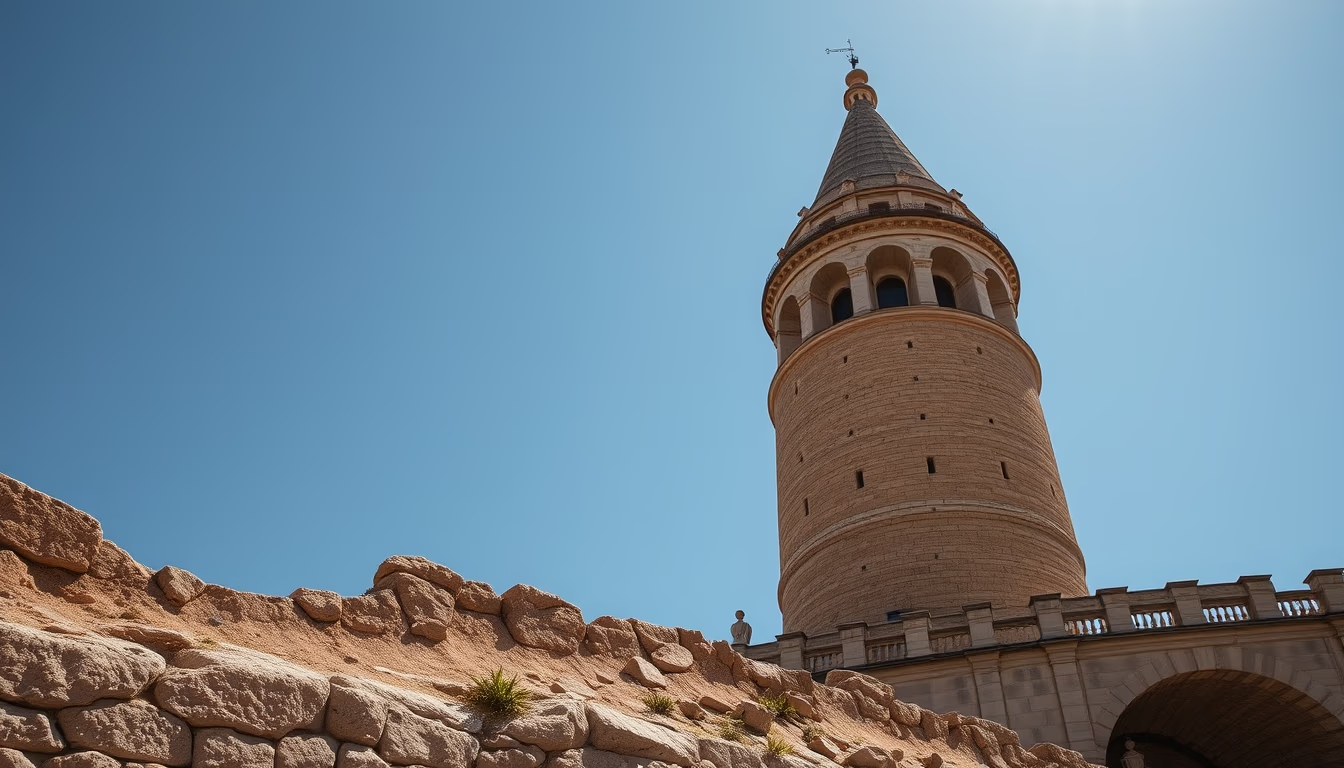
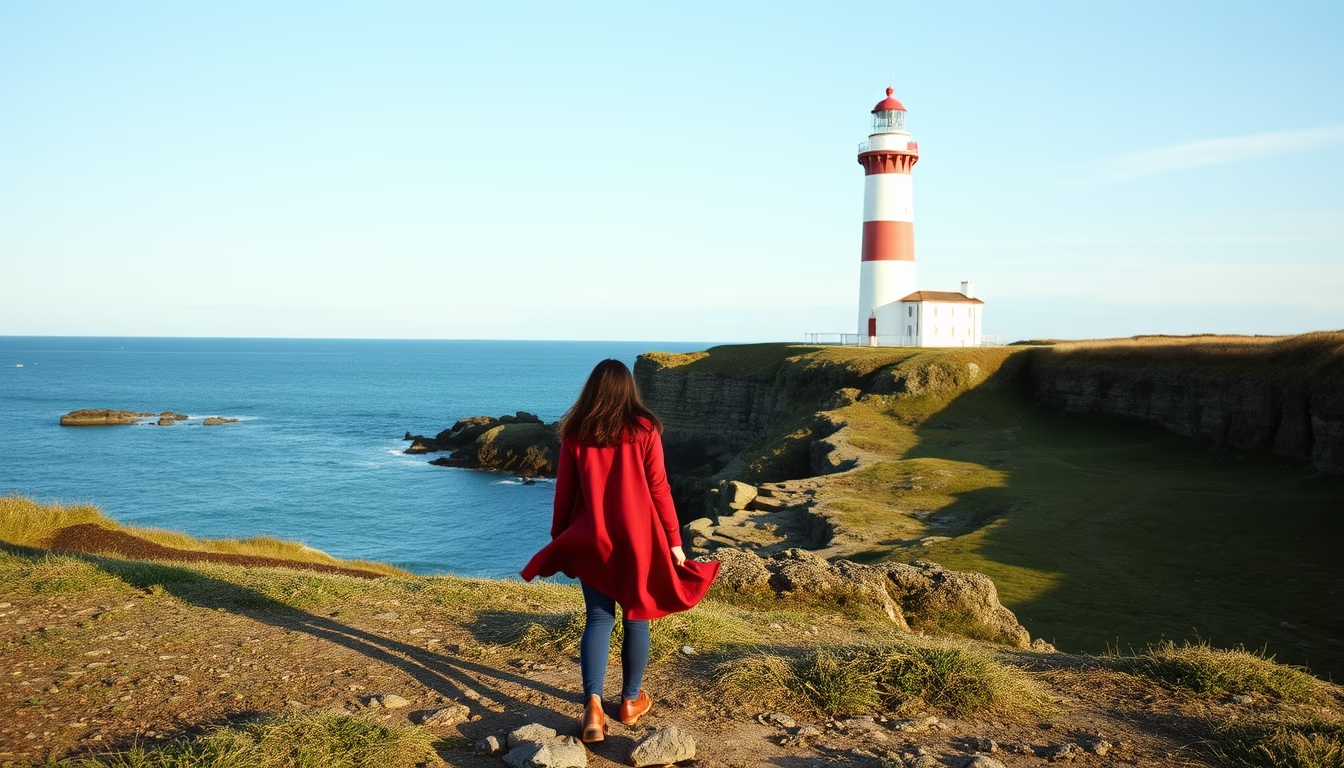
The Tower of Hercules, in A Coruña, Spain, is the oldest Roman lighthouse still in operation, dating back to the 1st century AD.
About this subject
The Tower of Hercules, located in A Coruña, Galicia, Spain, is a Roman lighthouse that has remained in operation since the 1st century AD. Built at the end of the 1st century under Emperor Trajan's reign, it was designed by the architect Gaius Sevius Lupus, as recorded on an original inscription. Standing 55 meters high, the original Roman structure measured about 34 meters, but was enlarged in the 18th century during a restoration that added an upper section. The lighthouse marks the entrance to the port of A Coruña and is one of the city's main symbols, designated a UNESCO World Heritage Site since 2009.
For centuries, the tower served as a navigational aid for sailors crossing the Atlantic. Its strategic position on the northwest coast of the Iberian Peninsula was crucial for Roman maritime routes connecting the Mediterranean to the ocean. Local legend associates the tower with the mythological hero Hercules, who is said to have defeated the giant Geryon on the site, giving the tower its name. The lighthouse now uses an electric lamp, but its architectural base preserves Roman construction techniques such as opus caementicium (Roman concrete).
The Tower of Hercules is one of the best-preserved Roman lighthouses, alongside Dover's Roman lighthouse (Britain) and the Pharos of Alexandria (destroyed). In 1791, engineer Eustáquio Giannini designed the renovation that gave the tower its current appearance with two octagonal bodies. The surrounding park, Parque de la Torre de Hércules, contains sculptures and archaeological remains, and the area is a popular tourist attraction. The lighthouse is operated by the Port Authority of A Coruña and emits a light signal with a range of 34 nautical miles.
Interestingly, the tower was used as a prison and fortress in different historical periods. During the Middle Ages, it was incorporated into the city walls and served as a watchtower. Recent archaeological studies have shown that the base of the tower was originally surrounded by a retaining wall, likely to protect the structure from the sea. The Tower of Hercules stands as a testament to Roman engineering and continuous adaptation over two millennia.
Frequently Asked Questions
Who built the Tower of Hercules and when?
The Tower of Hercules was built by the Roman architect Gaius Sevius Lupus in the late 1st century AD, likely during the reign of Emperor Trajan.
Is the Tower of Hercules still functioning as a lighthouse?
Yes, the Tower of Hercules remains an active lighthouse, guiding ships in the Atlantic with a range of 34 nautical miles.
Why is the tower called the Tower of Hercules?
The name derives from the legend that Hercules defeated the giant Geryon on the site and ordered the tower to be built to mark his victory.
Direct URL
https://pub-c7d6a6ea828543ac903a74a341ccb2e1.r2.dev/imagens/tower-of-hercules-spain-minimalist-composition-fresh16.avifHow to credit
Include a visible link back to UtilizAí. Copy one of the snippets below:
<a href="https://xn--utiliza-eza.com/en/midia/imagens/tower-of-hercules-spain-minimalist-composition-fresh16">Tower of hercules spain</a> by <a href="https://xn--utiliza-eza.com">UtilizAí</a>, licensed under <a href="https://creativecommons.org/licenses/by/4.0/">CC BY 4.0</a>.
[Tower of hercules spain](https://xn--utiliza-eza.com/en/midia/imagens/tower-of-hercules-spain-minimalist-composition-fresh16) by [UtilizAí](https://xn--utiliza-eza.com), CC BY 4.0
License: CC-BY-4.0