Stamp magnifier album
1344×768 · AVIF · CC BY 4.0

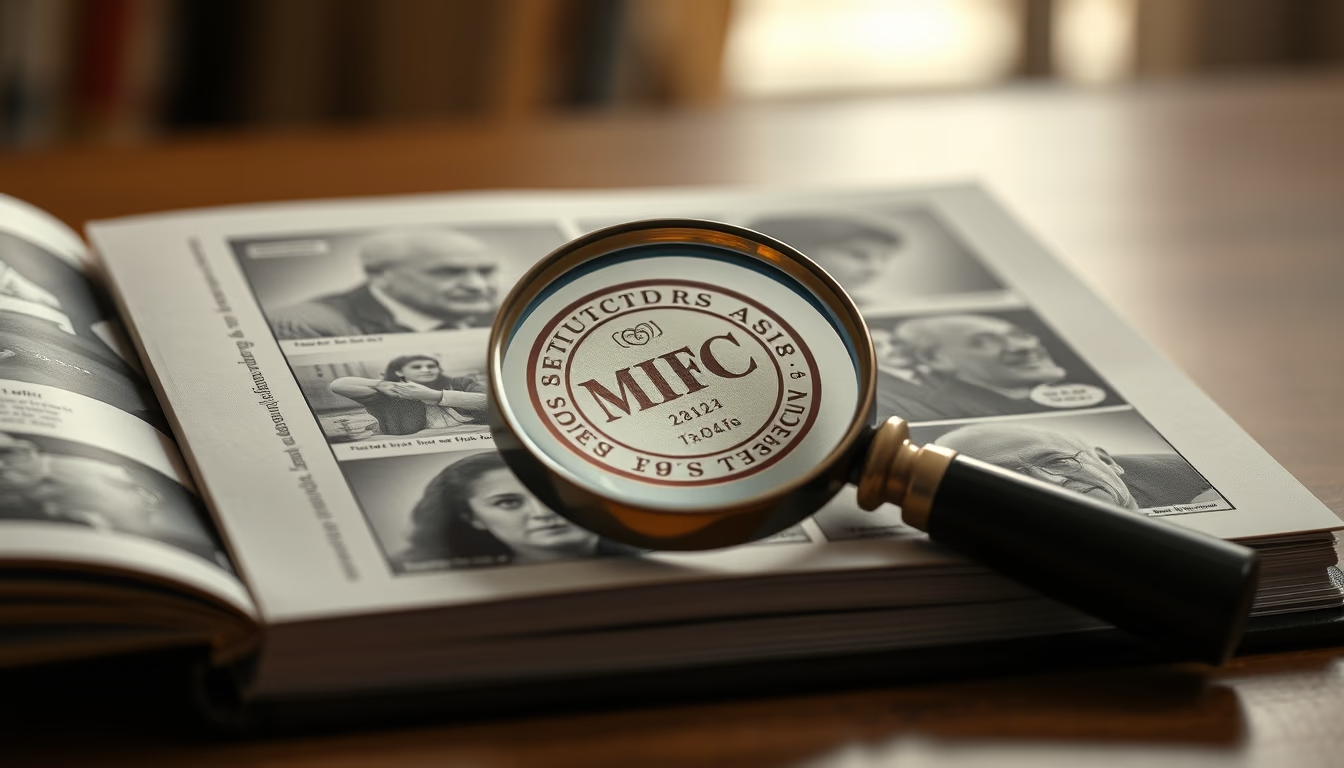
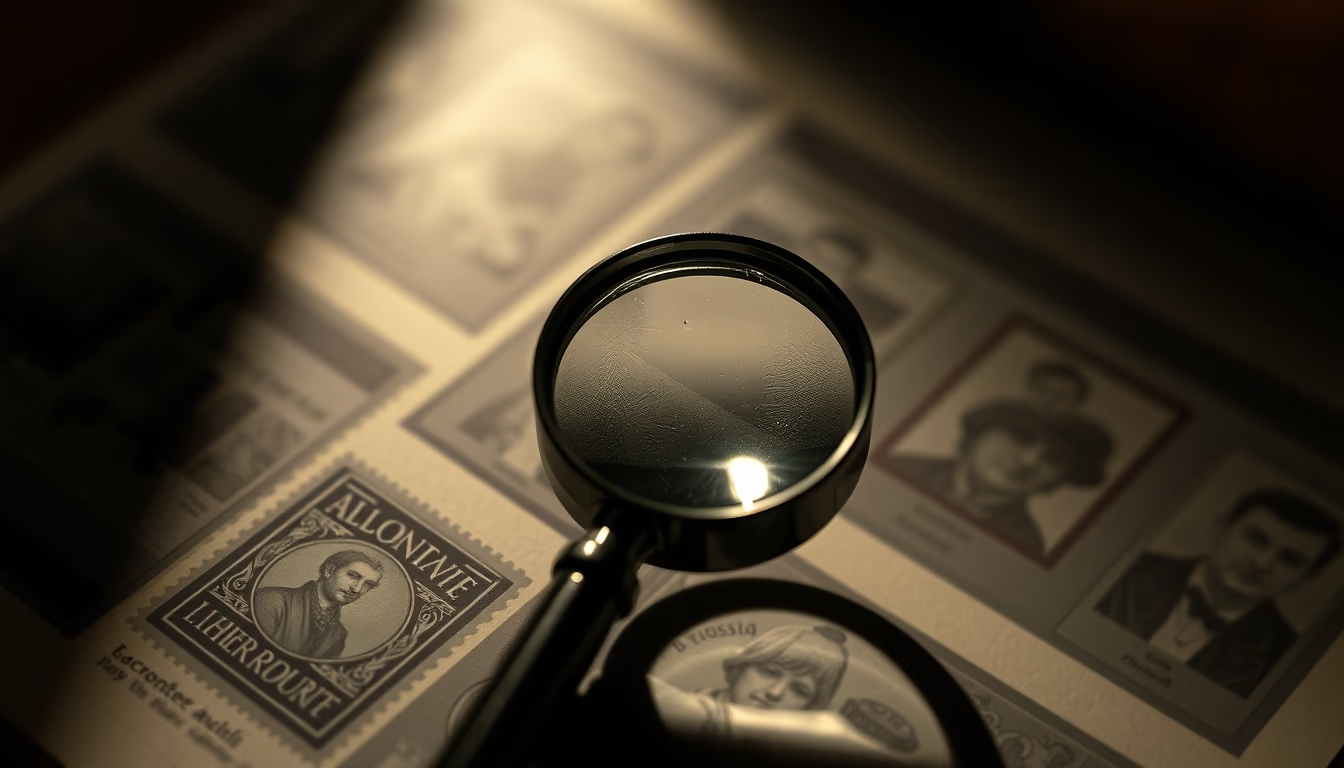
Stamp album with magnifier: essential tools for philately, exploring the history and cultural value of stamp collecting.
About this subject
Philately, the collection and study of postage stamps, is one of the most traditional and widespread hobbies worldwide. It emerged shortly after the issuance of the first adhesive stamp, the Penny Black, in 1840 in the United Kingdom. Since then, millions of people have dedicated themselves to organizing, cataloging, and studying stamps from different countries, eras, and themes. The stamp album is the classic support for this practice: it allows collectors to store and display their items systematically, protecting them from deterioration. Pages are often divided into grids or specific spaces for each stamp, and many albums come with printed information about the stamps to be inserted, such as issue date, country, and face value.
The magnifying glass is an indispensable tool for the philatelist. It enables the observation of minute details of stamps, such as print quality, watermarks, perforation (teething), and any defects or rare varieties. Stamps with printing errors or slight color differences can be worth fortunes, and a good-quality magnifier is crucial to identify them. Additionally, the magnifier helps assess the condition: stamps with creases, tears, or stains lose significant value. Models with built-in lighting are especially useful for examining stamps in low-light conditions.
The album and magnifier set represents the basics of the hobby, but there are other important accessories: tweezers (to handle stamps without damaging them), perforation gauges (rulers to measure perforation), reference catalogs (such as Scott or Yvert et Tellier), and increasingly, digital platforms for cataloging and exchanging information among collectors. Philately is not just a pastime; it also preserves the postal, social, and artistic history of each nation. Old stamps, for example, depict rulers, historical events, flora, fauna, and technological advances, functioning as tiny time capsules.
In Brazil, philately has a strong tradition. The first Brazilian stamp, the Olho de Boi (Bull's Eye), was issued in 1843 and is one of the most sought after worldwide. Today, the Brazilian Postal and Telegraph Company (ECT) maintains programs to encourage collecting, such as the Coin and Stamp Club. Moreover, national and international philatelic exhibitions bring together experts and beginners, promoting knowledge exchange and the valorization of cultural heritage. For those who wish to start, a simple album and a magnifying glass are the first steps into this fascinating universe.
Frequently Asked Questions
Why is a magnifying glass important in philately?
A magnifying glass allows you to observe details such as watermarks, perforations, printing errors, and the condition of stamps. These details are crucial for determining a stamp's authenticity and value.
How do I start a stamp collection?
Get a basic album, a magnifier, and some common stamps (from received mail or beginner kits). Join philatelic clubs or online forums to exchange information and stamps.
What is the Scott Catalog and what is it used for?
The Scott Catalog is an international reference that lists stamps from around the world, with estimated values and technical information. It is used by collectors to identify and price their stamps.
Direct URL
https://pub-c7d6a6ea828543ac903a74a341ccb2e1.r2.dev/imagens/stamp-magnifier-album-high-fashion-editorial-fresh8.avifHow to credit
Include a visible link back to UtilizAí. Copy one of the snippets below:
<a href="https://xn--utiliza-eza.com/en/midia/imagens/stamp-magnifier-album-high-fashion-editorial-fresh8">Stamp magnifier album</a> by <a href="https://xn--utiliza-eza.com">UtilizAí</a>, licensed under <a href="https://creativecommons.org/licenses/by/4.0/">CC BY 4.0</a>.
[Stamp magnifier album](https://xn--utiliza-eza.com/en/midia/imagens/stamp-magnifier-album-high-fashion-editorial-fresh8) by [UtilizAí](https://xn--utiliza-eza.com), CC BY 4.0
License: CC-BY-4.0