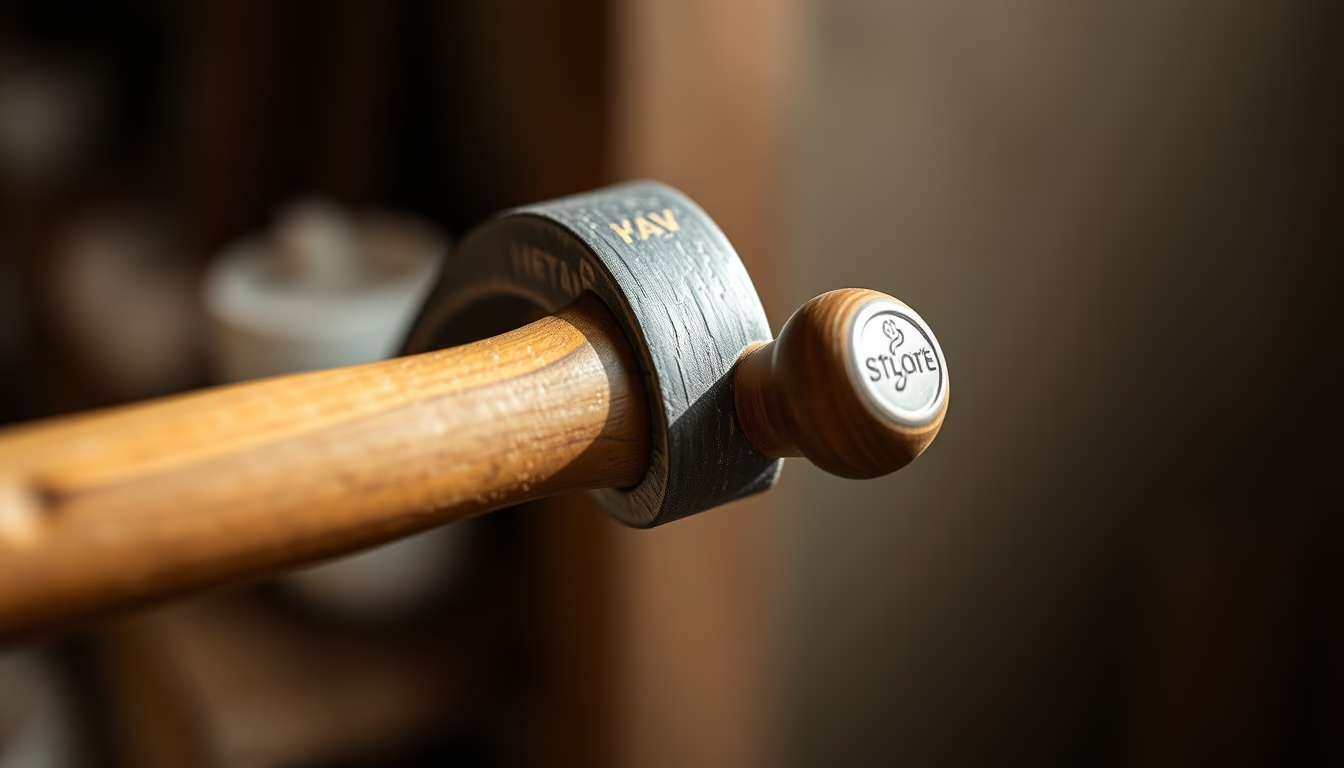
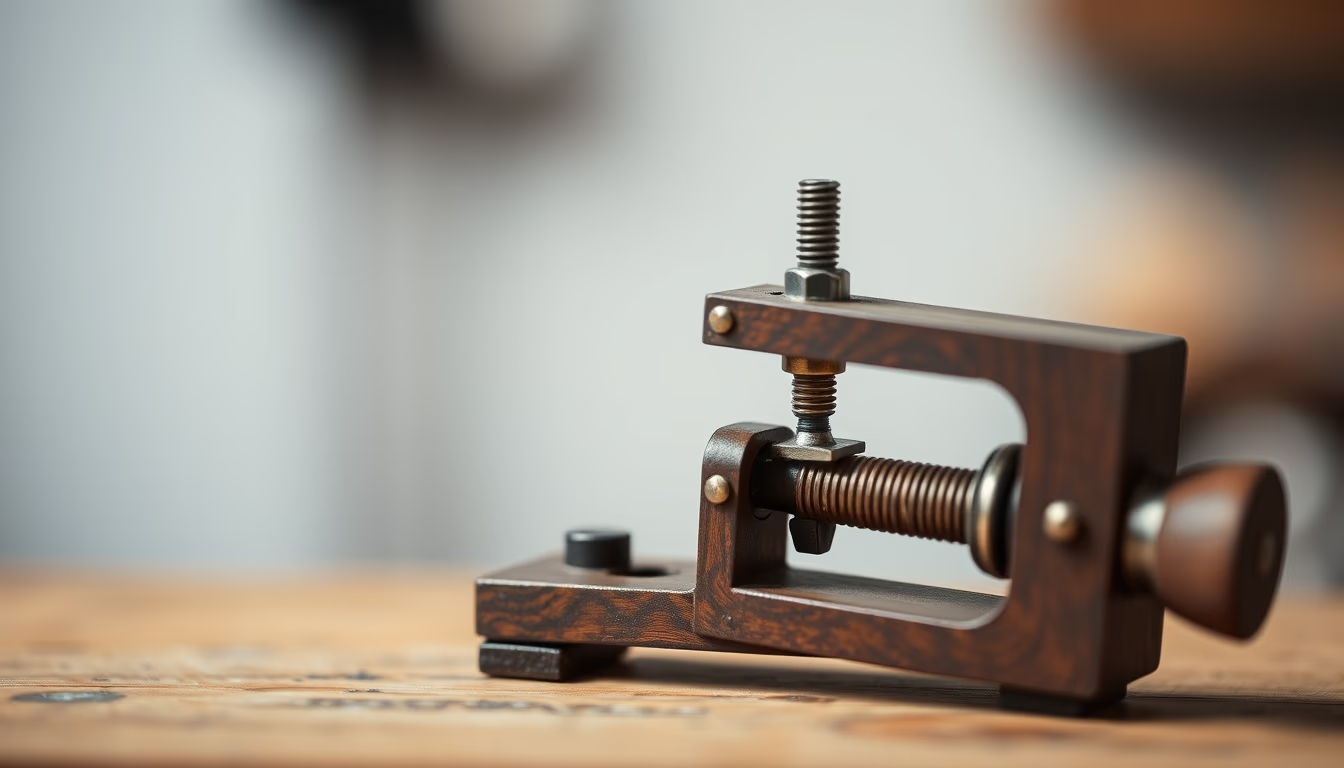
Square machinist
1344×768 · AVIF · CC BY 4.0

The machinist square is a precision tool used in metalworking to check right angles and alignments, essential since the 19th century.
About this subject
The machinist square, also known as a precision square, is a fundamental tool in precision mechanics. Composed of a hardened steel blade and a base, typically in an L-shape, it allows checking perpendicularity between surfaces with high accuracy. Originally, such pieces were handmade by specialized blacksmiths, but the Industrial Revolution demanded standardization and tighter tolerances.
In the 19th century, with the advancement of machine tools, the need for calibrated squares grew. Brands like Starrett and Mitutoyo became world references, producing squares with accuracy up to 0.01 mm per 300 mm length. Interestingly, calibration of these instruments often relies on a master standard, such as a granite square or an optical square.
In machine shops, the square is used together with dial indicators and surface gauges to set up machines like lathes and milling machines. It is also vital in making dies and molds, where a minimal angular deviation can compromise the final part. The term "square" in English can refer both to the tool and the geometric concept, but the context "machinist" specifies its industrial use.
The dramatic lighting in images of this object, such as the Rembrandt style, emphasizes its details and edges, highlighting the precision and robustness of the steel. This echoes the importance of visual inspection in quality assurance, where even tiny imperfections are detected by contrast of light and shadow.
Frequently Asked Questions
What is the difference between a machinist square and a common square?
A machinist square is manufactured with much tighter dimensional tolerances (on the order of hundredths of a millimeter) and usually in hardened steel to resist wear. A common square, used in carpentry or drawing, has lower precision and may be made of materials like plastic or aluminum.
How is a machinist square calibrated?
Calibration is done against reference standards, such as a granite square or using optical methods. The common procedure involves inverting the square against a flat reference surface and measuring the deviation with a dial indicator.
Which brands are most reliable for machinist squares?
Brands like Starrett (USA), Mitutoyo (Japan), and Browne & Sharpe (USA) are worldwide recognized for high precision and durability. In Brazil, Tramontina also produces good quality squares for professional use.
Direct URL
https://pub-c7d6a6ea828543ac903a74a341ccb2e1.r2.dev/imagens/square-machinist-rembrandt-lighting-dramatic-shadows-fresh13.avifHow to credit
Include a visible link back to UtilizAí. Copy one of the snippets below:
<a href="https://xn--utiliza-eza.com/en/midia/imagens/square-machinist-rembrandt-lighting-dramatic-shadows-fresh13">Square machinist</a> by <a href="https://xn--utiliza-eza.com">UtilizAí</a>, licensed under <a href="https://creativecommons.org/licenses/by/4.0/">CC BY 4.0</a>.
[Square machinist](https://xn--utiliza-eza.com/en/midia/imagens/square-machinist-rembrandt-lighting-dramatic-shadows-fresh13) by [UtilizAí](https://xn--utiliza-eza.com), CC BY 4.0
License: CC-BY-4.0