Small family farmer tending to organic vegetables
1344×768 · AVIF · CC BY 4.0
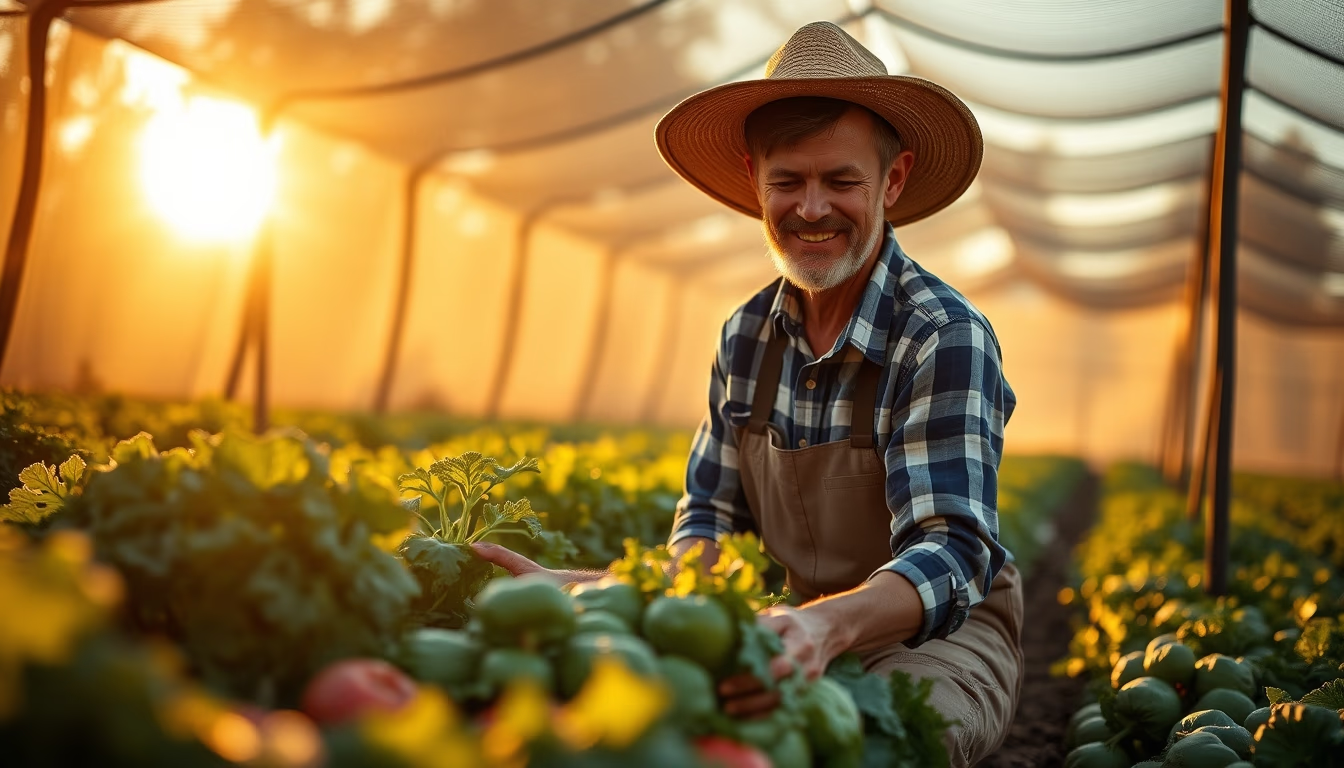
Small family farmer tending to organic vegetables in the late afternoon, a practice that sustains sustainable agriculture in Brazil.
About this subject
Family farming in Brazil is responsible for about 70% of the food that reaches Brazilian tables, according to IBGE. Within this segment, organic production has grown significantly, driven by demand for healthier foods free from pesticides. Small farmers, like the one depicted, dedicate themselves to growing vegetables such as lettuce, arugula, and tomatoes using ecological management techniques like composting and crop rotation to maintain soil fertility without chemical inputs.
Organic farming on small properties is especially relevant in regions like South and Southeast Brazil, where organic fairs and participatory certification programs are strong. Manual labor and attention to natural cycles are hallmarks of this model, which also contributes to preserving local biodiversity. In the late afternoon, when heat subsides, many farmers perform tasks like selective weeding and irrigation, taking advantage of soft light to care for plants without water stress.
Data from the Ministry of Agriculture indicates that Brazil has over 21,000 registered organic producers, with family farming standing out. These producers face challenges such as access to credit and technical assistance but benefit from niche markets and fairer prices. The image of a farmer working in the field symbolizes the resilience of this sector, combining tradition and innovation to offer quality food.
Interestingly, organic certification in Brazil is regulated by Law 10.831/2003, which sets strict standards for production and labeling. Additionally, the country is one of the largest consumers of organics in Latin America, with double-digit annual growth. The presence of small farmers in this scenario reinforces the importance of public policies that value sustainable agriculture and food security.
Frequently Asked Questions
What is the importance of family farming in Brazil?
Family farming is responsible for about 70% of the food consumed in the country, including vegetables, fruits, and milk. It generates rural employment and promotes food security.
How to obtain organic certification for small properties?
Certification can be done by accredited bodies or through participatory guarantee systems. It must follow Law 10.831/2003, which prohibits pesticides and chemical fertilizers.
What are the main challenges for organic family farmers?
Main challenges include access to rural credit, specialized technical assistance, and fair marketing channels, as well as competition with conventional products.
Direct URL
https://pub-c7d6a6ea828543ac903a74a341ccb2e1.r2.dev/imagens/small-family-farmer-tending-to-organic-vegetables-wide-late-afternoon-5.avifHow to credit
Include a visible link back to UtilizAí. Copy one of the snippets below:
<a href="https://xn--utiliza-eza.com/en/midia/imagens/small-family-farmer-tending-to-organic-vegetables-wide-late-afternoon-5">Small family farmer tending to organic vegetables</a> by <a href="https://xn--utiliza-eza.com">UtilizAí</a>, licensed under <a href="https://creativecommons.org/licenses/by/4.0/">CC BY 4.0</a>.
[Small family farmer tending to organic vegetables](https://xn--utiliza-eza.com/en/midia/imagens/small-family-farmer-tending-to-organic-vegetables-wide-late-afternoon-5) by [UtilizAí](https://xn--utiliza-eza.com), CC BY 4.0
License: CC-BY-4.0