Small family farmer tending to organic vegetables
1344×768 · AVIF · CC BY 4.0
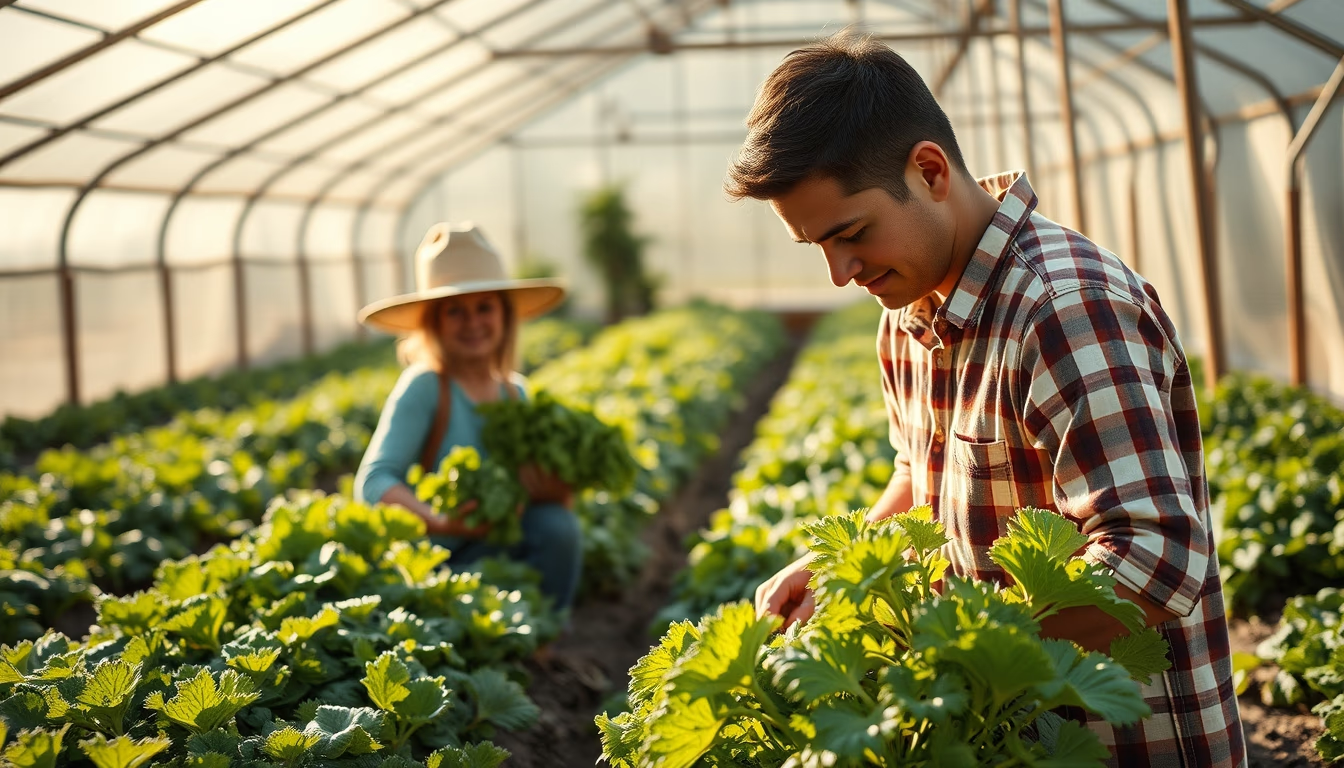
A small family farmer tends organic vegetables on a rural property, a practice that strengthens food security and local economies.
About this subject
Family farming and organic agriculture are cornerstones of sustainable food production worldwide. In Brazil, family farms account for over 77% of all agricultural establishments and produce about 70% of the food consumed domestically, according to the latest IBGE Agricultural Census. Organic cultivation excludes synthetic pesticides and fertilizers, relying instead on composting, crop rotation, and biological pest control. This approach preserves soil biodiversity and surrounding ecosystems while yielding nutrient-dense, chemical-free food.
Small family farms often manage diverse crop systems that include vegetables, legumes, and herbs. Manual labor and generational knowledge ensure meticulous care from soil preparation to harvest. In Brazil, public policies like the Food Acquisition Program (PAA) and the National School Feeding Program (PNAE) directly purchase from family farmers to supply schools and institutions. Farmers' markets and subscription boxes further connect consumers to local producers, fostering transparency and fair trade.
These farmers demonstrate resilience amid climate and market challenges. Crop diversification mitigates economic and environmental risks, while organic certification adds value. However, access to land, credit, and technical assistance remains a hurdle. Agroecology initiatives and farmer cooperatives help overcome these obstacles through seed exchanges, collective work, and solidarity marketing. The image of a family farmer tending organic vegetables thus embodies a sustainable production model that merges tradition, innovation, and socio-environmental responsibility.
Frequently Asked Questions
What is the difference between family farming and organic farming?
Family farming refers to a production model where management and labor are predominantly family-based, while organic farming is a cultivation system that avoids synthetic pesticides and fertilizers. A farm can be family-run but not organic, or organic but not family-run, though the combination is common and valued.
How does organic family farming benefit the environment?
It promotes biodiversity, protects water resources, reduces greenhouse gas emissions, and maintains long-term soil fertility, unlike intensive conventional agriculture.
Where can I buy organic vegetables from family farmers?
At farmers' markets, community-supported agriculture groups, subscription boxes, specialty stores, and directly from rural properties. Many municipalities maintain directories of certified organic producers.
Direct URL
https://pub-c7d6a6ea828543ac903a74a341ccb2e1.r2.dev/imagens/small-family-farmer-tending-to-organic-vegetables-symmetric-bright-midday-4.avifHow to credit
Include a visible link back to UtilizAí. Copy one of the snippets below:
<a href="https://xn--utiliza-eza.com/en/midia/imagens/small-family-farmer-tending-to-organic-vegetables-symmetric-bright-midday-4">Small family farmer tending to organic vegetables</a> by <a href="https://xn--utiliza-eza.com">UtilizAí</a>, licensed under <a href="https://creativecommons.org/licenses/by/4.0/">CC BY 4.0</a>.
[Small family farmer tending to organic vegetables](https://xn--utiliza-eza.com/en/midia/imagens/small-family-farmer-tending-to-organic-vegetables-symmetric-bright-midday-4) by [UtilizAí](https://xn--utiliza-eza.com), CC BY 4.0
License: CC-BY-4.0