Small family farmer tending to organic vegetables
1344×768 · AVIF · CC BY 4.0
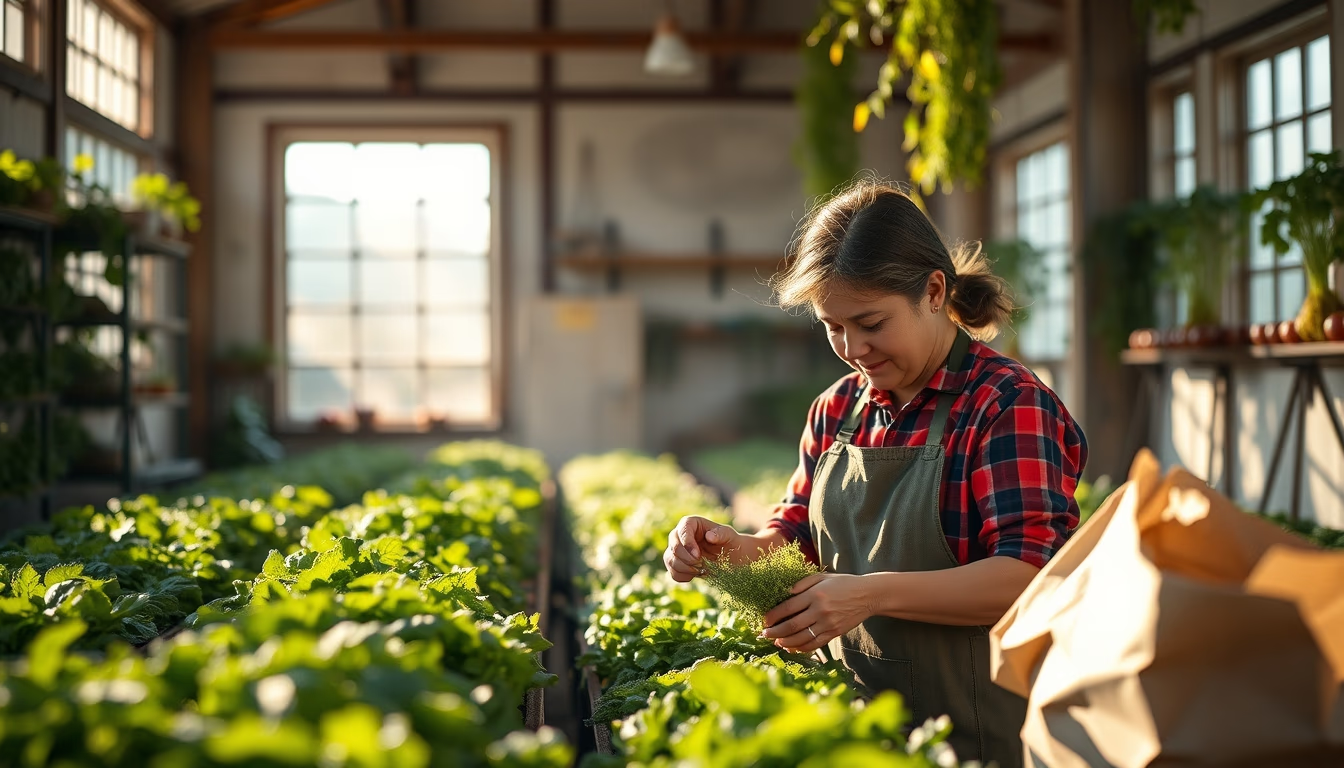
A small family farmer tends to organic vegetables on a rural property, a practice that strengthens food security in Brazil.
About this subject
Family organic farming plays a crucial role in supplying healthy food in Brazil. According to the 2017 Agricultural Census by IBGE, family farms represent 77% of the country's agricultural establishments and account for 23% of the total agricultural production value. These farmers cultivate areas generally smaller than 100 hectares, using predominantly family labor and sustainable practices such as crop rotation, green manure, and biological pest control.
Certified organic production grows annually in Brazil, especially vegetables, fruits, and grains. The Southern region concentrates the largest number of organic producers, followed by the Southeast. Organic cultivation requires careful soil and water management, as well as technical knowledge about composting and biofertilizers. Many family farmers participate in cooperatives and local markets, selling directly to consumers, which reduces costs and adds value to products.
The transition to organic systems is encouraged by public policies such as the National School Feeding Program (PNAE), which prioritizes purchasing organic food from family agriculture. Additionally, the Organic Brazil seal, regulated by the Ministry of Agriculture, ensures traceability and compliance with technical standards. Studies indicate that family organic farming contributes to biodiversity conservation, carbon sequestration, and improved rural income.
The image captures the morning harvest, when vegetables are most turgid and nutrient-rich. The farmer uses hand tools to avoid damaging plants, a common practice in organic systems. The diversity of crops observed reflects the polyculture strategy, which reduces loss risks and promotes ecological balance. This approach contrasts with conventional monoculture, being more resilient to pests and weather extremes.
Frequently Asked Questions
What is the difference between family farming and agribusiness?
Family farming uses predominantly family labor on smaller areas, focusing on diversification and sustainability. Agribusiness operates large properties with high mechanization and monoculture aimed at export.
How to obtain organic certification in Brazil?
Producers must follow Normative Instruction 19/2009, which requires area conversion for a variable period, use of permitted inputs, and audit by a certifier accredited by the Ministry of Agriculture.
Which vegetables are most commonly grown in organic systems?
Lettuce, tomatoes, carrots, beets, kale, and broccoli are among the most common. The choice depends on regional climate and local demand, prioritizing adapted and pest-resistant varieties.
Direct URL
https://pub-c7d6a6ea828543ac903a74a341ccb2e1.r2.dev/imagens/small-family-farmer-tending-to-organic-vegetables-documentary-morning-2.avifHow to credit
Include a visible link back to UtilizAí. Copy one of the snippets below:
<a href="https://xn--utiliza-eza.com/en/midia/imagens/small-family-farmer-tending-to-organic-vegetables-documentary-morning-2">Small family farmer tending to organic vegetables</a> by <a href="https://xn--utiliza-eza.com">UtilizAí</a>, licensed under <a href="https://creativecommons.org/licenses/by/4.0/">CC BY 4.0</a>.
[Small family farmer tending to organic vegetables](https://xn--utiliza-eza.com/en/midia/imagens/small-family-farmer-tending-to-organic-vegetables-documentary-morning-2) by [UtilizAí](https://xn--utiliza-eza.com), CC BY 4.0
License: CC-BY-4.0