Small family farmer tending to organic vegetables
1344×768 · AVIF · CC BY 4.0
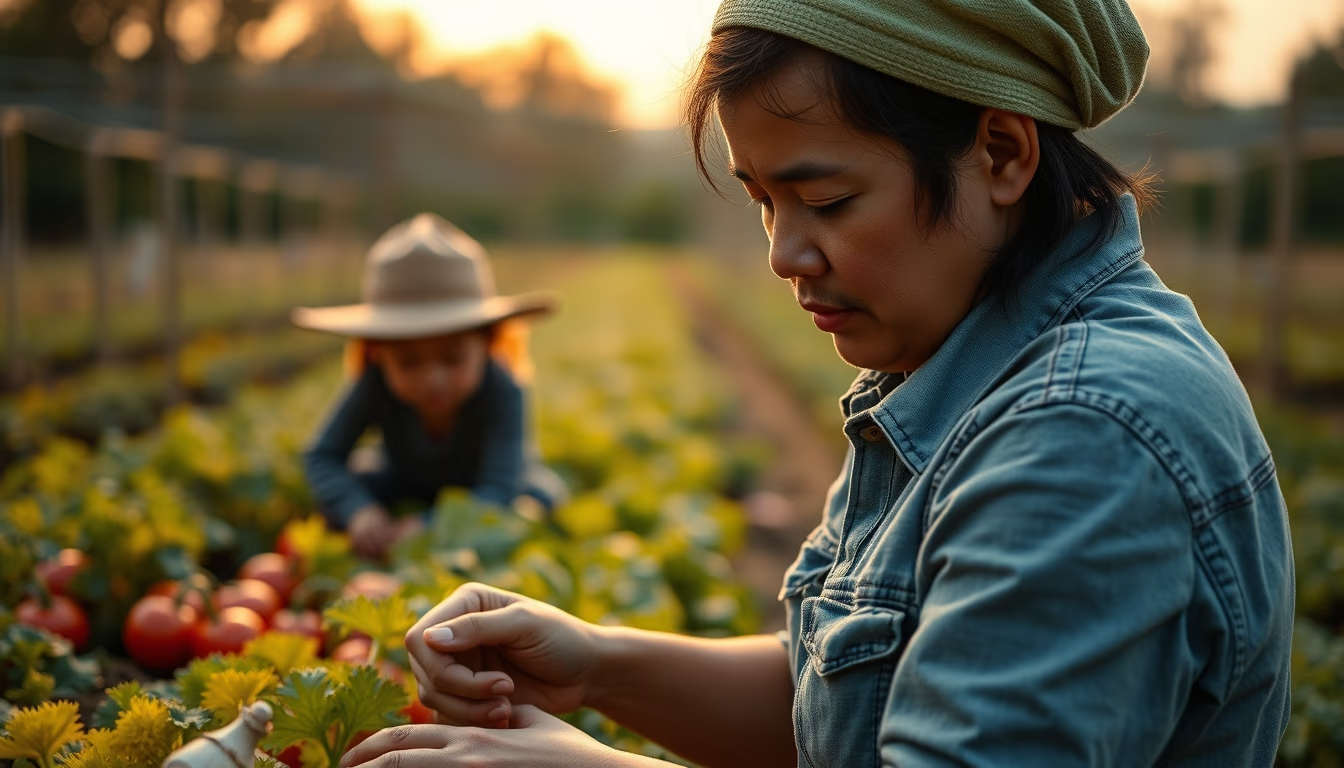
A small family farmer tends organic vegetables at twilight, a practice that supports food security and biodiversity in Brazil.
About this subject
Family farming in Brazil is responsible for about 70% of the food that reaches Brazilians' tables, according to IBGE data. This farmer, on a small property, grows organic vegetables, a system that excludes pesticides and synthetic fertilizers, prioritizing soil and consumer health. Twilight is a common time for harvesting leafy greens like lettuce, arugula, and kale, which lose less water and maintain quality with the evening coolness.
Organic family farming gained momentum in Brazil with Law 10.831 of 2003, which regulates organic agriculture. Small producers organize into associations and cooperatives to obtain certification and access markets such as fairs and delivery baskets. This model reduces dependence on external inputs and preserves agrobiodiversity, with creole varieties adapted to each region.
The close-up of the farmer shows details of manual work: hands preparing the soil with composting, the sweat of physical effort, and attention to natural cycles. Unlike industrial agriculture, organic family farming uses techniques such as crop rotation, green manure, and biological pest control. Studies by Embrapa indicate that these systems can be as productive as conventional ones, with lower environmental impact.
In Brazil, organic family farming is supported by public policies such as the Food Acquisition Program (PAA) and Pronaf. However, challenges persist: access to land, technical assistance, and logistics for marketing production. The image captures the resilience of these farmers who, at twilight, ensure healthy and sustainable food for cities.
Frequently Asked Questions
What characterizes organic family farming?
It is a production system that combines family management, predominantly family labor, and certified organic practices, without the use of pesticides or chemical fertilizers.
Why is harvesting at twilight advantageous for vegetables?
In the late afternoon, temperatures drop and the plant loses less water through transpiration, maintaining hydration, flavor, and post-harvest durability.
How can consumers identify products from organic family farming?
Look for the Brazilian Organic Conformity Assessment System (SisOrg) seal at farmers' markets, delivery baskets, or stores, or buy directly from certified producers.
Direct URL
https://pub-c7d6a6ea828543ac903a74a341ccb2e1.r2.dev/imagens/small-family-farmer-tending-to-organic-vegetables-closeup-twilight-7.avifHow to credit
Include a visible link back to UtilizAí. Copy one of the snippets below:
<a href="https://xn--utiliza-eza.com/en/midia/imagens/small-family-farmer-tending-to-organic-vegetables-closeup-twilight-7">Small family farmer tending to organic vegetables</a> by <a href="https://xn--utiliza-eza.com">UtilizAí</a>, licensed under <a href="https://creativecommons.org/licenses/by/4.0/">CC BY 4.0</a>.
[Small family farmer tending to organic vegetables](https://xn--utiliza-eza.com/en/midia/imagens/small-family-farmer-tending-to-organic-vegetables-closeup-twilight-7) by [UtilizAí](https://xn--utiliza-eza.com), CC BY 4.0
License: CC-BY-4.0