Plane wood shaving
1344×768 · AVIF · CC BY 4.0
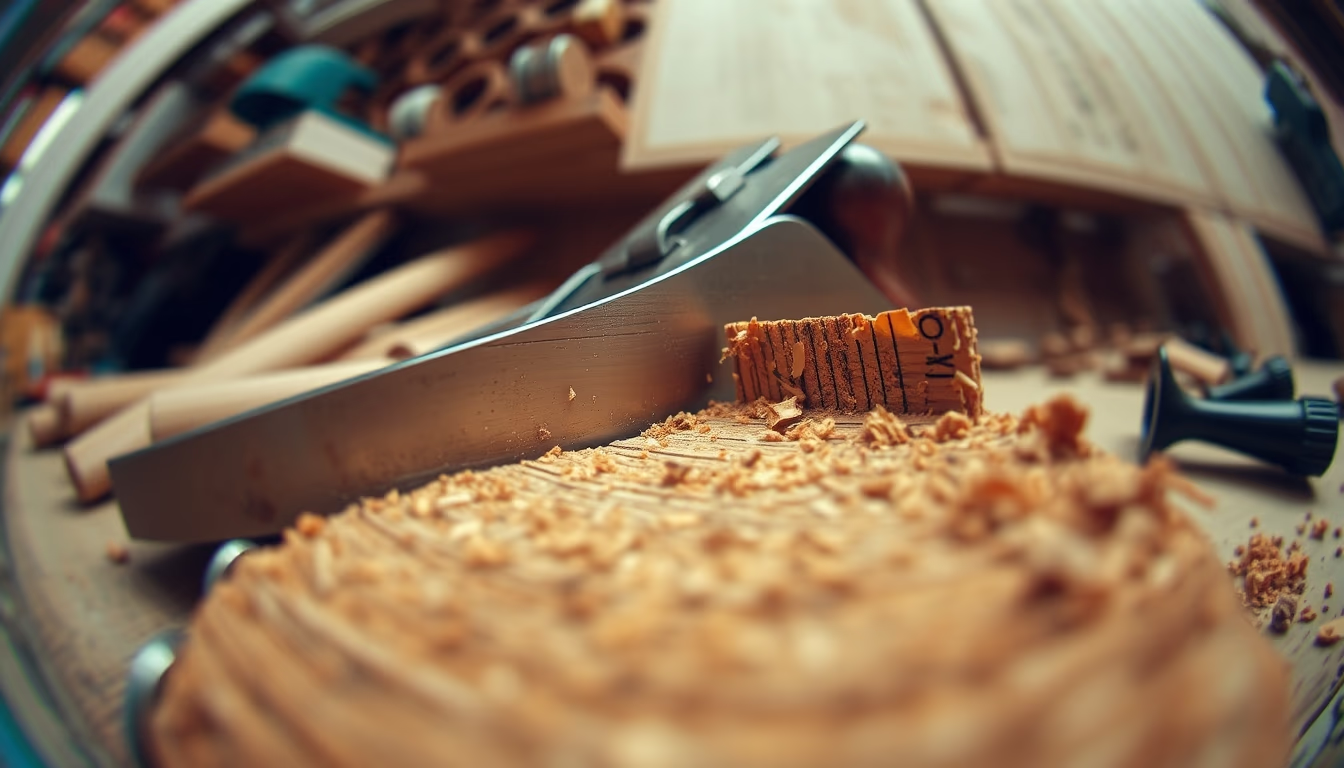
Plane wood shavings, or curls, are thin strips of wood produced when smoothing surfaces with a hand plane, revealing the beauty of the grain and the skill of the woodworker.
About this subject
Plane wood shavings, also known as curls, are the fine residue generated when planing wood with a hand plane. These thin, translucent strips are a byproduct of the woodworker's craft, but also an indicator of the tool's sharpness and the artisan's technique. A well-adjusted plane produces continuous, uniform shavings that can be so thin that light passes through them. The curled or spiral shape of the shavings depends on the wood species, depth of cut, and blade curvature.
The hand plane is an ancient tool, with origins dating back to ancient Rome, but it was refined in Europe during the Middle Ages. Woodworkers worldwide value the plane not only for smoothing surfaces but also for adjusting joints and creating precise finishes. Different types of planes, such as the jack plane or smoothing plane, produce shavings with distinct characteristics. Hardwoods like oak or walnut yield stiffer shavings, while softwoods like pine produce more flexible ones.
Beyond their practical significance, plane shavings have creative uses. Artists and craftsmen use them in crafts, decoration, packaging, or as stuffing material. In traditional woodworking, shavings can evaluate blade sharpness: a fine, glossy shaving indicates a sharp tool ready for use. Some woodworkers collect shavings from exotic woods as samples, appreciating their unique grain patterns and colors.
Interestingly, the act of planing wood and watching the shavings curl is considered therapeutic by many artisans. Producing continuous shavings is a sign of harmony between the person, the tool, and the wood, a concept deeply rooted in the culture of handcrafted woodworking. Despite the popularity of power tools, the hand plane remains essential for high-precision work and restoring antique furniture.
Frequently Asked Questions
What determines the thickness of a plane shaving?
The thickness is determined by the depth of cut adjustment of the plane blade, usually measured in fractions of a millimeter. A shallower depth produces finer shavings, ideal for smoothing.
Why are some plane shavings curled and others not?
The curl depends on the blade curvature (camber), wood species, and moisture content. Concave blades tend to produce more curled shavings, while dry, dense woods may produce straighter ones.
Can plane shavings be reused?
Yes, they are often used in crafts, as packaging material, in composting, or as natural fire starters. Woodworkers also use them to test blade sharpness.
Direct URL
https://pub-c7d6a6ea828543ac903a74a341ccb2e1.r2.dev/imagens/plane-wood-shaving-fish-eye-wide-angle-fresh15.avifHow to credit
Include a visible link back to UtilizAí. Copy one of the snippets below:
<a href="https://xn--utiliza-eza.com/en/midia/imagens/plane-wood-shaving-fish-eye-wide-angle-fresh15">Plane wood shaving</a> by <a href="https://xn--utiliza-eza.com">UtilizAí</a>, licensed under <a href="https://creativecommons.org/licenses/by/4.0/">CC BY 4.0</a>.
[Plane wood shaving](https://xn--utiliza-eza.com/en/midia/imagens/plane-wood-shaving-fish-eye-wide-angle-fresh15) by [UtilizAí](https://xn--utiliza-eza.com), CC BY 4.0
License: CC-BY-4.0