Open plan office modern
1344×768 · AVIF · CC BY 4.0
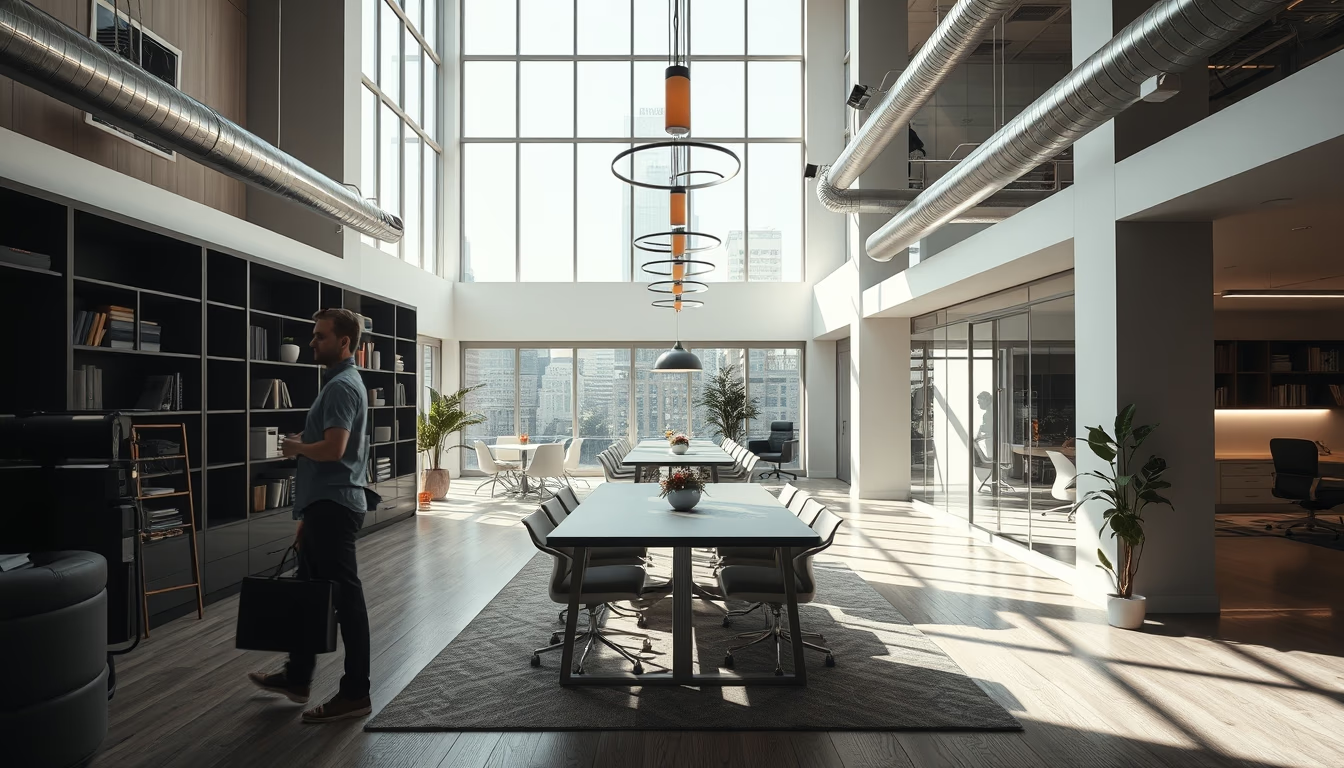
The modern open plan office transformed corporate workspace concepts, prioritizing collaboration and flexibility since the early 21st century.
About this subject
The open plan office, also known as the open office, traces its roots to Henry Ford's assembly lines but was adapted for corporate environments in the 1960s by Herman Miller with Robert Propst's Action Office system. Its massive popularity came during the dot-com era, with tech giants like Google and Facebook adopting the layout to boost communication and innovation. Studies from the Harvard Business Review (2019) show that although about 70% of US offices use this model, productivity can drop by up to 15% due to auditory and visual distractions.
Modern open plan design integrates shared desks, acoustic phone booths, breakout areas, and lounges. The concept of activity-based working allows employees to choose the best spot for each task, promoting autonomy. Sustainable modular furniture, such as certified wood structures and LED lighting with occupancy sensors, is standard. Steelcase is a leading researcher on efficiency and ergonomics for these spaces.
Controversies around lack of privacy and constant noise led to the hybrid open plan, combining open areas with quiet zones and enclosed meeting rooms. The COVID-19 pandemic accelerated changes: social distancing and improved ventilation became priorities. By 2026, the trending-2026 trend points to IoT and wellness integration, with sensors monitoring occupancy and temperature, plus natural plants to improve air quality.
Fun fact: in Brazil, the open plan solidified in the 1990s with globalization and the arrival of multinationals. Companies like Natura adopted the model to reinforce collaborative culture. Despite criticisms, the layout continues to evolve, balancing interaction and focus.
Frequently Asked Questions
What is an open plan office and where did it originate?
An open plan office is a workspace layout without fixed walls or partitions, promoting collaboration. Its origins trace back to Henry Ford's assembly lines, but the modern concept was created by Robert Propst in the 1960s for Herman Miller. It became popular with tech companies in the 2000s.
What are the main advantages and disadvantages?
Advantages: enhanced communication and flexibility. Disadvantages: excessive noise, lack of privacy, and reduced productivity for tasks requiring focus. Studies show productivity drops of up to 15% due to distractions.
How has the open plan office evolved after the pandemic?
After the pandemic, the hybrid model gained traction, featuring quiet zones, improved ventilation, and social distancing. The 2026 trend includes IoT sensors for environmental monitoring and natural plants for wellness.
Direct URL
https://pub-c7d6a6ea828543ac903a74a341ccb2e1.r2.dev/imagens/open-plan-office-modern-fine-art-photography-p5.avifHow to credit
Include a visible link back to UtilizAí. Copy one of the snippets below:
<a href="https://xn--utiliza-eza.com/en/midia/imagens/open-plan-office-modern-fine-art-photography-p5">Open plan office modern</a> by <a href="https://xn--utiliza-eza.com">UtilizAí</a>, licensed under <a href="https://creativecommons.org/licenses/by/4.0/">CC BY 4.0</a>.
[Open plan office modern](https://xn--utiliza-eza.com/en/midia/imagens/open-plan-office-modern-fine-art-photography-p5) by [UtilizAí](https://xn--utiliza-eza.com), CC BY 4.0
License: CC-BY-4.0