Library study room
1344×768 · AVIF · CC BY 4.0
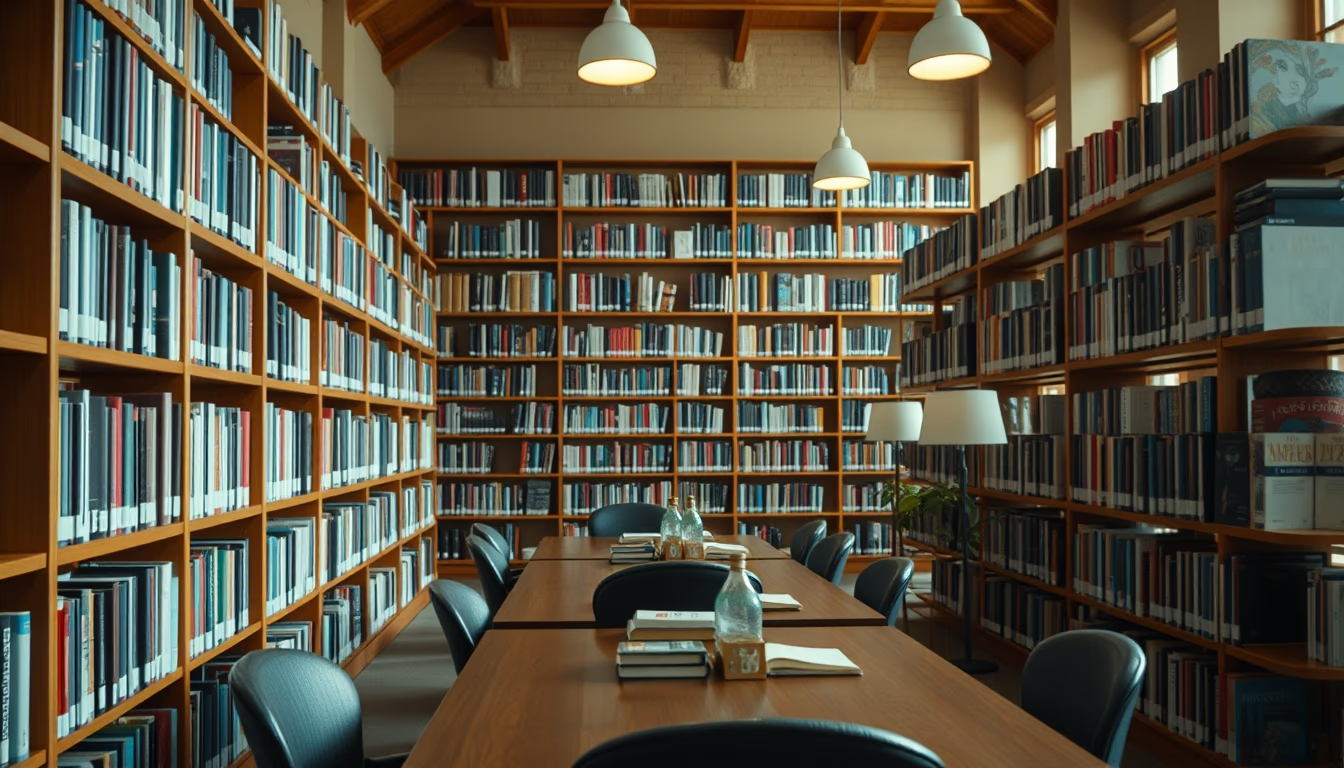
Explore a atmosfera de uma sala de estudos em biblioteca, um espaço dedicado à concentração e ao aprendizado silencioso.
Sobre o tema
As salas de estudo em bibliotecas são ambientes planejados para maximizar a produtividade acadêmica. Diferentes das áreas de leitura casual, esses espaços costumam ter iluminação focada, mesas individuais ou cabines com divisórias. O conceito moderno surgiu no século XIX com a criação de bibliotecas públicas nos Estados Unidos e Europa, como as famosas bibliotecas Carnegie, que incluíam salas silenciosas para pesquisa.
No Brasil, a Biblioteca Nacional do Rio de Janeiro e a Biblioteca Mário de Andrade em São Paulo possuem salas de estudo históricas, com mobiliário de época que ainda hoje são usadas por estudantes. O design desses ambientes busca reduzir distrações: paredes claras e acústica tratada ajudam na concentração. Muitas bibliotecas universitárias, como a da USP, oferecem salas de estudo em grupo com lousas e projetores, adaptando-se às novas necessidades colaborativas.
Um estudo da Universidade de Oxford mostrou que estudantes que utilizam salas de estudo dedicadas têm 23% mais retenção de informação do que aqueles que estudam em casa. Além disso, a presença de outros leitores cria um efeito de "atenção coletiva", onde o silêncio compartilhado aumenta o foco individual. Bibliotecas como a Biblioteca do Congresso dos EUA têm salas de estudo privadas para pesquisadores, algumas com vista para o interior do edifício.
Curiosidade: o silêncio nas bibliotecas não é apenas uma regra social, mas também um requisito acústico. O nível de ruído recomendado para salas de estudo é de 30 a 40 decibéis, equivalente a uma biblioteca vazia. Em 2024, a Biblioteca de Alexandria no Egito lançou um aplicativo que reserva salas de estudo com base na densidade de usuários, otimizando o uso do espaço.
Perguntas frequentes
Por que as bibliotecas possuem salas de estudo separadas?
As salas de estudo separadas oferecem um ambiente controlado com menos distrações, iluminação adequada e assentos projetados para longas horas de concentração. Elas também permitem que grupos pequenos trabalhem juntos sem perturbar os leitores nas áreas abertas.
Qual a diferença entre uma sala de estudo e uma cabine de estudo?
Uma cabine de estudo é um espaço individual fechado ou semifechado, geralmente com uma mesa e uma cadeira, enquanto uma sala de estudo pode acomodar múltiplas pessoas ou mesas. Cabines oferecem mais privacidade e menos distrações visuais.
Como reservar uma sala de estudo em bibliotecas brasileiras?
Muitas bibliotecas universitárias e públicas oferecem reserva online pelo site ou aplicativo. Por exemplo, a Biblioteca Central da UnB permite agendamento com até 7 dias de antecedência. Algumas exigem carteirinha da biblioteca ou vínculo institucional.
URL direta
https://pub-c7d6a6ea828543ac903a74a341ccb2e1.r2.dev/imagens/library-study-room-national-geographic-style-p4.avifComo creditar
Inclua um link visível de volta pro UtilizAí. Copie um dos snippets abaixo:
<a href="https://xn--utiliza-eza.com/midia/imagens/library-study-room-national-geographic-style-p4">Library study room</a> by <a href="https://xn--utiliza-eza.com">UtilizAí</a>, licensed under <a href="https://creativecommons.org/licenses/by/4.0/">CC BY 4.0</a>.
[Library study room](https://xn--utiliza-eza.com/midia/imagens/library-study-room-national-geographic-style-p4) by [UtilizAí](https://xn--utiliza-eza.com), CC BY 4.0
Licença: CC-BY-4.0