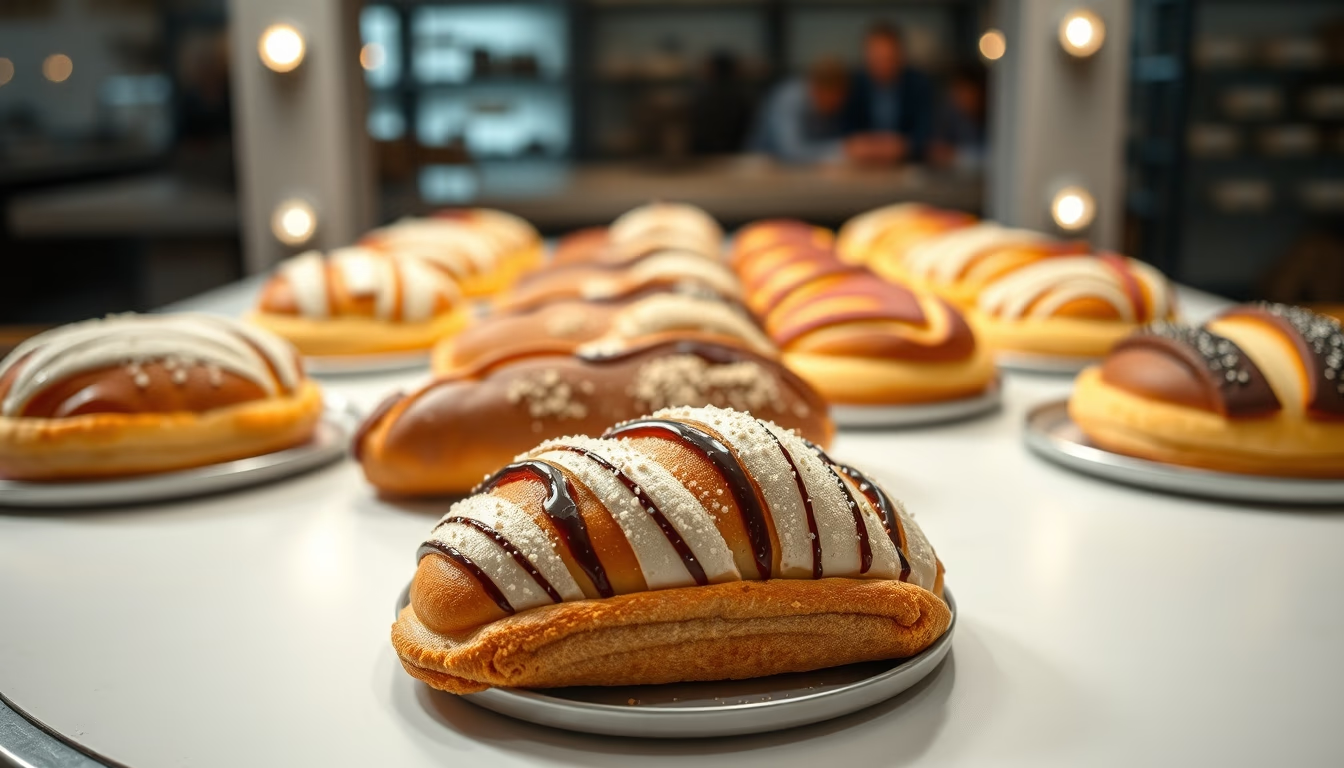
French pastries display
1344×768 · AVIF · CC BY 4.0
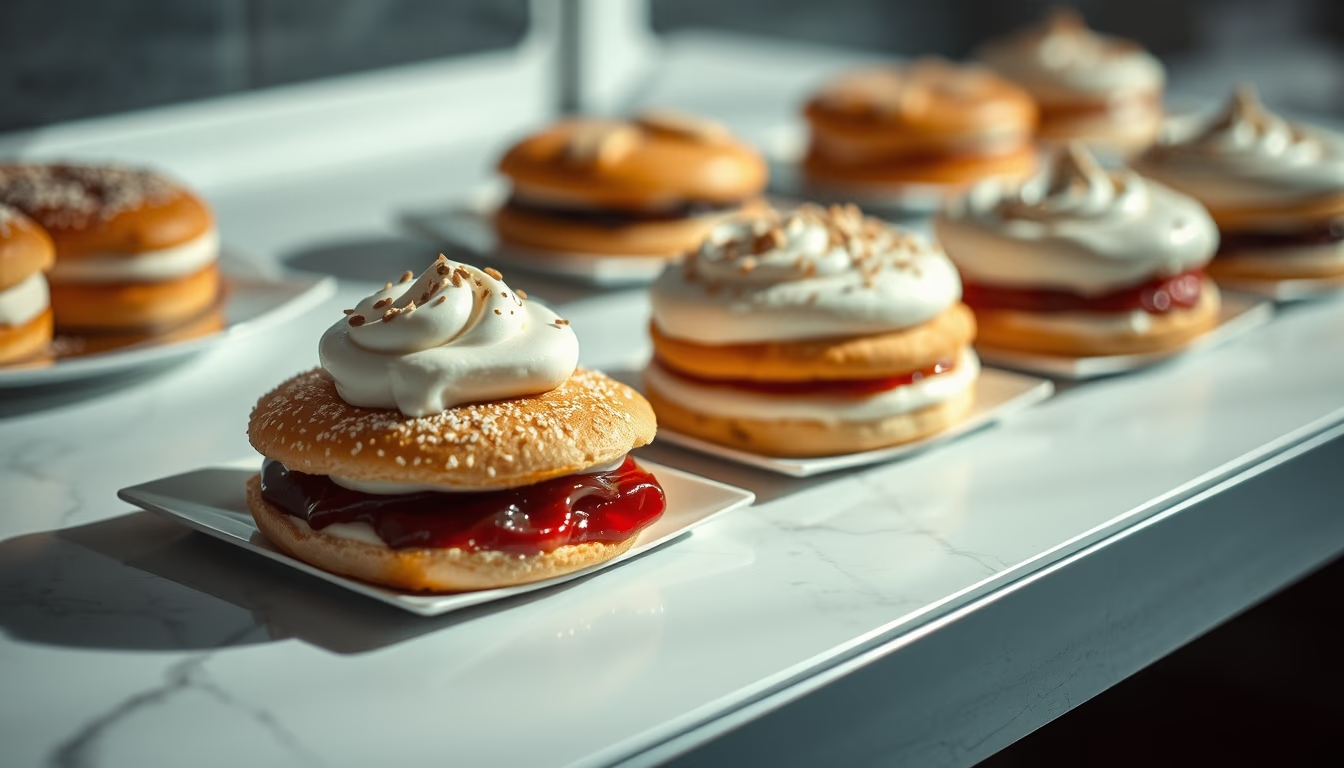
Explore the richness of French pâtisserie: from the buttery croissant to the delicate macaron, each pastry tells a story of tradition and technique.
About this subject
French pâtisserie is globally renowned for its technical precision, high-quality ingredients, and artistic presentation. Originating in the 19th century with the professionalization of confectionery, it has become a symbol of the country's gastronomy. Classics like the croissant, made with laminated dough that results in flaky layers, and the éclair, filled with cream and topped with icing, exemplify the mastery of pâtissiers. The macaron, an almond biscuit with creamy filling, gained worldwide fame, especially through the colorful versions from Ladurée in Paris.
Beyond these famous sweets, France has regional variations. In Brittany, you'll find kouign-amann, a cake of butter and caramelized sugar layers. In Lyon, tarte à la praline is a specialty. The technique of puff pastry, essential for croissant and pain au chocolat, was refined by pâtissiers like Antoine Carême in the 19th century. High-fat butter (beurre sec) is preferred for its texture and flavor.
A typical French breakfast includes a croissant or pain au chocolat with coffee or hot chocolate. Afternoon snack time (goûter) is for an éclair or a slice of tarte. Many artisanal bakeries (boulangeries-pâtisseries) follow traditional methods, such as using natural yeast and AOC butter. For those wishing to delve deeper, schools like Le Cordon Bleu and Ferrandi offer specialized courses.
Fun fact: the word 'croissant' means 'crescent' in French, referring to its shape. Although associated with France, its origin traces back to the Austrian kipferl, adapted in the 19th century. The macaron was popularized by Catherine de Medici in the 16th century, but the current version emerged in the early 20th century.
Frequently Asked Questions
What is the difference between a croissant and a pain au chocolat?
A croissant is made solely with laminated dough, while pain au chocolat has chocolate bars placed in the center before rolling. Both use the same croissant dough base, but the chocolate filling distinguishes pain au chocolat.
Why are French macarons so expensive?
The high cost is due to premium ingredients (almond flour, egg whites, sugar) and the labor-intensive process: the batter must be dried before baking, and complex fillings are prepared. Consistency and appearance require skilled technique.
What are the main types of French pastries for beginners to try?
Start with a croissant, pain au chocolat, éclair, macaron, and tarte Tatin. For regional specialties, try the Breton kouign-amann and Lyon's tarte à la praline.
Direct URL
https://pub-c7d6a6ea828543ac903a74a341ccb2e1.r2.dev/imagens/french-pastries-display-magazine-editorial-fresh10.avifHow to credit
Include a visible link back to UtilizAí. Copy one of the snippets below:
<a href="https://xn--utiliza-eza.com/en/midia/imagens/french-pastries-display-magazine-editorial-fresh10">French pastries display</a> by <a href="https://xn--utiliza-eza.com">UtilizAí</a>, licensed under <a href="https://creativecommons.org/licenses/by/4.0/">CC BY 4.0</a>.
[French pastries display](https://xn--utiliza-eza.com/en/midia/imagens/french-pastries-display-magazine-editorial-fresh10) by [UtilizAí](https://xn--utiliza-eza.com), CC BY 4.0
License: CC-BY-4.0