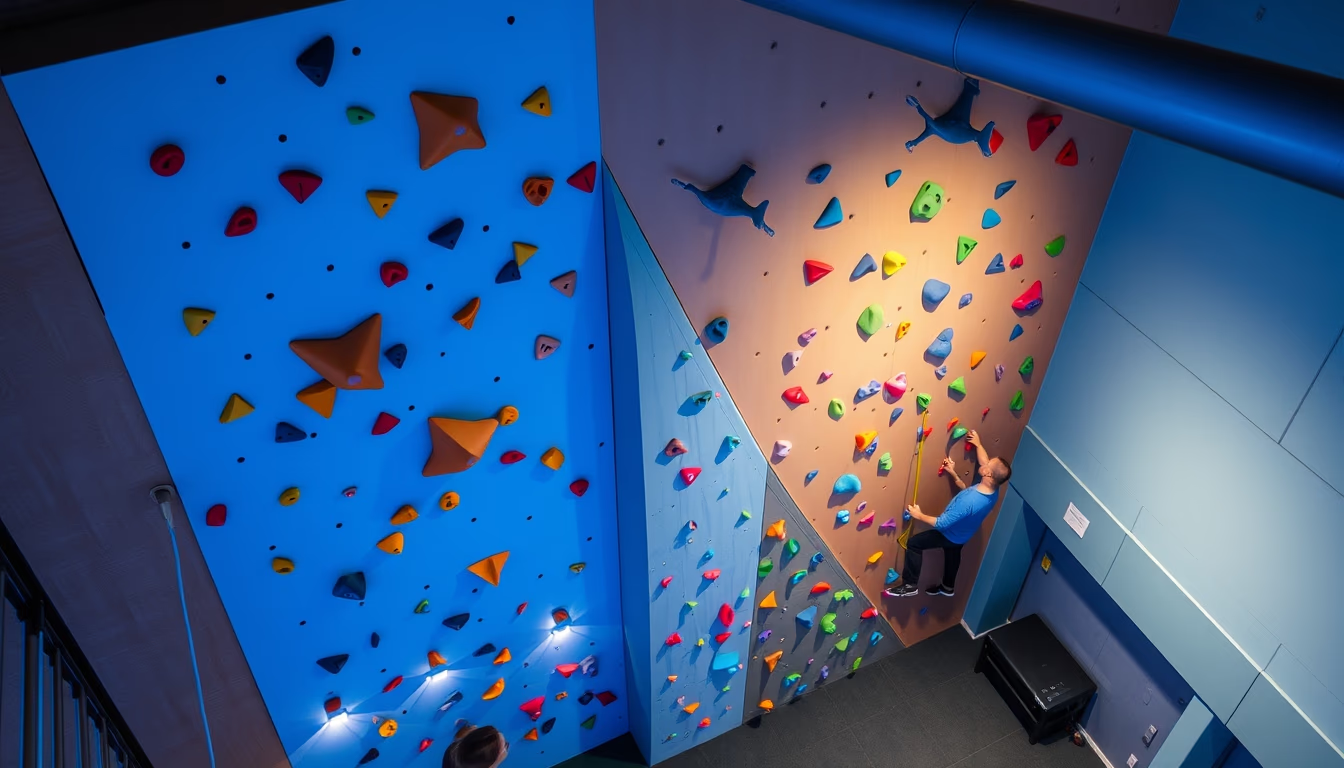
Climbing wall gym indoor
1344×768 · AVIF · CC BY 4.0
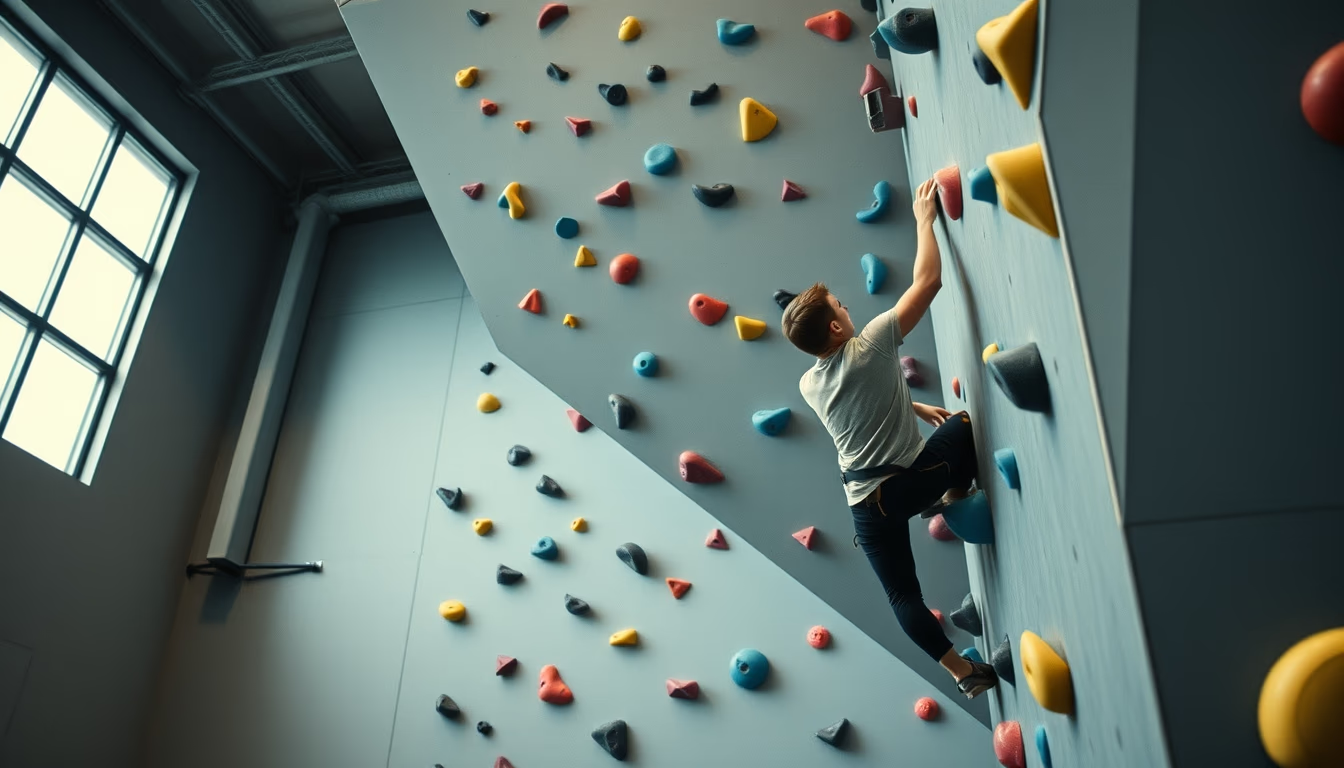
Indoor climbing walls blend physical and mental challenge, a sport growing in Brazil and worldwide with specialized gyms.
About this subject
Indoor climbing, practiced on artificial walls in gyms, has become one of the most popular fitness activities of the last decade. Unlike natural rock climbing, it provides a controlled and safe environment ideal for beginners and experienced athletes. Walls are typically made of plywood or fiberglass, covered with colorful holds that mark different routes or difficulty grades. There are three main disciplines: bouldering, without ropes and landing on crash pads; lead climbing, where the climber clips the rope to fixed anchors; and top rope, with the rope already anchored at the top. Indoor climbing arrived in Brazil in the 1990s, with the opening of the first gym in São Paulo. Since then, the number of gyms has skyrocketed, especially in major cities like Rio de Janeiro, Belo Horizonte, and Curitiba. According to the Brazilian Mountaineering Confederation, the country now has over 200 indoor climbing centers, many with walls exceeding 15 meters in height. The inclusion of climbing as an Olympic sport in Tokyo 2020 (held in 2021) further boosted demand. Beyond physical conditioning, climbing develops coordination, grip strength, and problem-solving skills, as each route requires a different strategy. Culturally, the climbing community values collaboration and mutual respect, with practitioners frequently exchanging tips and encouragement at the base of the wall. For those wanting to start, most gyms offer shoe and equipment rentals, as well as introductory classes.
Frequently Asked Questions
What equipment do I need for indoor climbing?
For bouldering, just climbing shoes and chalk. For roped climbing, you need shoes, a harness, carabiners, a belay device, and a rope, though ropes are often provided by the gym.
Is indoor climbing safe for beginners?
Yes, with instructor supervision and proper equipment. Gyms have crash pads and anchoring systems that minimize risks. It is advisable to take a basic course before climbing unsupervised.
What is the difference between bouldering and roped climbing?
Bouldering is done on low walls (up to about 15 feet) without ropes, with falls cushioned by mats. Roped climbing (lead or top rope) requires higher walls, a harness, and a rope for protection.
Direct URL
https://pub-c7d6a6ea828543ac903a74a341ccb2e1.r2.dev/imagens/climbing-wall-gym-indoor-film-grain-authentic-p1.avifHow to credit
Include a visible link back to UtilizAí. Copy one of the snippets below:
<a href="https://xn--utiliza-eza.com/en/midia/imagens/climbing-wall-gym-indoor-film-grain-authentic-p1">Climbing wall gym indoor</a> by <a href="https://xn--utiliza-eza.com">UtilizAí</a>, licensed under <a href="https://creativecommons.org/licenses/by/4.0/">CC BY 4.0</a>.
[Climbing wall gym indoor](https://xn--utiliza-eza.com/en/midia/imagens/climbing-wall-gym-indoor-film-grain-authentic-p1) by [UtilizAí](https://xn--utiliza-eza.com), CC BY 4.0
License: CC-BY-4.0