Climbing wall gym indoor
1344×768 · AVIF · CC BY 4.0
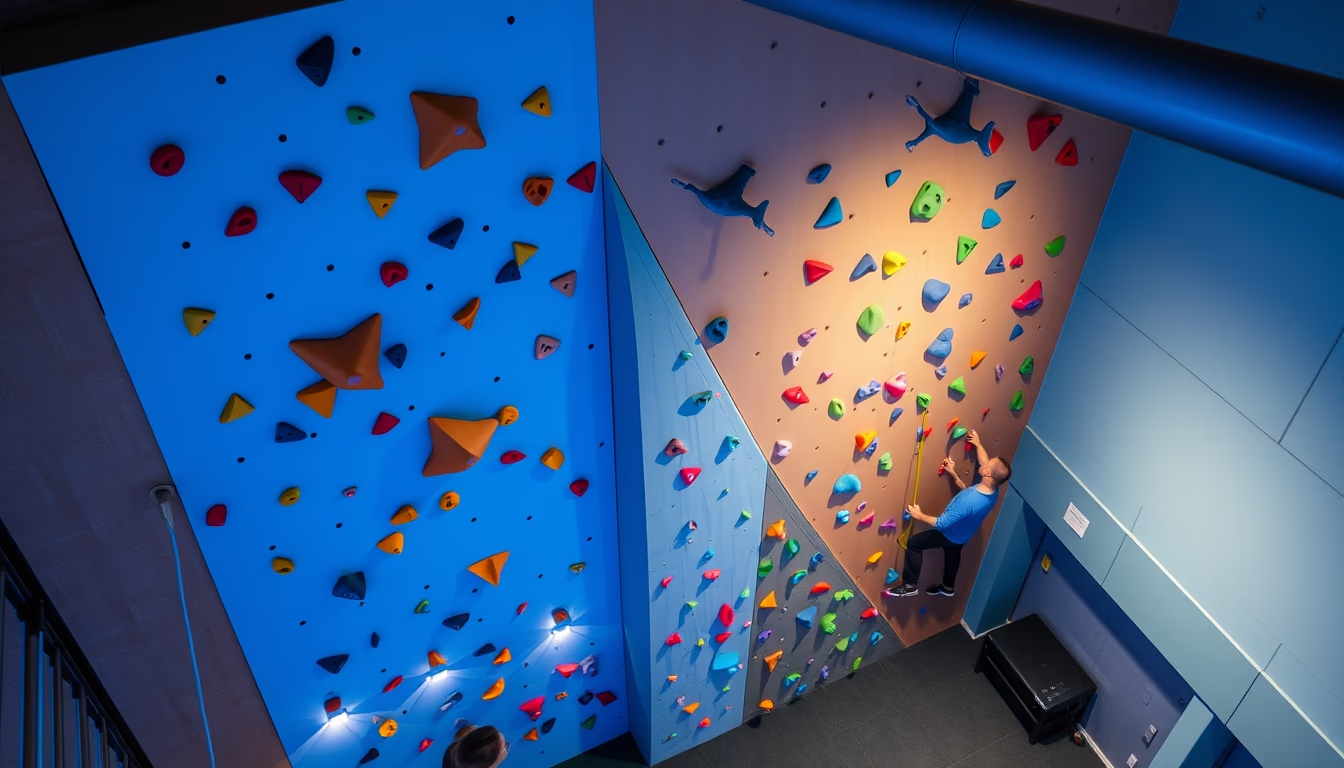
Indoor climbing walls combine physical and mental challenges in controlled environments, replicating natural rock with varied textures and angles.
About this subject
Indoor climbing began as a controlled way to train technical movements and strength away from weather conditions. The first artificial climbing wall was built in the 1960s in the United Kingdom, but the sport gained global popularity in the 1990s, including in Brazil. Modern gyms offer everything from low bouldering walls to routes exceeding 15 meters, attracting beginners and elite athletes alike. Benefits include increased muscular strength, especially in the upper body and core, plus improvements in flexibility, balance, and coordination.
Walls are constructed from materials like marine plywood, fiberglass, or concrete, coated with textured resin to mimic natural rock. Holds are made of polyurethane and come in various shapes, sizes, and difficulty levels, regularly repositioned to create new challenges. Difficulty follows standards such as the UIAA scale for roped climbing and the V-scale for bouldering. Many gyms use color codes to indicate route grades, helping climbers track progress.
Climbing culture emphasizes community and problem-solving. Competitions like the IFSC Climbing World Cup and the sport's Olympic debut at Tokyo 2020 (featuring bouldering, lead, and speed) have boosted interest. Training includes endurance exercises, finger strength drills, and breathing techniques, alongside safety lessons for ropes, quickdraws, and anchoring systems.
Indoor climbing also sharpens mental skills: focus, planning, and overcoming fear of heights. Studies show it reduces stress and boosts self-esteem. In Brazil, São Paulo, Rio de Janeiro, and Belo Horizonte host dozens of climbing gyms, many with walls over 10 meters high. The 2026 trend points toward high-tech gyms with interactive lighting and auto-belay systems.
Frequently Asked Questions
What are the benefits of indoor climbing?
It improves strength, balance, and problem-solving skills while being low-impact on joints. It also reduces stress and boosts self-esteem.
Do I need prior experience to start?
No. Most gyms offer beginner classes with equipment and trained instructors. Beginners can start on easy routes or boulder problems.
What's the difference between bouldering and roped climbing?
Bouldering is done on low walls (up to 5 m) without ropes, using crash pads. Roped climbing requires a harness, rope, and partner to ascend taller routes.
Direct URL
https://pub-c7d6a6ea828543ac903a74a341ccb2e1.r2.dev/imagens/climbing-wall-gym-indoor-aerial-drone-shot-p6.avifHow to credit
Include a visible link back to UtilizAí. Copy one of the snippets below:
<a href="https://xn--utiliza-eza.com/en/midia/imagens/climbing-wall-gym-indoor-aerial-drone-shot-p6">Climbing wall gym indoor</a> by <a href="https://xn--utiliza-eza.com">UtilizAí</a>, licensed under <a href="https://creativecommons.org/licenses/by/4.0/">CC BY 4.0</a>.
[Climbing wall gym indoor](https://xn--utiliza-eza.com/en/midia/imagens/climbing-wall-gym-indoor-aerial-drone-shot-p6) by [UtilizAí](https://xn--utiliza-eza.com), CC BY 4.0
License: CC-BY-4.0