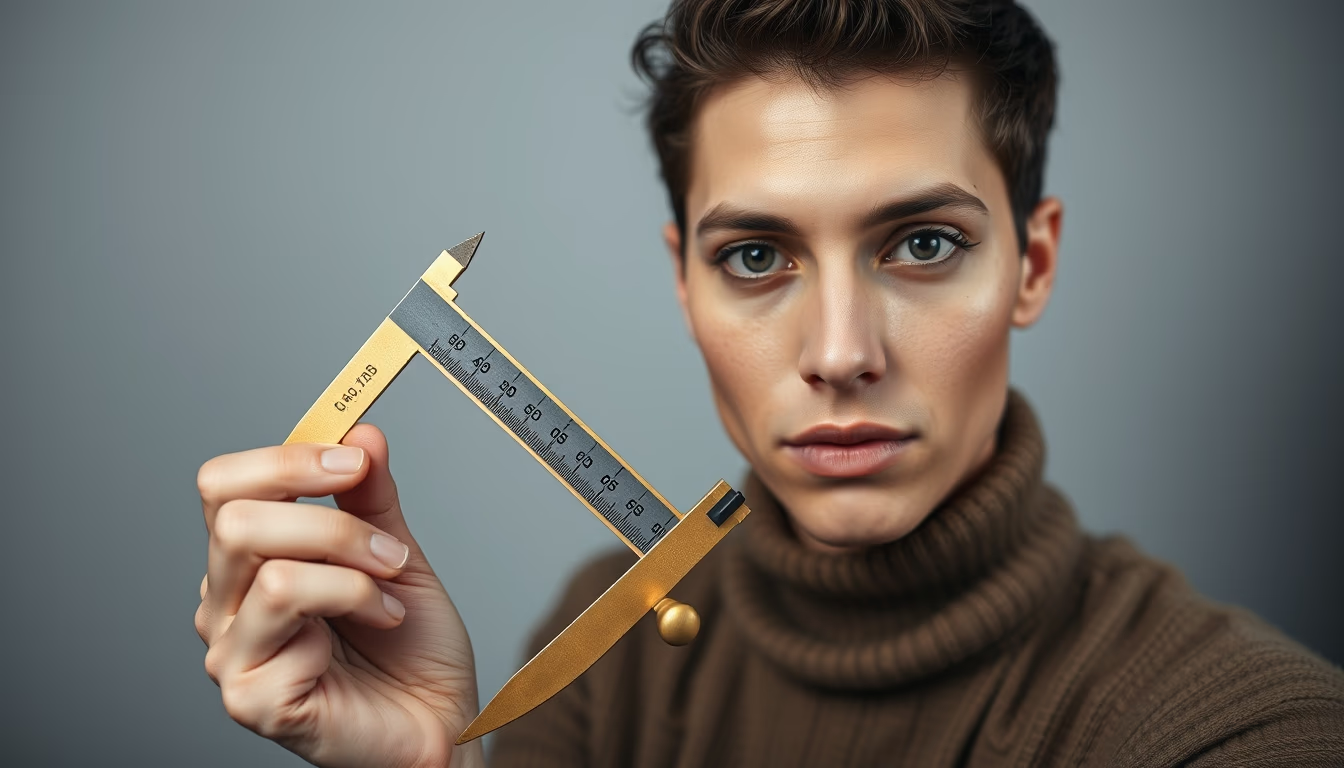
Caliper vernier brass
1344×768 · AVIF · CC BY 4.0
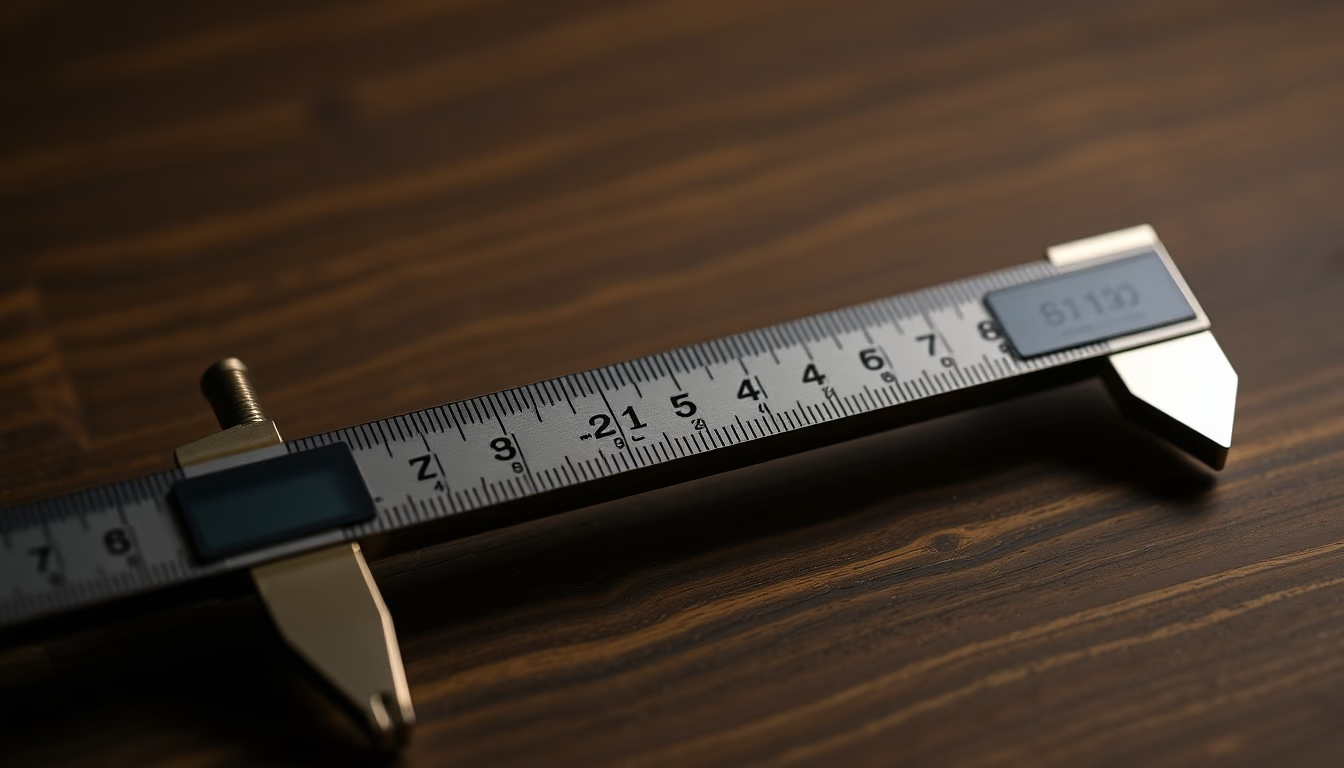
Brass vernier caliper, a precision measuring instrument from the 19th century, essential in mechanical engineering and metalworking.
About this subject
The brass vernier caliper is a precision measuring instrument that revolutionized industrial accuracy. Invented by French mathematician Pierre Vernier in 1631, the vernier scale allows readings with fractions of a millimeter, unattainable with common rulers. Early calipers were made of brass, a corrosion-resistant and easily machinable material, making them durable and reliable in machine shops, jewelry workshops, and laboratories.
During the 19th century, with the advance of the Industrial Revolution, the brass caliper became indispensable for manufacturing interchangeable parts. Unlike modern stainless steel versions, antique brass calipers often featured hand-engraved scales and ornate locking screws, reflecting the craftsmanship of their time. These instruments were calibrated to British or French standards, such as the imperial system or the newly adopted metric system.
Today, antique brass calipers are collectible items, valued for their aesthetic beauty and historical significance. They represent the transition from craftsmanship to mass production, with each piece telling a story of human technical development. Although digital measurement has replaced everyday use, the brass vernier caliper remains a symbol of analog precision.
Frequently Asked Questions
How does reading a vernier caliper work?
The vernier scale is an auxiliary scale that reads fractions of the smallest division on the main scale. By aligning the marks on the vernier with those on the main scale, you obtain the precise measurement, typically in tenths or hundredths of a millimeter.
What is the difference between a caliper and a micrometer?
A caliper measures external, internal, and depth dimensions with an accuracy of 0.02 mm to 0.05 mm, while a micrometer (or Palmer) is more precise (0.001 mm) and measures only thicknesses or external diameters.
Why were old calipers made of brass?
Brass was chosen for its corrosion resistance, low thermal expansion coefficient, and ease of machining. Additionally, the material allowed detailed engravings and maintained accuracy over time.
Direct URL
https://pub-c7d6a6ea828543ac903a74a341ccb2e1.r2.dev/imagens/caliper-vernier-brass-lo-fi-disposable-camera-fresh8.avifHow to credit
Include a visible link back to UtilizAí. Copy one of the snippets below:
<a href="https://xn--utiliza-eza.com/en/midia/imagens/caliper-vernier-brass-lo-fi-disposable-camera-fresh8">Caliper vernier brass</a> by <a href="https://xn--utiliza-eza.com">UtilizAí</a>, licensed under <a href="https://creativecommons.org/licenses/by/4.0/">CC BY 4.0</a>.
[Caliper vernier brass](https://xn--utiliza-eza.com/en/midia/imagens/caliper-vernier-brass-lo-fi-disposable-camera-fresh8) by [UtilizAí](https://xn--utiliza-eza.com), CC BY 4.0
License: CC-BY-4.0