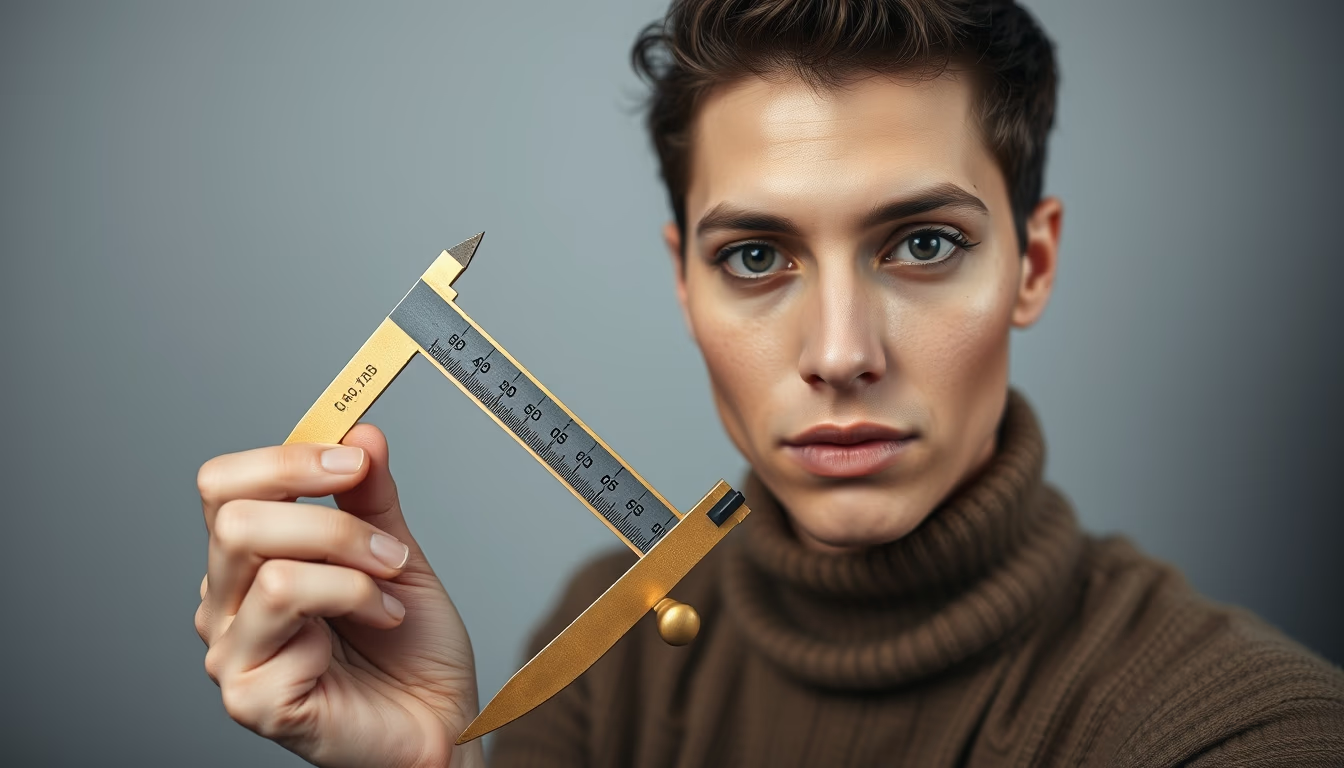
Caliper vernier brass
1344×768 · AVIF · CC BY 4.0
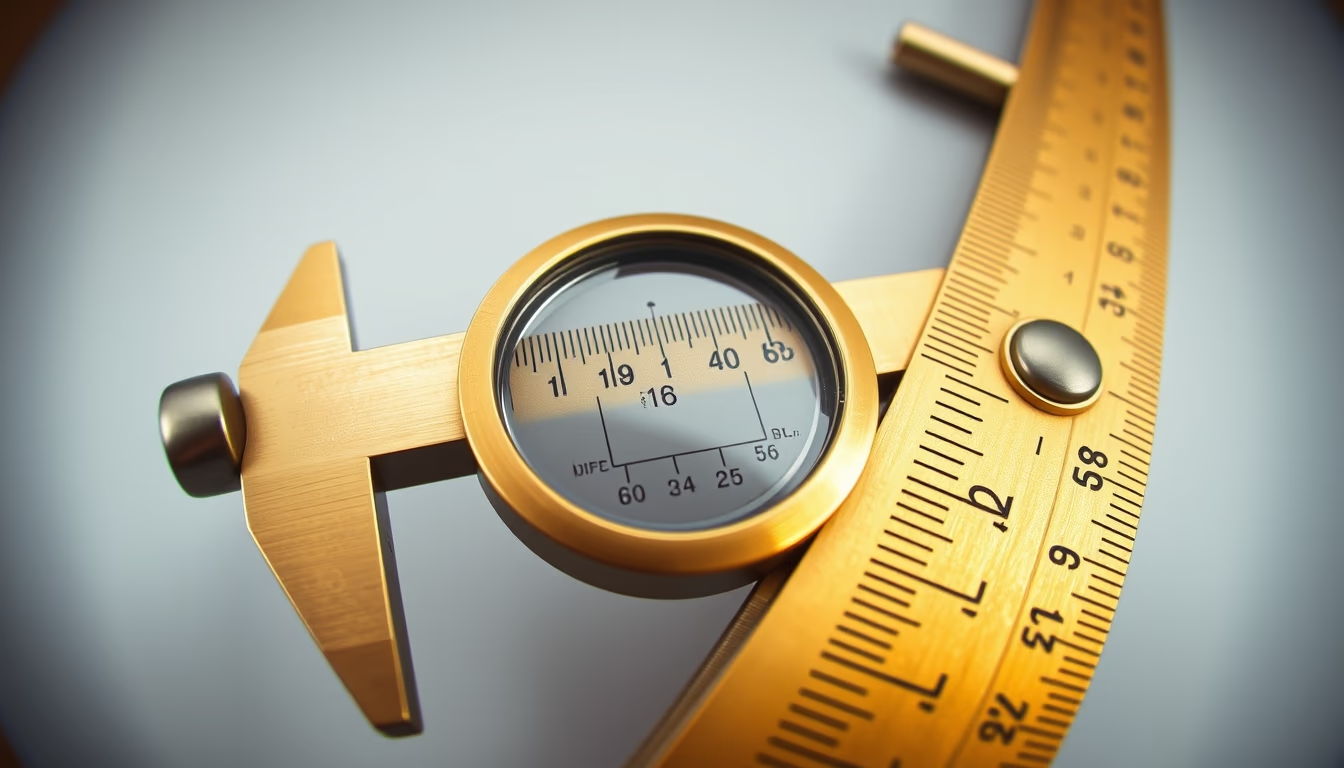
The brass vernier caliper is a precision measuring tool from the 19th century, still used in mechanics and jewelry.
About this subject
The vernier caliper, also known as the nonius caliper, was invented by French mathematician Pierre Vernier in 1631. The brass model, typical of the 19th century, consists of a main scale and a sliding cursor with an auxiliary scale (vernier) that allows readings with precision up to 0.02 mm. Brass was preferred for its corrosion resistance and dimensional stability, widely used in scientific and industrial instruments before stainless steel became common.
These calipers were essential during the Industrial Revolution, when mass production demanded interchangeable parts with strict tolerances. In jewelry making, brass avoided scratching precious metals, while in mechanics it allowed measuring internal and external diameters of shafts and cylinders. The basic design remains unchanged today, though digital versions have emerged.
Interestingly, antique brass vernier calipers are collector's items, especially those made by brands like Brown & Sharpe or Starrett from the late 19th century. The natural patina of brass and the wear on the vernier scale tell the story of industrial use. To preserve them, dry cloth cleaning and storage in a dry place are recommended, avoiding oils that could stain the metal.
The instrument's precision depends on the quality of the vernier and calibration. A well-maintained caliper can retain accuracy for decades, a testament to pre-digital engineering.
Frequently Asked Questions
How do you use a vernier caliper to measure?
Slide the jaw until it contacts the object. Read the main scale in millimeters and add the vernier fraction: the vernier line that aligns exactly with a main scale line gives the tenths or hundredths of a millimeter.
What is the typical accuracy of a brass vernier caliper?
Common models have an accuracy of 0.02 mm (0.001 inch). Higher precision versions can reach 0.01 mm, but require larger scales and high-quality oil.
Why was brass used in old calipers?
Brass is corrosion-resistant, does not rust like steel, and has a low thermal expansion coefficient, maintaining accuracy under temperature changes. It is also malleable, allowing precise scale engraving.
Direct URL
https://pub-c7d6a6ea828543ac903a74a341ccb2e1.r2.dev/imagens/caliper-vernier-brass-fish-eye-wide-angle-fresh12.avifHow to credit
Include a visible link back to UtilizAí. Copy one of the snippets below:
<a href="https://xn--utiliza-eza.com/en/midia/imagens/caliper-vernier-brass-fish-eye-wide-angle-fresh12">Caliper vernier brass</a> by <a href="https://xn--utiliza-eza.com">UtilizAí</a>, licensed under <a href="https://creativecommons.org/licenses/by/4.0/">CC BY 4.0</a>.
[Caliper vernier brass](https://xn--utiliza-eza.com/en/midia/imagens/caliper-vernier-brass-fish-eye-wide-angle-fresh12) by [UtilizAí](https://xn--utiliza-eza.com), CC BY 4.0
License: CC-BY-4.0