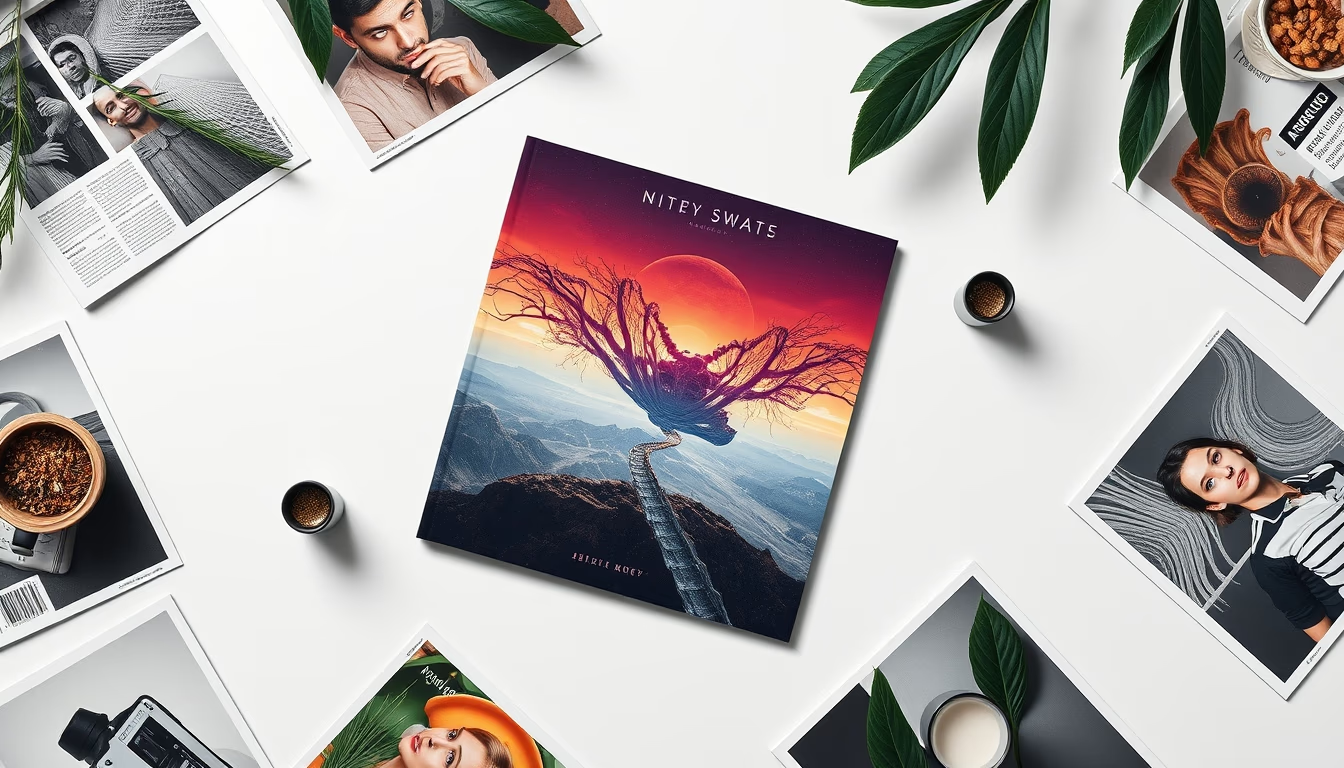
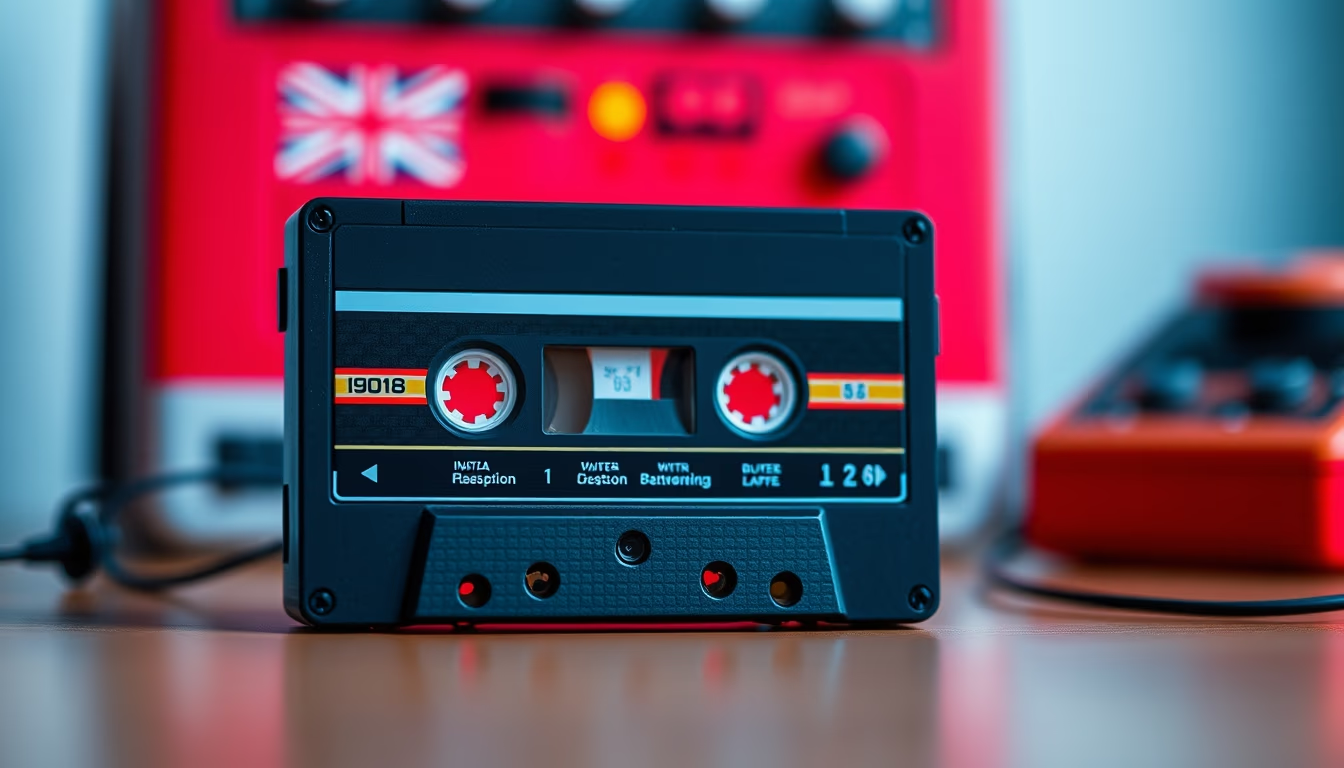
Album cover art display
1344×768 · AVIF · CC BY 4.0

Album cover art is a form of art combining graphic design and music, with emphasis on the vintage period and its cultural influence.
About this subject
Album cover art began as a protective sleeve for records but quickly evolved into an essential artistic medium. In the 1940s, covers were simple, often just listing the artist and title. By the 1950s, with the rise of vinyl, graphic designers started using illustrations and photographs. The creative peak came in the 1960s and 1970s, when bands like The Beatles, Pink Floyd, and Led Zeppelin commissioned works from renowned visual artists. The cover for "Sgt. Pepper's Lonely Hearts Club Band" (1967), for instance, is a landmark of pop collage and collective concept.
In the vintage context, vinyl covers were larger (12 inches), allowing for details lost in digital formats. This physical size also encouraged the inclusion of inserts with lyrics, photos, and liner notes. Minimalist design, on the other hand, gained traction in the 1950s (as seen on Blue Note Records covers) and resurfaces today in special editions. The vintage aesthetic values textures, manual typography, and limited color palettes, evoking an era when the cover was the first visual contact with the music.
Beyond aesthetic value, album covers became collector's items. Rare or limited-edition covers can be worth hundreds of dollars. Artists like Andy Warhol (cover for The Rolling Stones' "Sticky Fingers") and Storm Thorgerson (Pink Floyd's designer) helped elevate the cover to high art. Today, the vinyl revival keeps this tradition alive, with independent labels investing in elaborate covers to attract consumers seeking a physical and nostalgic experience.
Frequently Asked Questions
What was the first iconic album cover in history?
One of the earliest iconic covers is The Beatles' 'Sgt. Pepper's Lonely Hearts Club Band' (1967), but Frank Sinatra's 'In the Wee Small Hours' (1955) is also considered a landmark for its melancholic illustration.
Why are vinyl covers larger than CD covers?
Vinyl records are 12 inches in diameter, allowing a larger cover area (about 30 cm²). This gave more space for detailed designs and lyrics, something CDs (12 cm) could not offer.
How did minimalist design influence album covers?
Minimalist design, popularized in the 1950s by labels like Blue Note, focused on clean typography and simple images. This approach valued clarity and elegance, influencing genres like jazz and electronic music.
Direct URL
https://pub-c7d6a6ea828543ac903a74a341ccb2e1.r2.dev/imagens/album-cover-art-display-minimalist-composition-fresh7.avifHow to credit
Include a visible link back to UtilizAí. Copy one of the snippets below:
<a href="https://xn--utiliza-eza.com/en/midia/imagens/album-cover-art-display-minimalist-composition-fresh7">Album cover art display</a> by <a href="https://xn--utiliza-eza.com">UtilizAí</a>, licensed under <a href="https://creativecommons.org/licenses/by/4.0/">CC BY 4.0</a>.
[Album cover art display](https://xn--utiliza-eza.com/en/midia/imagens/album-cover-art-display-minimalist-composition-fresh7) by [UtilizAí](https://xn--utiliza-eza.com), CC BY 4.0
License: CC-BY-4.0