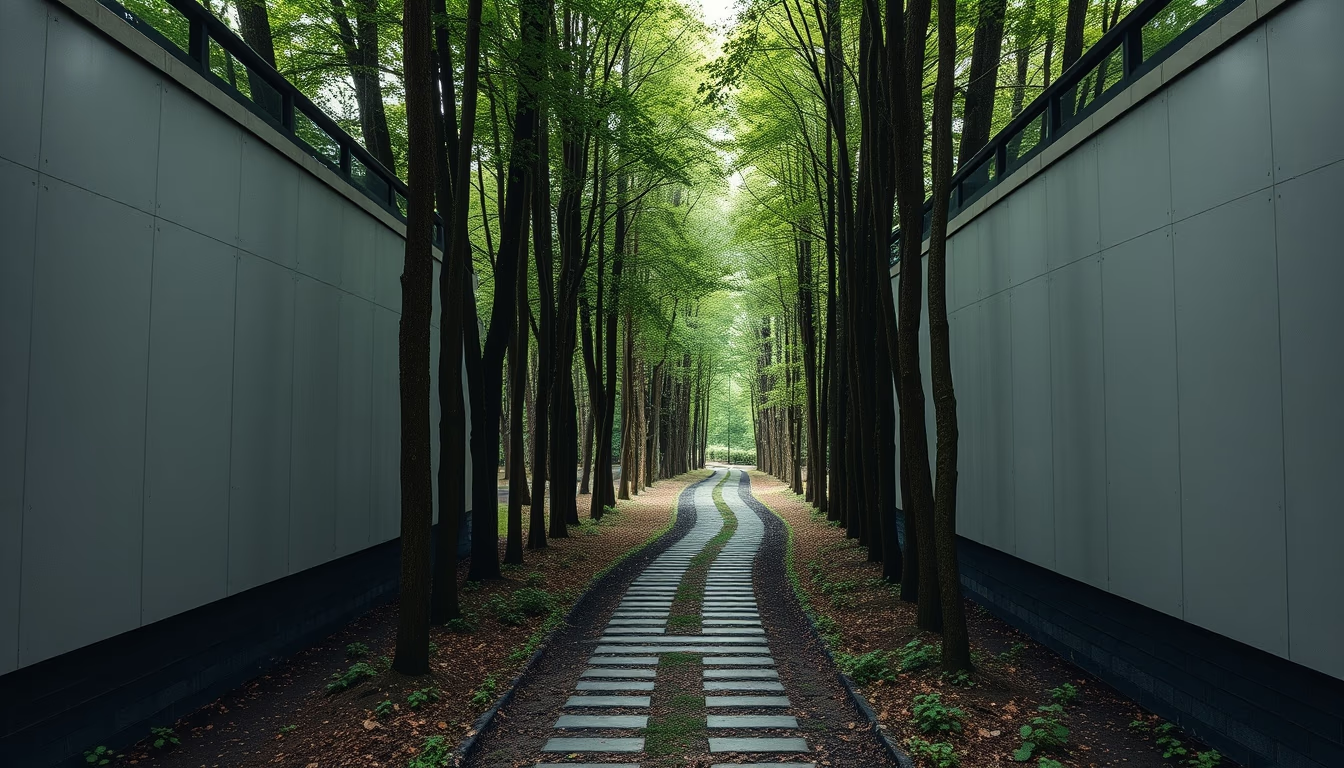
Zen garden raked sand
1344×768 · AVIF · CC BY 4.0

Zen gardens with raked sand, known as karesansui, are meditation spaces originating in Japan's Muromachi period.
About this subject
Zen gardens, known as karesansui (dry landscape), originated in Japan during the Muromachi period (1336-1573), deeply influenced by Zen Buddhism. Unlike traditional Japanese gardens with real water, these gardens use fine gravel or sand meticulously raked to symbolize rivers, seas, or waves. Rocks represent islands or mountains, creating an abstract landscape that invites contemplation.
The most famous example is the garden at Ryoanji Temple in Kyoto, built in the late 15th century. With only 15 stones arranged in five groups on a bed of white raked gravel, it is considered a masterpiece of minimalism. Zen monks use the act of raking sand as a form of active meditation, as the repetitive motion promotes focus and calm. Interestingly, from any viewing angle in the temple, only 14 of the 15 stones can be seen at once, a detail that encourages reflection on impermanence.
Today, zen gardens are appreciated worldwide not only as decorative elements but also as tools for wellness and mindfulness. Studies show that observing or tending to a zen garden reduces cortisol levels and improves concentration. In Brazil, adapted versions in urban or therapeutic spaces are gaining popularity, especially among yoga and meditation practitioners. Maintenance requires patience: the raking must be redone periodically to maintain straight or curved lines, simulating natural patterns like tides or wind.
Frequently Asked Questions
What is the origin of zen gardens?
Zen gardens originated in Japan during the Muromachi period (1336-1573), based on Zen Buddhist principles of meditation and simplicity.
What does the raked sand symbolize in zen gardens?
The raked sand or gravel symbolizes water, such as rivers or ocean waves. The raking action is a meditative practice that helps achieve mental clarity.
Are zen gardens only decorative?
No. They are tools for meditation and wellness. Studies show that observing or tending to a zen garden reduces stress and improves focus.
Direct URL
https://pub-c7d6a6ea828543ac903a74a341ccb2e1.r2.dev/imagens/zen-garden-raked-sand-fine-art-photography-p0.avifHow to credit
Include a visible link back to UtilizAí. Copy one of the snippets below:
<a href="https://xn--utiliza-eza.com/en/midia/imagens/zen-garden-raked-sand-fine-art-photography-p0">Zen garden raked sand</a> by <a href="https://xn--utiliza-eza.com">UtilizAí</a>, licensed under <a href="https://creativecommons.org/licenses/by/4.0/">CC BY 4.0</a>.
[Zen garden raked sand](https://xn--utiliza-eza.com/en/midia/imagens/zen-garden-raked-sand-fine-art-photography-p0) by [UtilizAí](https://xn--utiliza-eza.com), CC BY 4.0
License: CC-BY-4.0