Wine cellar wood barrels
1344×768 · AVIF · CC BY 4.0
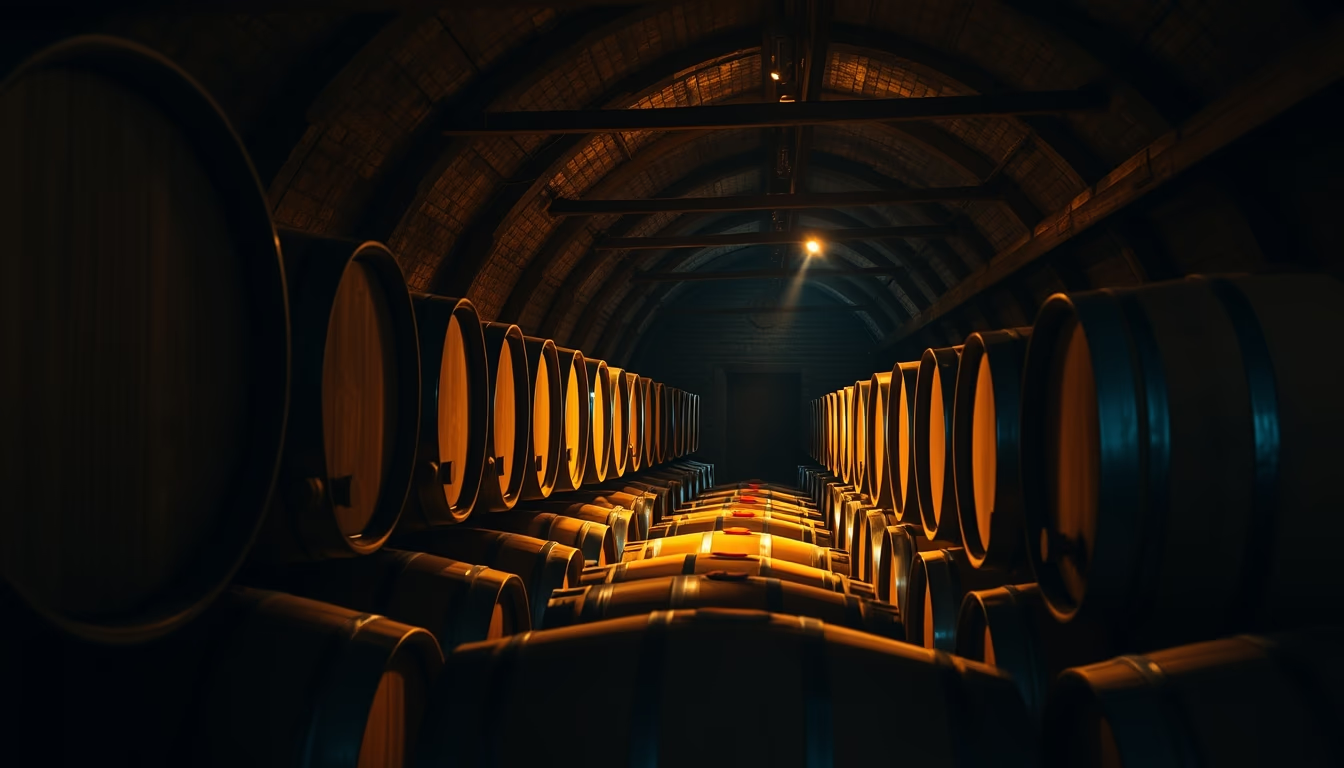
Wine cellar with oak barrels aging red wines in a controlled climate, a centuries-old winemaking tradition.
About this subject
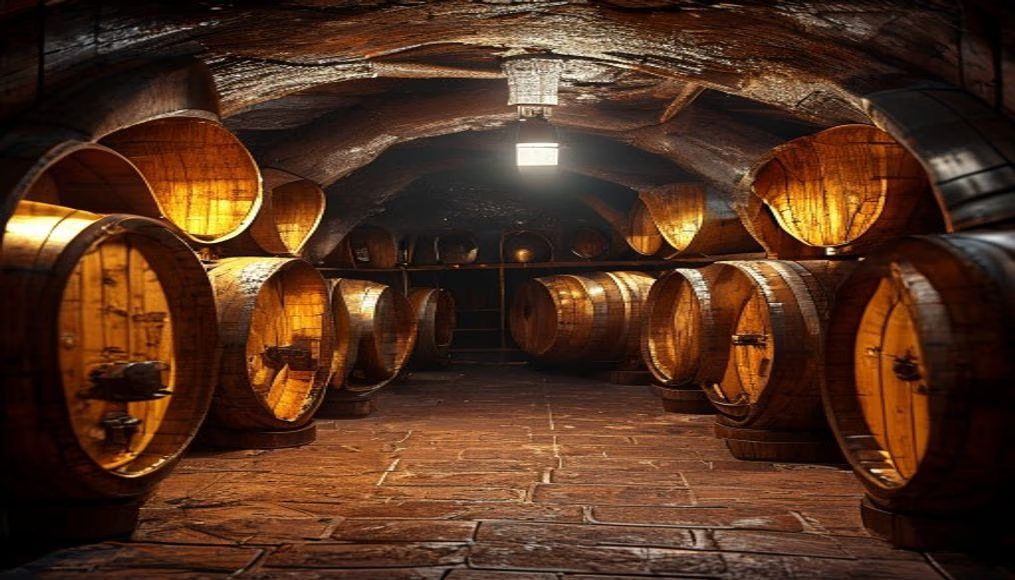
In an underground wine cellar, dozens of oak barrels rest in meticulous rows, each containing red wines undergoing aging. Oak wood, especially from Quercus petraea and Quercus alba species, is chosen for its ability to impart tannins and aromas like vanilla, clove, and smoke to the wine. The environment is kept at a stable temperature between 12°C and 16°C and relative humidity of 70% to 80%, ideal conditions to prevent premature oxidation and allow micro-oxygenation through the wood's pores, softening tannins and integrating flavors.
The origin of using wooden barrels in winemaking dates back to the Romans, who replaced clay amphorae with oak casks, facilitating transport and improving conservation. Today, French, American, and Hungarian oak barrels are the most prized, each imparting a distinct sensory profile. In France, barrels from Allier and Tronçais are famous for fine grain and elegant tannins; American oak, faster-growing, offers sweeter notes of coconut and vanilla.
The standard capacity of a wine barrel is 225 liters, called a Bordeaux barrique, but variations exist such as the tonneau (900 liters) and the foudre (up to 30,000 liters). Aging time varies: age-worthy wines may spend 12 to 36 months in barrel, while lighter wines stay only a few months. During this period, evaporation of part of the liquid occurs, known as the "angel's share," which can reach 5% per year.
Besides wine, oak barrels are used to age spirits like whiskey, cognac, and rum, where the wood contributes color, flavor, and complexity. Barrel reuse is common: first-use barrels are more intense, while third- or fourth-use barrels are subtler, ideal for wines seeking elegance without woody dominance. The choice of barrel is a crucial decision for the winemaker, balancing tradition and innovation.
Frequently Asked Questions
Why is oak the most commonly used wood for wine barrels?
Oak has a dense yet porous grain, allowing controlled micro-oxygenation. Its phenolic compounds, such as ellagitannins, contribute structure and complex aromas to the wine. Other woods like chestnut or acacia are used but on a smaller scale.
What is the difference between French and American oak barrels?
French oak (Quercus petraea) has a finer grain and more elegant tannins, imparting subtle spice and vanilla notes. American oak (Quercus alba) has a more open grain and sweeter tannins, with aromas of coconut, vanilla, and caramel. The choice depends on the wine style.
How many times can an oak barrel be reused?
A barrel can be reused 3 to 5 times, depending on use. First-use barrels are more intense and used for full-bodied wines; in subsequent uses, wood extraction decreases, making them ideal for wines requiring subtle aging.
Direct URL
https://pub-c7d6a6ea828543ac903a74a341ccb2e1.r2.dev/imagens/wine-cellar-wood-barrels-cinematic-wide-shot-v2.avifHow to credit
Include a visible link back to UtilizAí. Copy one of the snippets below:
<a href="https://xn--utiliza-eza.com/en/midia/imagens/wine-cellar-wood-barrels-cinematic-wide-shot-v2">Wine cellar wood barrels</a> by <a href="https://xn--utiliza-eza.com">UtilizAí</a>, licensed under <a href="https://creativecommons.org/licenses/by/4.0/">CC BY 4.0</a>.
[Wine cellar wood barrels](https://xn--utiliza-eza.com/en/midia/imagens/wine-cellar-wood-barrels-cinematic-wide-shot-v2) by [UtilizAí](https://xn--utiliza-eza.com), CC BY 4.0
License: CC-BY-4.0