Wine cellar arched ceiling
1344×768 · AVIF · CC BY 4.0
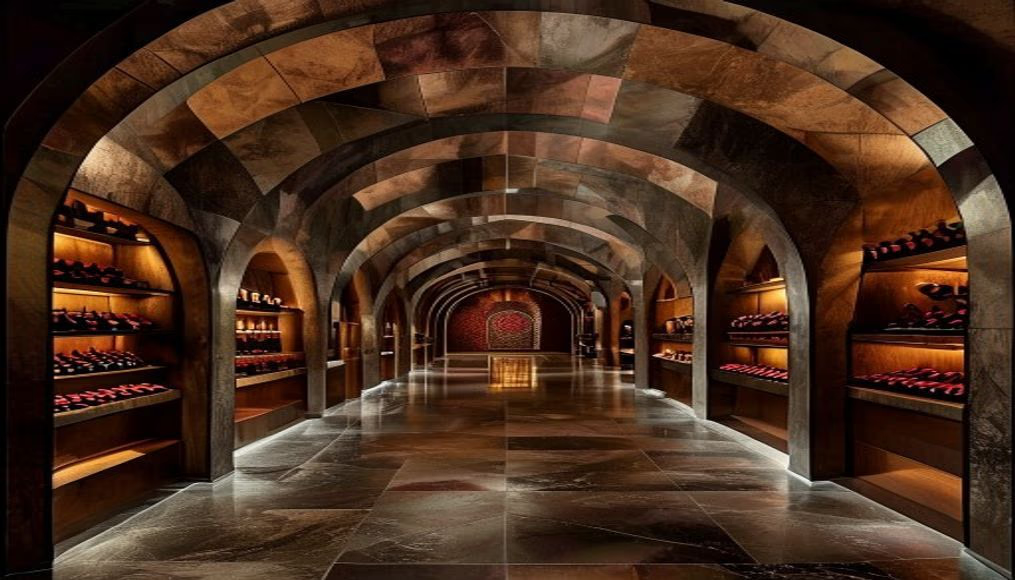
A wine cellar with an arched ceiling merges functionality and aesthetics, uniting winemaking tradition with the luxury of Art Deco design in underground spaces.
About this subject
A wine cellar with an arched ceiling represents more than a storage space for wines: it is an engineering and design work that dates back centuries. The arches, popularized in Roman and Romanesque architecture, were adapted for cellars due to their ability to bear heavy loads and maintain thermal stability. In hot climates, such as Brazil's, the arched ceiling helps keep the temperature cooler and more constant, essential for aging red and white wines of guard.
During the Art Deco period, between the 1920s and 1930s, the aesthetics of arches gained new forms: geometric lines, indirect lighting, and materials like reinforced concrete and exposed brick. This trend was incorporated into luxury residential cellars, combining functionality with a sophisticated look. Today, many high-end cellars use full or segmental arches lined with natural stone or tiles, recalling traditional European caves.
Building a wine cellar with an arched ceiling requires specific care: proper thermal insulation, humidity control (ideal between 50% and 80%), and discreet ventilation systems. The curved shape favors air circulation, avoiding condensation points that can damage labels. Additionally, the design allows integrating bottle racks on side walls, optimizing space without losing elegance. The choice of amber-toned LED lighting highlights the texture of the arches and creates an intimate atmosphere.
For wine enthusiasts, a cellar with an arched ceiling is not just an investment in conservation but also in sensory experience. Many contemporary projects incorporate tastings on-site, with oak tables and armchairs that contrast with the technical rigor of construction. The trend of private underground cellars has grown in regions like Serra Gaúcha and the São Francisco Valley, where wine culture strengthens. Combining the tradition of arches with Art Deco luxury is a way to celebrate the longevity of wines and the art of hospitality.
Frequently Asked Questions
What is the advantage of an arched ceiling in a wine cellar?
The arched ceiling efficiently distributes weight, providing greater structural strength and thermal stability. Its curvature favors air circulation, reducing temperature and humidity variations, crucial for proper wine aging.
Which materials are common in arched ceiling wine cellars?
Natural stone, exposed brick, reinforced concrete, and decorative tiles are frequent. In Art Deco style, metals like bronze or stainless steel are added for lighting details and shelving, combining tradition and modernity.
How does Art Deco design influence a wine cellar?
Art Deco brings geometric lines, symmetry, and indirect lighting to highlight the arch. Colors tend to be neutral with touches of gold or silver, creating a luxurious and functional environment. Many residential cellars adopt this style to harmonize with the house architecture.
Direct URL
https://pub-c7d6a6ea828543ac903a74a341ccb2e1.r2.dev/imagens/wine-cellar-arched-ceiling-art-deco-aesthetic-luxo1.avifHow to credit
Include a visible link back to UtilizAí. Copy one of the snippets below:
<a href="https://xn--utiliza-eza.com/en/midia/imagens/wine-cellar-arched-ceiling-art-deco-aesthetic-luxo1">Wine cellar arched ceiling</a> by <a href="https://xn--utiliza-eza.com">UtilizAí</a>, licensed under <a href="https://creativecommons.org/licenses/by/4.0/">CC BY 4.0</a>.
[Wine cellar arched ceiling](https://xn--utiliza-eza.com/en/midia/imagens/wine-cellar-arched-ceiling-art-deco-aesthetic-luxo1) by [UtilizAí](https://xn--utiliza-eza.com), CC BY 4.0
License: CC-BY-4.0