Wifi router modern
1344×768 · AVIF · CC BY 4.0
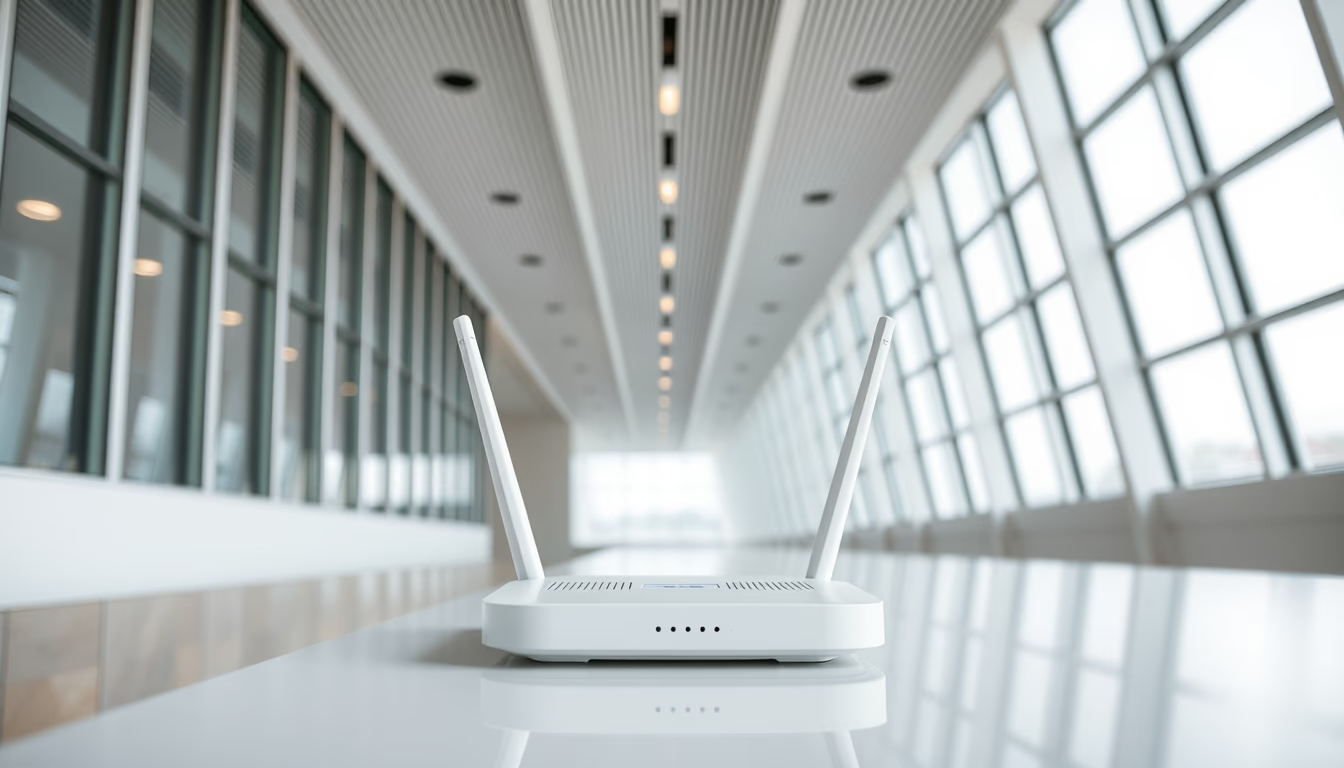
Modern Wi-Fi router: technologies that make home office and entertainment faster and more reliable.
About this subject
Wi-Fi routers have evolved significantly in recent years, driven by the explosion of remote work and high-definition content consumption. Today's most modern devices support Wi-Fi 6 (802.11ax) and Wi-Fi 6E standards, operating on 2.4 GHz, 5 GHz, and the new 6 GHz band, offering greater bandwidth and less interference. These technologies are essential for environments with many devices connected simultaneously, such as home offices with computers, smartphones, and smart TVs.
Features like MU-MIMO (Multiple User Multiple Input Multiple Output), beamforming, and band steering allow the router to manage traffic more intelligently, directing signals to the devices that need them most and reducing latency. Beamforming focuses the signal toward devices, while MU-MIMO enables simultaneous communication with multiple devices without performance loss. Additionally, the WPA3 standard provides enhanced security against cyberattacks, critical for those working from home and handling sensitive data.
The impact on productivity is direct: studies show that an unstable connection can reduce efficiency by up to 30%. Modern routers can support dozens of connected devices with low latency, which is essential for video conferencing, cloud storage, and large file transfers. For online gamers and virtual reality users, Wi-Fi 7, expected to see broad adoption by 2026, promises speeds up to 30 Gbps and latency under 1 ms.
In residential settings, mesh systems are becoming popular, eliminating dead zones through multiple nodes that communicate with each other. Brands like TP-Link, Asus, and Google offer kits covering areas up to 500 m². Choosing the ideal router depends on home size, number of devices, and activities performed, but investing in a Wi-Fi 6 compatible model is already a recommendation for those wanting to be prepared for future demands.
Frequently Asked Questions
What is Wi-Fi 6 and why is it better?
Wi-Fi 6 is the latest standard (IEEE 802.11ax) offering higher speeds, lower latency, and better efficiency in crowded environments. Ideal for home offices and 4K/8K streaming.
How can I improve my router's signal at home?
Place the router centrally and elevated, away from thick walls and electronic devices. Consider using range extenders or a mesh system to cover the entire home.
What is the difference between a router and a modem?
A modem converts the internet signal (fiber, cable, DSL) into data; a router distributes that data to devices via Wi-Fi or ethernet. Many providers offer combined modem/router units.
Direct URL
https://pub-c7d6a6ea828543ac903a74a341ccb2e1.r2.dev/imagens/wifi-router-modern-architectural-photography-p1.avifHow to credit
Include a visible link back to UtilizAí. Copy one of the snippets below:
<a href="https://xn--utiliza-eza.com/en/midia/imagens/wifi-router-modern-architectural-photography-p1">Wifi router modern</a> by <a href="https://xn--utiliza-eza.com">UtilizAí</a>, licensed under <a href="https://creativecommons.org/licenses/by/4.0/">CC BY 4.0</a>.
[Wifi router modern](https://xn--utiliza-eza.com/en/midia/imagens/wifi-router-modern-architectural-photography-p1) by [UtilizAí](https://xn--utiliza-eza.com), CC BY 4.0
License: CC-BY-4.0