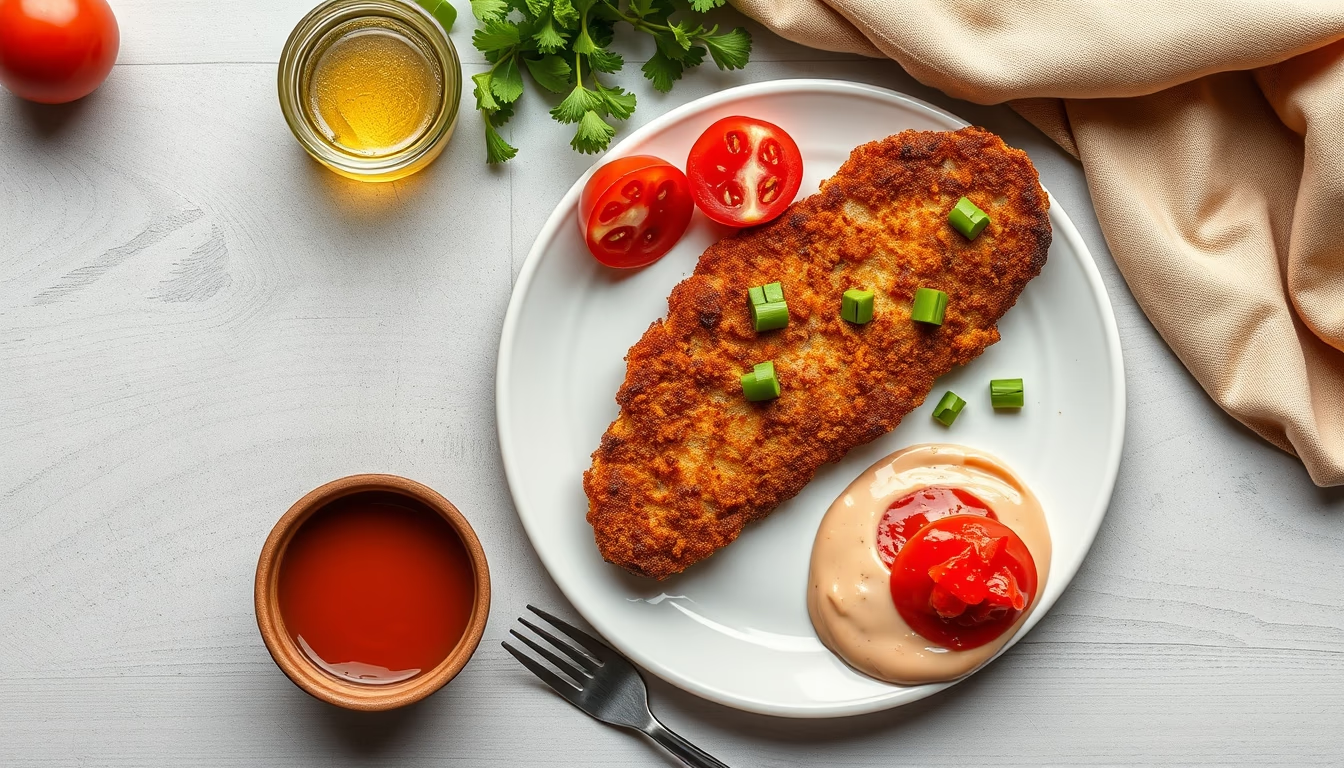
Wiener schnitzel plate
1344×768 · AVIF · CC BY 4.0
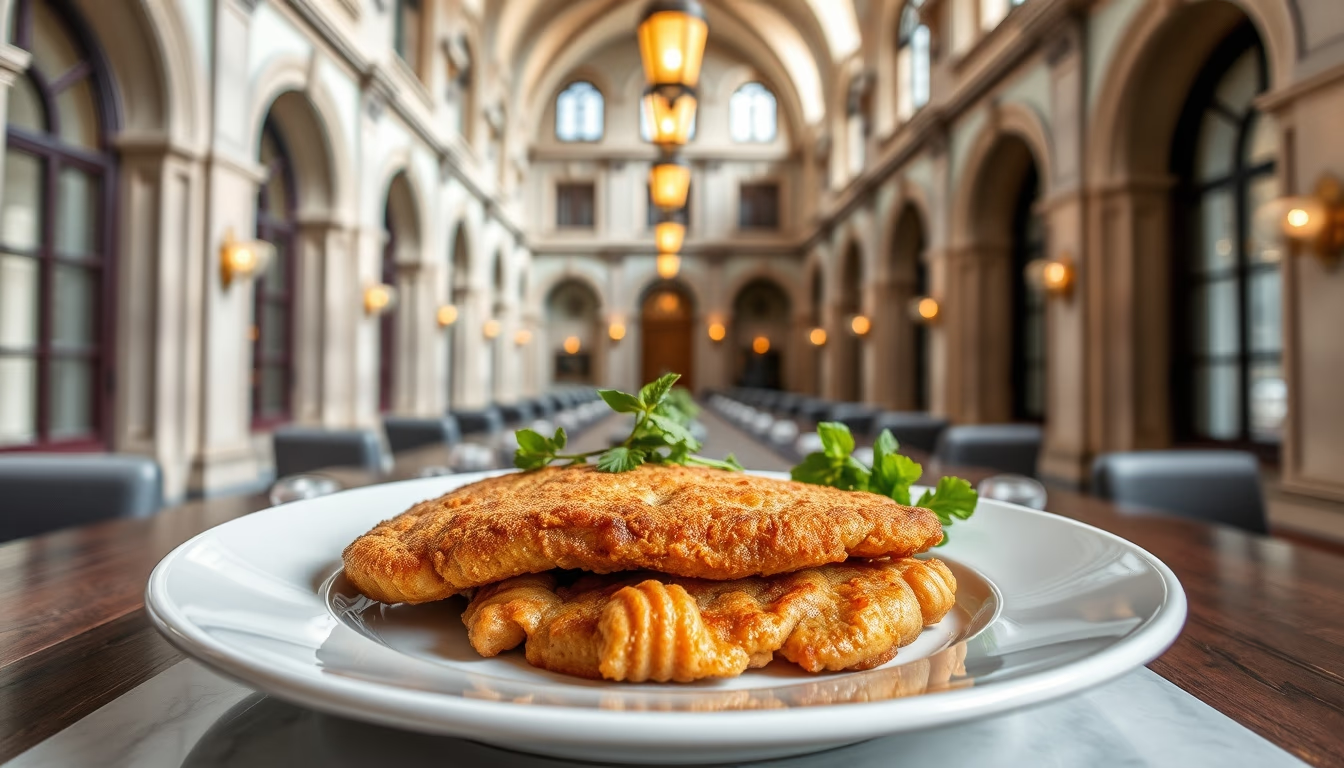
Wiener schnitzel, a traditional Austrian dish, consists of a thin breaded and fried veal cutlet, served with lemon and classic side dishes.
About this subject
Wiener schnitzel is one of the most emblematic dishes of Austrian cuisine and, by extension, Central European cuisine. Its origins date back to the 19th century, although its invention is disputed. The term "Wiener" refers to Vienna, the city where the dish became popular. The traditional recipe uses veal (Kalbsschnitzel), though variations with pork (Schnitzel Wiener Art) are common, especially in Germany. The key lies in the breading: the meat is lightly pounded, coated in flour, beaten egg, and breadcrumbs, then fried in clarified butter or fat until golden and crispy.
Traditionally served with a lemon wedge, Wiener schnitzel is accompanied by side dishes such as potato salad, parsley potatoes, or rice. In Austria, it is commonly found in traditional guesthouses (Gasthäuser) and at festivals. The dish gained international fame and is often associated with Austrian cultural identity, protected by a law defining its authentic preparation. Interestingly, in Vienna, Wiener schnitzel is considered a local culinary symbol, and century-old specialized establishments like Figlmüller serve oversized versions.
Wiener schnitzel's cultural impact extends beyond gastronomy. It appears in literary and cinematic works and is one of the most ordered dishes by tourists in Austria. Despite its apparent simplicity, the breading technique requires precision to ensure a crispy texture. Oil temperature and meat thickness are crucial. In 2020, the dish was the subject of a documentary exploring its origins and regional variations across Europe.
Frequently Asked Questions
What is the difference between Wiener schnitzel and Schnitzel Wiener Art?
Authentic Wiener schnitzel is made from veal, while Schnitzel Wiener Art (Viennese-style) uses pork. Both follow the same breading and frying process, but the veal version is considered traditional.
Is Wiener schnitzel served with sauce?
Traditionally, no. Wiener schnitzel is served with a lemon wedge to enhance flavor. Sauces may accompany it, but they are not part of the classic recipe. In Austria, it is commonly served with potato salad or parsley potatoes.
What is the origin of the name Wiener schnitzel?
The name means "Viennese cutlet" and refers to the city of Vienna. It is believed the dish was introduced to Austria by Field Marshal Radetzky in the 19th century, inspired by the Italian cotoletta alla milanese, though earlier records exist.
Direct URL
https://pub-c7d6a6ea828543ac903a74a341ccb2e1.r2.dev/imagens/wiener-schnitzel-plate-architectural-photography-fresh12.avifHow to credit
Include a visible link back to UtilizAí. Copy one of the snippets below:
<a href="https://xn--utiliza-eza.com/en/midia/imagens/wiener-schnitzel-plate-architectural-photography-fresh12">Wiener schnitzel plate</a> by <a href="https://xn--utiliza-eza.com">UtilizAí</a>, licensed under <a href="https://creativecommons.org/licenses/by/4.0/">CC BY 4.0</a>.
[Wiener schnitzel plate](https://xn--utiliza-eza.com/en/midia/imagens/wiener-schnitzel-plate-architectural-photography-fresh12) by [UtilizAí](https://xn--utiliza-eza.com), CC BY 4.0
License: CC-BY-4.0