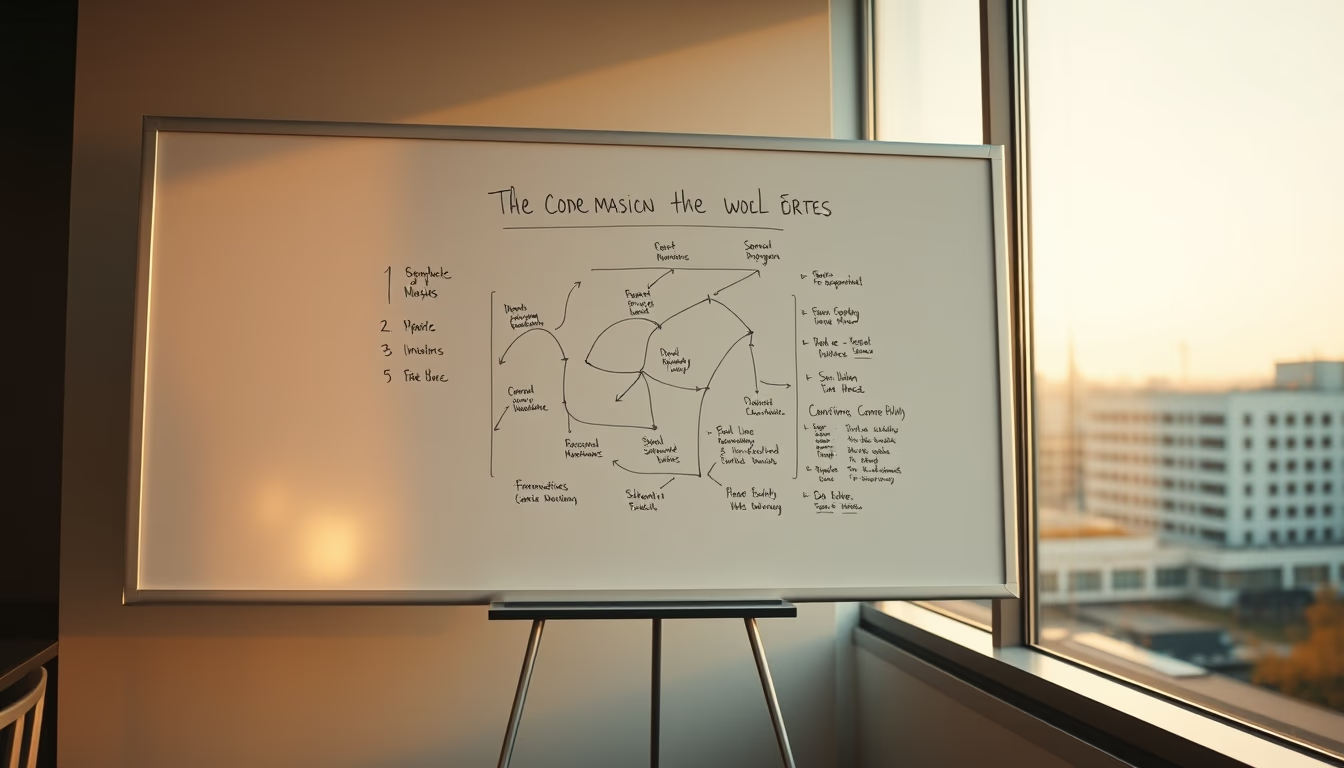
Whiteboard at home
1344×768 · AVIF · CC BY 4.0
The whiteboard at home, a versatile tool for organizing ideas and tasks in the home office.
About this subject
A whiteboard is a non-porous writing surface, typically made of melamine, glass, or enameled steel, used with dry-erase markers. Unlike blackboards, it produces no chalk dust, making it cleaner and more suitable for indoor environments like home offices. Its popularity surged with remote work, especially after 2020, when many professionals adapted residential spaces for work.
Whiteboard use at home extends beyond professional notes. They are common in study areas, kitchens, or children's rooms for to-do lists, schedules, brainstorming, and remote teaching. Studies indicate that handwriting improves information retention and creativity, making whiteboards valuable cognitive tools.
Regarding material choice, glass whiteboards offer durability and stain resistance, while melamine ones are more affordable. Enameled steel boards are magnetic, allowing document attachment with magnets. In home settings, sizes range from small 30x40 cm boards to full-wall installations, depending on available space.
Interesting fact: the whiteboard is credited to Albert Stallion of the American company Dry-Erase in the late 1980s, but its widespread adoption came through classrooms and corporate offices. Today, it is a home office staple, present in about 40% of Brazilian homes that adopted remote work, according to a 2023 survey.
Frequently Asked Questions
What is the difference between a whiteboard and a blackboard?
A whiteboard uses dry-erase markers and produces no dust, while a blackboard uses chalk and creates residues. Whiteboards are cleaner and more suitable for indoor environments like home offices.
How to properly clean a whiteboard?
Use a whiteboard eraser or soft cloth with isopropyl alcohol or a dedicated cleaner. Avoid abrasive products that damage the surface. For stubborn stains, write over them with a dry-erase marker and erase immediately.
Can permanent markers be used on a whiteboard?
Permanent markers can be used but require caution: write over them with a dry-erase marker and wipe immediately, or use isopropyl alcohol to remove. Always prefer markers designed for whiteboards.
Direct URL
https://pub-c7d6a6ea828543ac903a74a341ccb2e1.r2.dev/imagens/whiteboard-at-home-macro-closeup-p2.avifHow to credit
Include a visible link back to UtilizAí. Copy one of the snippets below:
<a href="https://xn--utiliza-eza.com/en/midia/imagens/whiteboard-at-home-macro-closeup-p2">Whiteboard at home</a> by <a href="https://xn--utiliza-eza.com">UtilizAí</a>, licensed under <a href="https://creativecommons.org/licenses/by/4.0/">CC BY 4.0</a>.
[Whiteboard at home](https://xn--utiliza-eza.com/en/midia/imagens/whiteboard-at-home-macro-closeup-p2) by [UtilizAí](https://xn--utiliza-eza.com), CC BY 4.0
License: CC-BY-4.0